Why the Pistons Invested $200 Million in Jalen Duren Despite Playoff Woes
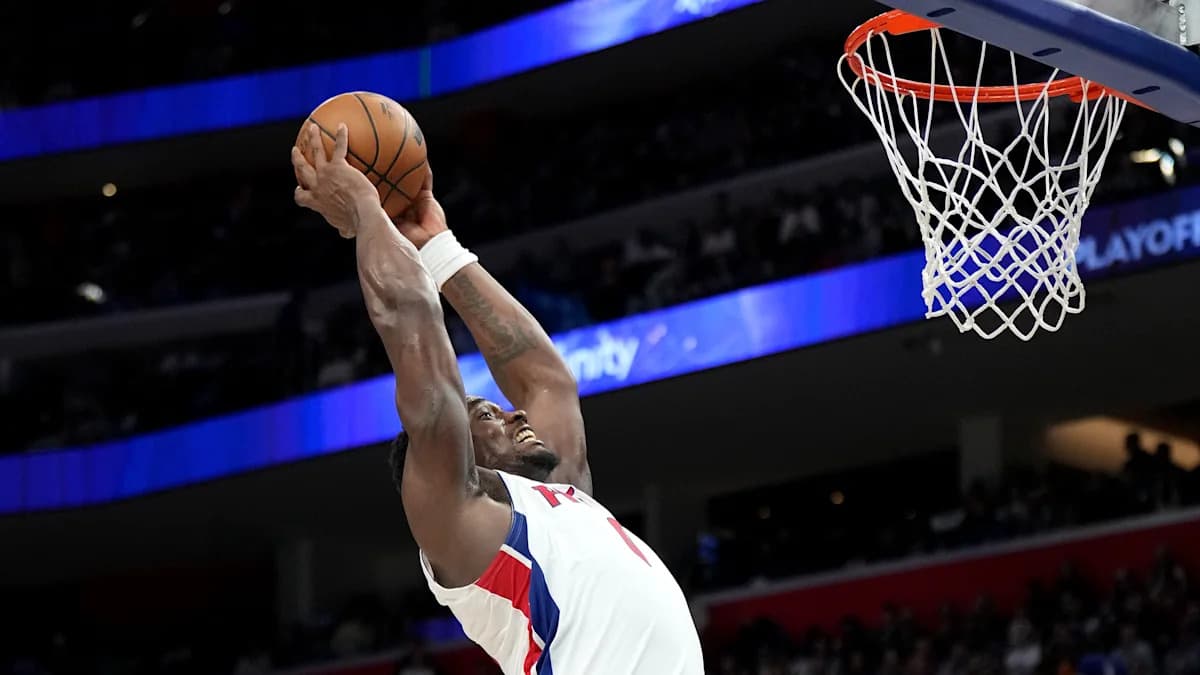
At just 22 years old, Jalen Duren is coming off an All-NBA season and has just signed a five-year, $200 million contract with the Detroit Pistons. The deal falls short of the $287 million max he could have received, reflecting some hesitation from the team despite his promising upside.
What Makes Duren Valuable?
Duren offers Cade Cunningham a reliable presence near the basket. He can catch lobs, finish through contact, run the floor, and aggressively pursue offensive rebounds without set plays. Last season, he reduced turnovers and took on more responsibilities as a ball handler, passer, and screener. Without Cade on the court, Duren showcased his emerging face-up post moves, doubling his free-throw attempts per game. His averages stood at 19.5 points and 10.5 rebounds, while anchoring the league's second-best defense, earning him All-NBA recognition.
Playoff Performance Raised Concerns
But the playoffs told a different story. Duren was outperformed by Wendell Carter Jr. in the first round and struggled badly against Evan Mobley and Jarrett Allen in the second. His scoring dipped to 10.2 points per game, and shooting dropped from 65% during the regular season to 51.4% in the postseason. What looked like a star during the season became inconsistent when it counted most.
"I'm man enough to acknowledge my flaws and that I'm not perfect. I'm also man enough to get my ass in the gym and work on those things and get better," Duren said. "I'm not trying to run from anything. I know I will make things better in the future."
Reasons Behind the Inconsistencies
The Pistons hesitated to offer the full max partly because of these playoff struggles but also due to Duren's uneven performances over three seasons. He had dominant stretches mixed with periods of lackadaisical defense and insufficient offensive assertiveness. Some evaluators link this to focus and mentality; others point to conditioning issues—Detroit even tried to include weight clauses in his contract talks. Maturity likely played a role too, as Duren has grown from a teenager into a player who now takes his craft seriously, signaling the start of his prime.
The Path Forward
For this contract to pay off, Duren must prove last season's progress was no fluke and carry it into playoff success. Ideally, he’ll continue improving. At his recent press conference, he emphasized versatility and creating his own shot to avoid being boxed in.
"I try to be a tool that my coaches and my teammates can use to do anything," Duren explained.
Last season, Duren increased his pull-up jumpers and dribble moves, making 48.4% of his 31 dribble jumpers. He also shot efficiently in post-ups (54.5%) and isolations (46%), though on small sample sizes. If these skills become reliable weapons, it helps explain why the Pistons refused to trade him for veterans like Domantas Sabonis or Anthony Davis, whose health or age pose concerns.
Still About Potential
Despite flashes of new offensive skills, Duren remains a player defined by potential. The Pistons need him to develop a dependable spot-up three-pointer to fit better alongside rising star Ausar Thompson. Thompson is a non-shooter, which limited spacing in the playoffs, making it harder for both players to thrive simultaneously.
- With Thompson off the floor and Duren on: Pistons outscored opponents by 11.2 points per 100 possessions.
- With both Thompson and Duren on: Pistons had a -0.9 net rating.
- With Duren on and Thompson off: Pistons were -1.7.
The team functioned better with other lineups, notably featuring Paul Reed and more motion. Having two poor shooters in Duren and Thompson, combined with streaky shooters like Cunningham and Tobias Harris, hurt spacing and efficiency.
Building Around Shooting
To address spacing, Detroit added sharpshooters like John Collins, Isaiah Joe, Taurean Prince, and drafted Ebuka Okorie. These moves aim to complement Duren and Thompson’s strengths while covering their shooting limitations.
The Pistons exceeded expectations by winning 60 games last season, a feat not easily achieved. With Cunningham at 25, Thompson at 24, and young talents like Ron Holland (21), the core remains youthful and still maturing.
Duren contributed significantly to that success, yet his best basketball might lie ahead. Team executive Trajan Langdon faces the challenge of measuring how much of Duren’s upside can materialize alongside Detroit's young roster. Agreeing on the contract was just one piece; if Duren falters, the deal remains tradable.
The ideal scenario sees Duren or Thompson developing a reliable three-point shot, Okorie or Holland becoming key contributors, and Cunningham growing into stardom. But the NBA landscape can change swiftly, and another disappointing postseason might force Langdon to rethink patience.
"I want to be a Detroit Piston for life," Duren said. "Making that happen will take more than becoming a better individual player. I have to become a better fit."