Pierre Sage's Challenges at Crystal Palace: Adapting to the Chaos
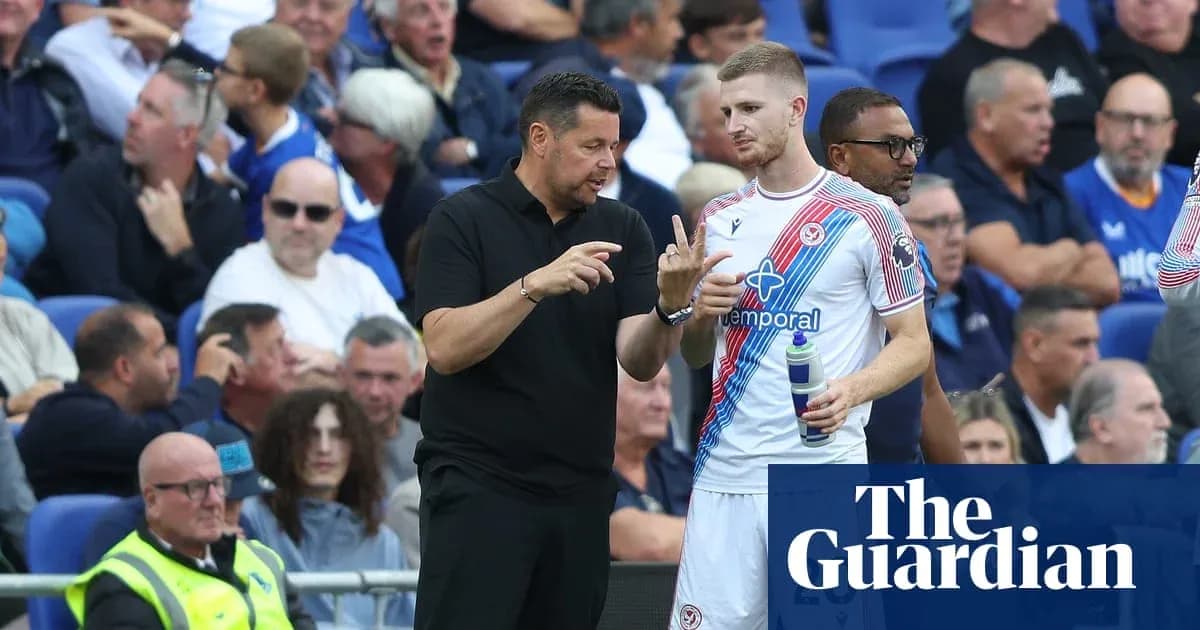
Pierre Sage walked into Crystal Palace with his eyes open. He had to. You do not follow Oliver Glasner – the coach who delivered the most successful period in the club’s history – without studying the terrain first.
Two defeats to open the new campaign, against Everton and Manchester City, have already underlined the size of the job. The Conference League glow is fading, key players have been unsettled and the new man in the dugout has been dropped straight into one of English football’s more chaotic transfer ecosystems.
A manager in the middle of the storm
Selhurst Park kept both Ismaïla Sarr and Jean-Philippe Mateta despite serious interest from Liverpool and Aston Villa. Four new faces arrived after that, but only after Palace were beaten to Malick Fofana by Sunderland in one of deadline day’s more dramatic late twists.
For some managers, that kind of window would prompt a public airing of grievances. Sage is wired differently. He knows what he signed up for.
“I knew that and I had to deal and adapt to that,” he said of Palace’s habit of leaving business late, a pattern that has seen them sign 10 players on deadline day across the last three summers. The Frenchman’s bottom line is simple: did he get the profiles he wanted? “That’s the case. I think we are in line with what we need.”
Glasner, now at Nottingham Forest and joined there by Daniel Muñoz, never hid his irritation at being forced to wait until the final hours for reinforcements in 2024. Sage has not gone down that road publicly, even if he did push hard – and unsuccessfully – for a like-for-like leader to replace Maxence Lacroix after the France defender’s July move to Chelsea.
The one that got away
Sage’s first choice was familiar: Ismaëlo Ganiou, the 21‑year‑old defender he had helped turn into a cornerstone at Lens, where they won the Coupe de France and finished second in Ligue 1 last season. Lens, understandably, dug in. Ganiou signed a new deal at the start of August and Palace had to pivot.
The scramble began. A move for Club Brugge’s Joel Ordóñez collapsed with the Ecuadorian still recovering from a broken foot. Pursuits of Augsburg’s Chrislain Matsima and Brest’s Raphaël Le Guen also hit dead ends. Palace eventually turned to Axel Disasi and teenage defender Honest Ahanor on loan to patch the hole.
Whether that truly replaces Lacroix’s authority at the back is another matter entirely.
The same pattern repeated higher up the pitch. Mamadou Sangaré, another from Lens, chose Brentford over Palace. Sage then drove the push for Fofana, this time from Lyon, another of his former clubs. A series of calls to the Belgium forward on deadline day could not sway him.
“I’m really proud and happy with what the club did for that,” Sage insisted. “We fight a lot and sometimes you cannot give more than this, but we give our best in this situation. At the end, the player chooses.”
Palace will now discover whether Dario Osorio can turn that disappointment into a footnote. The Chile forward has arrived from Midtjylland on an initial loan with an obligation to buy next summer for £26m. He operates mainly from the right, not through the middle like Fofana, so the fit is different. The expectation will not be.
Attacking riches, financial restraint
Up front, at least on paper, Palace are loaded. Dwight McNeil has come in, Evann Guessand has signed – though he has been left out of the Europa League squad – and Sarr stayed. Ben Chilwell’s return and the late addition of Quinten Timber give Sage more depth in midfield.
Then there is Adam Wharton. Palace turned away bids from unnamed clubs for the midfielder, with Manchester City and Chelsea believed to be among those circling. “The club was strong with the situation, and I think the player is completely in line with that,” Sage said. Keeping Wharton may prove as important as any signing.
All of this has been done while the money has flowed in rather than out. After breaking their transfer record twice in January for Jørgen Strand Larsen and Brennan Johnson – the latter swapped with Everton for McNeil – Palace’s summer business ended with a net profit of almost £40m, the second lowest spend in the division behind Aston Villa. Across the last five seasons, Hull and Coventry, both in the Championship, have outspent Palace’s £90m outlay.
Sage has heard the whispers that he must be unhappy. He bats them away with a story from home.
Lessons from a brasserie in Belley
“I’m not frustrated – we are not a bank,” he said. “We do with what we have. My parents had a restaurant and I prefer every day there’s a lot of clients but it was not the case sometimes and we have to deal with that every day. In football it’s the same.”
It is a revealing analogy. In Belley, in eastern France, you serve whoever walks through the door and make the best of the ingredients you can afford. At Palace, he must do the same in a league where rivals dine at Michelin-starred budgets.
The immediate menu is not ideal. Sarr and Mateta will both miss Saturday’s trip to Fulham. Mateta, who had hoped to leave before a hamstring injury intervened, is out for another three weeks. Sarr should be back from a groin problem for the Ipswich game next Saturday, but Sage knows the Senegal forward is still carrying the emotional weight of Liverpool’s pursuit and the public statement from his agent criticising the club.
“He needs time,” Sage said. Time to heal, time to reset, time to become again the explosive outlet Palace thought they might lose.
For now, the new manager must walk into Craven Cottage with a patched-up attack, a remodelled defence and a fanbase still adjusting to life after Glasner. The research is done. The market has closed. From here, everything rests on what Sage can cook with what Palace have left in the kitchen.