Peyton Watson Leaves Denver for Cleveland: A New Chapter Begins
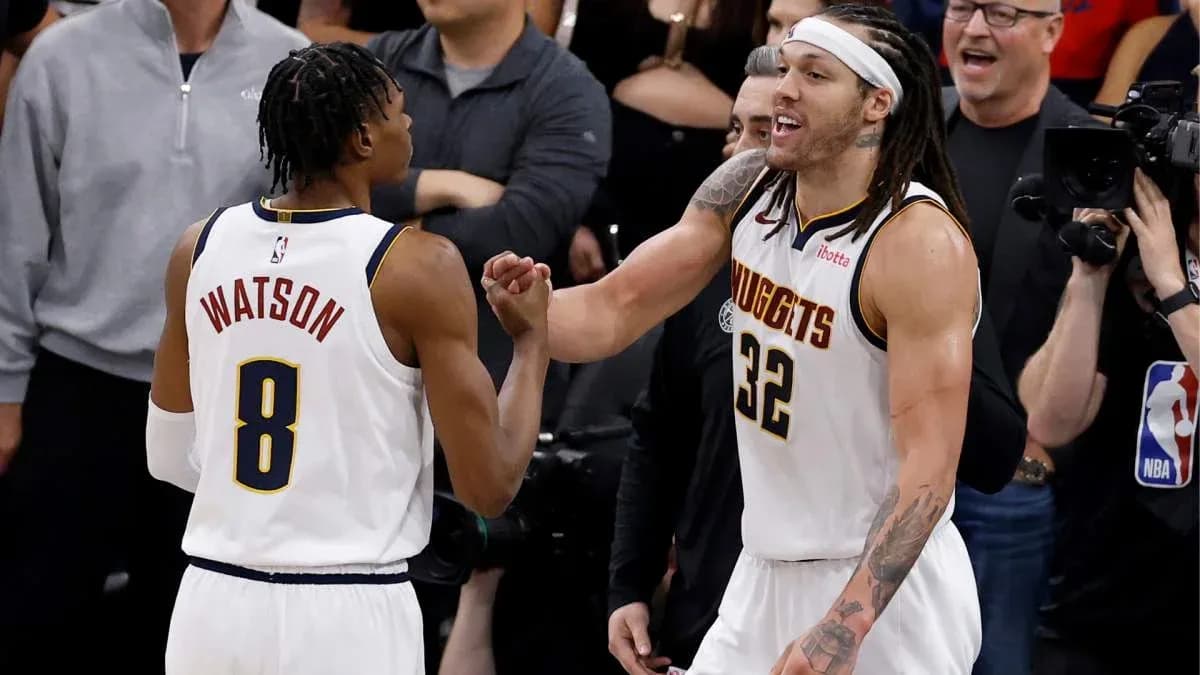
The Denver Nuggets didn’t just lose a young forward this summer. They lost a rising piece of their future in Peyton Watson — and they lost him to the realities of the modern NBA balance sheet.
Watson is heading to the Cleveland Cavaliers as part of a three-team sign-and-trade with the Nuggets and the LA Clippers, according to ESPN’s Shams Charania. The deal sends Watson to Cleveland, Max Strus to Los Angeles, and delivers Denver an unprotected 2031 Cavs first-round pick and a 2032 Kings second-rounder.
The money told the story.
Cleveland put a four-year, $88 million contract on the table, complete with a player option and a trade kicker. Denver, squeezed by the cap and the cost of keeping a contender together, could only reach four years and $72 million, per Bennett Durando of The Denver Post. For a 22-year-old coming off a breakout season, that $16 million gap might as well be a canyon.
Gordon Loses a Teammate, Keeps a Brother
If anyone in Denver felt Watson’s departure on a personal level, it was Aaron Gordon.
At his youth camp, Gordon spoke about Watson not like a teammate who moved on, but like family who changed addresses.
“That’s my dawg, but it’s deeper than basketball with Peyton and I,” Gordon said, via DNVR Nuggets. “Our families members go to the same church, Peyton’s just like my brother. I’m happy for him, the situation that he’s in. Obviously, we would’ve loved to have him, but it worked out the way it should’ve. That it was supposed to.”
No bitterness. No side-eye at the front office. Just a veteran who watched a younger player grow into his moment and cash in on it.
And Watson earned that moment.
With Gordon sidelined for large stretches last season, Watson stepped straight into the void. He didn’t just soak up minutes; he produced. He averaged 14.6 points, 4.9 rebounds and 2.1 assists per game, carving out a two-way role on a team that expects to play deep into May and June.
There was a point in the season when the hierarchy in Denver briefly shifted. With Nikola Jokic out for about a month with a knee injury, Jamal Murray carried the offense. Behind him, by form and by impact, came Watson. Not Michael Porter Jr., not a veteran stopgap. Watson.
Those weeks mattered. They changed how the rest of the league viewed him. They changed his market. They likely changed his career.
Denver saw it. Cleveland saw it. Only one of them could afford to pay for it.
A Young Star Says Goodbye the Right Way
Watson didn’t leave Denver with a cold press release or a casual farewell. He wrote directly to the people who watched him grow.
On Instagram, he posted a long message to Nuggets fans and to the city that helped him find his footing in the league.
“Nuggets Nation and the city of Denver, thank you for having me for the first four years of my career. As a young NBA player, who was a bit naive and hadn’t seen much of the real world, you guys took care of me better than I could have ever imagined. Thanks for that. Playing this game every night on the national stage is difficult on both the body and the mind, but the love from the fans always makes it so worthwhile,” Watson wrote.
He didn’t stop with the crowd in the stands. He name-checked the people inside the building who bet on him and helped shape him: former Nuggets general manager Calvin Booth, who drafted him out of UCLA; the Kroenke family; former head coach Michael Malone; current coach David Adelman; and the teammates, past and present, who shared the locker room.
It read like a player who understood what Denver gave him — and understood why he had to leave.
The Nuggets, locked into a title-chasing core headlined by Jokic and Murray and already paying deep into the tax, simply couldn’t stretch far enough to keep a young wing whose value had surged. The Cavaliers, searching for more scoring and length on the perimeter around Donovan Mitchell and Evan Mobley, could.
So a promising partnership ends not in drama, but in a handshake and a nod across conferences.
Denver walks away with future draft capital and the belief that its window remains open right now. Cleveland lands a 6-foot-7 wing entering his prime, paid like a cornerstone and expected to play like one.
Watson leaves behind a city that embraced him and a teammate who calls him a brother. Now he walks into a new locker room, a bigger contract, and a different kind of pressure: proving that last season in Denver was the start, not the peak.