Pelicans Rely on Internal Growth and Zion's Health for Success
The New Orleans Pelicans are running it back. Not with a contender. With a 26-win team.
That’s the gamble.
A franchise that finished 11th in the West and watched the postseason from home has chosen continuity over upheaval, trusting that the answers are already in the building. The message to the locker room is blunt: the roster doesn’t change much, so the players must.
A quiet offseason, loud expectations
The headline moves won’t dominate talk shows. AJ Johnson, Bennedict Mathurin, Jaron Pierre Jr. and Trendon Watford arrive as useful pieces rather than instant saviors. The core remains the same, and that’s by design.
New Orleans is banking on internal jumps, especially from Jeremiah Fears and Derik Queen. Both flashed real promise as rookies, enough to suggest they’re more than just rotation fillers. This season, they’re no longer cute stories at the end of the bench. They’re central to the plan.
If the Pelicans are going to climb out of the West’s bottom tier, those two have to push for bigger roles and more minutes. The front office clearly sees them as the foundation of what comes next.
Around them, the familiar questions linger.
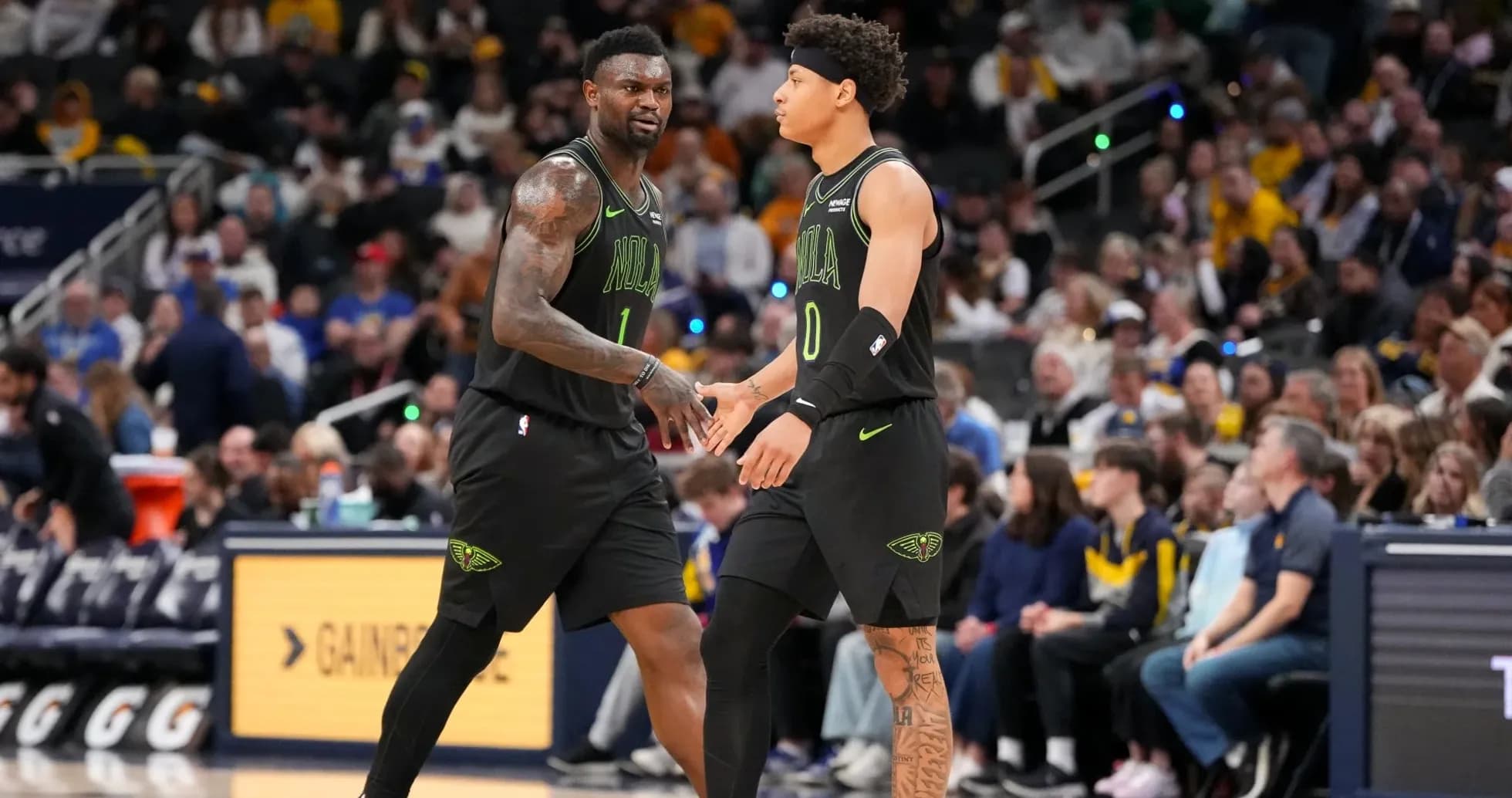
Trey Murphy’s shooting and versatility still matter. Zion Williamson’s health still defines the ceiling. Dejounte Murray, now sharing a backcourt with the newly acquired Mathurin, remains the steady hand and late-game decision-maker. If the group stalls again, Murray’s name will be all over trade-deadline conversations. That’s the reality of a guard in his prime on a team that can’t decide if it’s building or competing.
Herbert Jones at the crossroads
Every team searching for an identity needs a hinge player. For the Pelicans, that’s Herbert Jones.
A few seasons ago, Jones looked like one of the league’s most intriguing defensive wings. Long, sharp, disruptive. He guarded up and down the positional spectrum, bothered stars, and anchored schemes. The league noticed: First Team All-Defense in 2024, and a key figure in New Orleans’ brief upswing.
Then the growth stalled. The impact faded. The regression was subtle at first, then undeniable.
Now he’s 28. This is his prime, not a warm-up act. If there’s going to be a resurgence, it has to be now. This season will say a lot about his value, not just to the Pelicans but across the league.
The to-do list is clear. His 3-point shooting has dipped to 31% over the last two seasons, a number that shrinks the floor and limits his offensive value. He needs that shot back. On the other end, he wants his name mentioned again with the best defenders in the game, not as a “remember when” story.
If Jones sharpens both edges of his game — the perimeter shot and the defensive edge — New Orleans suddenly looks a lot more functional. If he doesn’t, the front office has a difficult decision to make.
A paint-heavy attack with mixed results
One number defines last season’s offense: 58%.
No team in the league took a higher percentage of its shots in the paint. The Pelicans lived at the rim, attacking the interior possession after possession. In theory, that should be a high-efficiency diet.
In practice, it wasn’t.
Zion did his part. He ranked third in the league with 791 field goal attempts in the paint and converted 60.3% of them — better than the league average of 57.8% and his best mark in three years. When he got there, he finished.
The rest of the roster dragged the numbers down. As a team, New Orleans shot just 55.4% in the paint, the second-worst mark in the league. Three Pelicans — Jones, Micah Peavy and Jordan Poole — were among the 41 players who took at least 100 shots in the paint and still finished below 50%.
That’s a brutal combination: heavy volume in the paint without the efficiency to justify it.
Mathurin, the marquee backcourt addition, doesn’t completely solve that issue. His career mark in the paint sits at 51.5%, hardly elite. But he brings something this offense badly needs: free throws. His knack for getting to the line can smooth out some of those empty possessions and lift the team’s overall efficiency, even if he’s not an automatic finisher inside.
A schedule that asks early questions
The Pelicans won’t have to wait long to see where they stand.
On Oct. 21, they open against the Pacers, a game that doubles as an early referendum on their direction. It’s Mathurin’s first look at his former team and a backcourt test for Murray against Tyrese Haliburton. Styles will clash, and New Orleans will get a quick sense of how its perimeter group stacks up.
On Nov. 6, the Timberwolves come to town, bringing a different kind of storyline. Zion and Anthony Edwards entered the league as No. 1 overall picks, but their paths have veered sharply. Edwards has surged into superstardom and deep playoff runs. Zion is still fighting to stay on the floor consistently. The contrast will be impossible to ignore.
Two weeks later, on Nov. 18, the Pelicans hit a three-game stretch against the Pistons, Thunder and Spurs. It’s a clean early-season measuring stick against other young, developing cores. Survive that run with purpose and the belief grows. Stumble, and the questions get louder.
On Nov. 29, they see the Trail Blazers and another draft ghost: Ja Morant. The 2019 Draft’s 1-2 punch has yet to fully deliver on the hype, each for very different reasons. Both will walk into that game knowing the expectations that followed their selection haven’t disappeared.
Then, on Feb. 2, comes a different kind of reunion. Jamahl Mosley returns to Orlando, where he guided the Magic to three straight playoff appearances and built a rugged, disciplined defense around Franz Wagner and Paolo Banchero. It’s the kind of culture New Orleans now wants him to recreate.
Mosley’s mandate: change the culture
The most important addition in New Orleans doesn’t wear a jersey.
Mosley arrives with a clear brief: guide and harden a young roster that has spent too long drifting. In Orlando, he took a raw group and turned it into a playoff regular, with a defensive identity that traveled every night. The Magic became a team nobody enjoyed facing.
He inherits a Pelicans squad that has sat in the bottom 10 defensively in each of the last two seasons. That has to change if this project is going anywhere.
This hire will define Joe Dumars’ tenure in New Orleans. The president of basketball operations isn’t just picking a coach; he’s choosing the voice that will shape Fears, Queen, Zion, Mathurin, and the rest of the core.
If Mosley connects — if his defensive standards stick, if his player development track record translates — the front office can finally shift its focus to adding complementary talent around a real nucleus. If he doesn’t, the Pelicans risk another year lost in the middle: not bad enough to bottom out, not good enough to matter.
The roster is set. The coach is in place. The paint is crowded, the margin for error is thin, and the clock on this core is ticking.
How long can New Orleans afford to bet on potential before the league moves on?