Pacific Division's New Era: Who Will Rise After LeBron?
The Pacific Division has lived in LeBron James’ shadow for years. That ends now.
With LeBron gone from Los Angeles and the balance of power wobbling, the division feels wide open in a way it hasn’t for more than a decade. Four teams can talk themselves into a playoff run. One is still trying to figure out what it wants to be. And lurking over all of it is one simple question: whose era is this now?
Golden State Warriors: One More Push with Curry
Golden State just lived through the cost of fragility. Jimmy Butler’s season-ending injury ripped the spine out of their campaign, and a 37-45 finish with only a play-in spot to show for it underlined how thin the margin has become around Stephen Curry.
The Warriors didn’t respond with a splashy veteran haul. They couldn’t. The cap sheet and the market closed that door. So they turned to something they haven’t always trusted in the Curry era: youth.
Yaxel Lendeborg is the bet.
The 23-year-old forward arrives with a college title on his résumé from Michigan and a reputation as a live-wire competitor. He’s a rookie, but not a wide-eyed one, and Golden State badly needs his legs, his energy, and his edge. In a quiet offseason, he’s as close to a headline move as they made.
Georges Niang and Brandon Williams also join the rotation, while Seth Curry, Quinten Post and Pat Spencer move on. Those are tweaks, not tremors. The real swing lies in Butler’s knee and Curry’s brilliance.
If Butler returns from surgery anywhere near his old level and Curry delivers another All-NBA caliber season, Golden State is back in the postseason picture. Not guaranteed contention. Not a coronation. But in the mix, which at this stage of Curry’s career is all the Warriors can realistically demand before the games start.
They’re trying to squeeze one more serious run out of a core that has already given them everything. That’s never easy. It might still be worth it.
LA Clippers: Life After Kawhi
The Clippers have talked about “the next era” for years. This summer, they finally forced it into existence.
Kawhi Leonard is gone, shipped to the Raptors. A franchise that once built its identity around his quiet dominance now has to learn how to win without that safety net. Last season, with Leonard healthier than he’d been in a long time, they scraped to 42-40 and into the play-in. Now they’re asking a different kind of question: what does a Clippers team built for the long haul look like?
Start with Keaton Wagler.
The first-round pick out of Illinois arrives as a dynamic combo guard whose college game looked ready-made for the NBA. That’s the theory. The league has humbled plenty of gifted guards before him. But the Clippers are handing him the keys to at least part of their future and seeing how far his skill and swagger can carry them.
They didn’t stop there. Brandon Ingram, Rui Hachimura and Max Strus arrive as proven rotation pieces, Johni Broome, Nick Martinelli and Baba Miller add size and versatility, and Gradey Dick brings more shooting. Out go Nicolas Batum, Bogdan Bogdanović, John Collins, Bennedict Mathurin and, of course, Leonard.
The West remains brutal. A half-dozen teams look better on paper. The Clippers know that. Their path back to the playoffs is narrow, but not blocked.
The Garland–Wagler pairing in the backcourt will define this season. Darius Garland finally gets a full year in Clippers colors to show what he can be as the lead guard, while Wagler’s development will signal how quickly this reboot can move. If they click, the Clippers won’t just be chasing the eighth seed; they’ll be laying the foundation for something that lasts longer than any one superstar’s health.
For once, the story in Clipperland isn’t about who just left. It’s about who might grow into the spotlight.
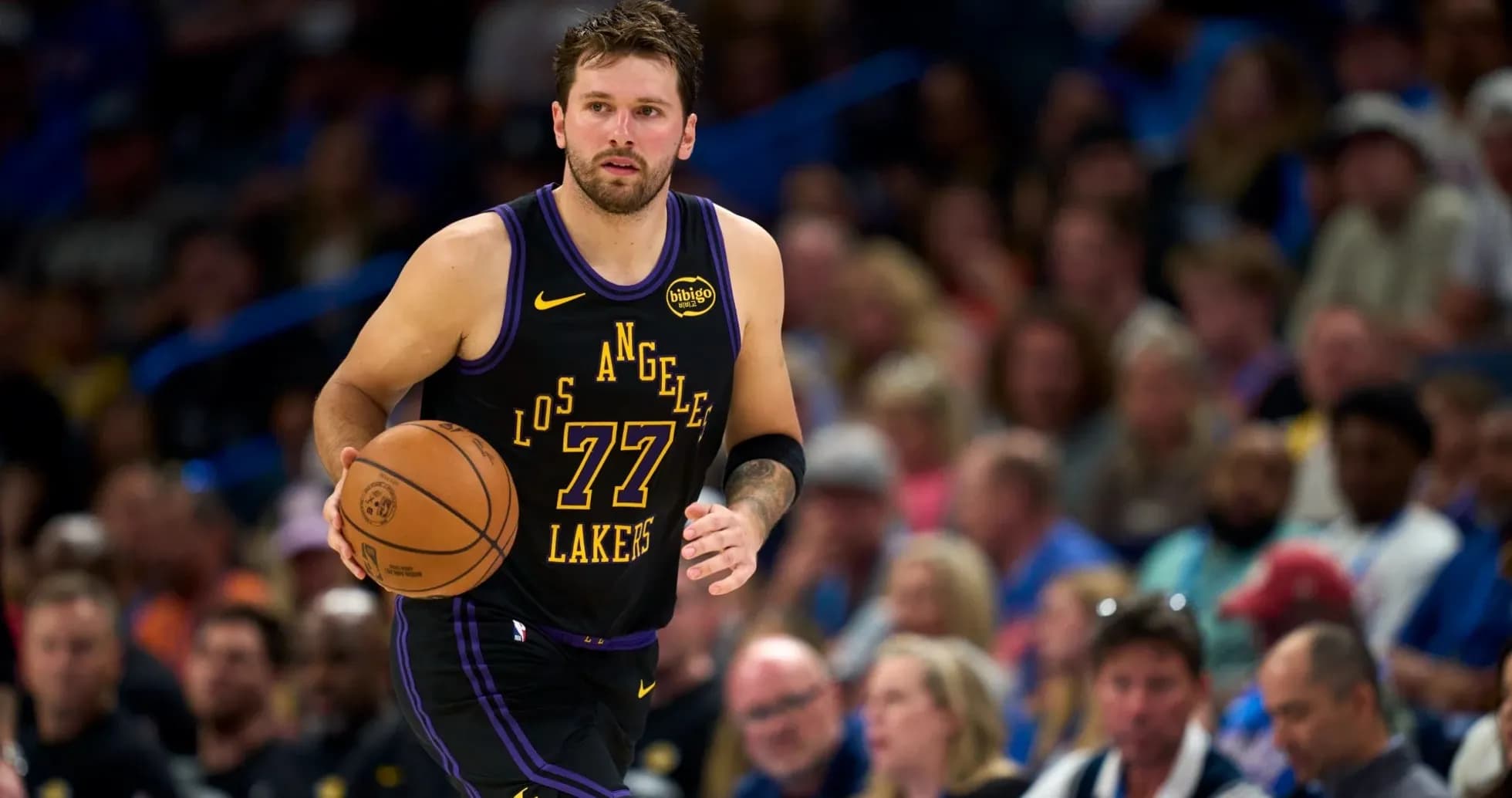
Los Angeles Lakers: Luka’s Team, At Last
LeBron’s departure from the Lakers is more than a roster move. It’s a cultural shift.
Los Angeles survived heavy injury blows to Luka Dončić and Austin Reaves last season and still went 53-29, pushing through to the second round. That resilience bought the front office time and credibility. Now the handover everyone anticipated finally arrives: this is Luka’s franchise, fully and officially.
The Lakers didn’t skimp on the supporting cast.
They retooled heavily: Cameron Carr, Quentin Grimes, Jaden Hardy, Walker Kessler, Kevon Looney, Sandro Mamukelashvili, Collin Sexton, Matisse Thybulle and Ziaire Williams all walk through the door. Deandre Ayton, Rui Hachimura, Jaxson Hayes, Luke Kennard, Maxi Kleber, Marcus Smart, Nick Smith Jr. and, most notably, LeBron, walk out.
The spine of the plan is clear. Reaves and Kessler are the co-stars Luka needs.
Both secured major extensions in the summer, a statement of faith and responsibility. Kessler arrives via sign-and-trade from Utah with the profile of a classic Luka big: soft hands on the catch, reliable around the rim, and a firm presence as a shot-blocker and rebounder. If he stays healthy, he gives Dončić the vertical threat and defensive anchor this roster has lacked in key moments.
Reaves remains the connector, the secondary playmaker who can ease Luka’s burden and punish defenses that overload the star.
Around them, Sexton’s scoring punch, Thybulle’s defense and the depth pieces on the wing give the Lakers options they didn’t always have in the LeBron years. It’s not a superteam. It’s a modern contender’s blueprint built around one transcendent engine.
Luka alone guarantees relevance, TV slots, and a puncher’s chance in any series. The question is whether this new cast can keep the Lakers in the thick of the West race from October through May. The transition is over. The expectations are not.
Phoenix Suns: Surprise No More
Phoenix stopped being a curiosity last season and became a problem.
Without Kevin Durant and Bradley Beal for stretches, the Suns still surged to 45-37 and grabbed a playoff berth that few projected. That kind of overachievement can be a fluke. This front office is working hard to make sure it isn’t.
GM Brian Gregory and coach Jordan Ott, both products of last year’s sweeping housecleaning, doubled down on the group that overperformed. Dillon Brooks, Collin Gillespie, Mark Williams and Jordan Goodwin all earned contract extensions after career seasons. Those deals lock in a core that can grow alongside Devin Booker during the remainder of his prime.
Then Phoenix added firepower.
Miles Bridges arrives as a proven 20-point scorer, the kind of wing who can create his own shot and ease the scoring burden on Booker. Luke Kennard steps in as the new designated marksman, replacing Grayson Allen and keeping the floor spaced with his elite shooting. Koa Peat joins the front line, bringing muscle and the kind of physicality that tends to translate early, even for a rookie.
Out go Allen, Amir Coffey and Royce O’Neale, but the identity of this team feels sharper now: tough, deep, and unapologetically competitive.
The Suns are no longer sneaking up on anyone. They’ve built a roster that expects to be in the playoff picture every year, not just when the breaks go their way. The transformation started quickly. It doesn’t look like it’s slowing down.
Sacramento Kings: Waiting on a Direction
Sacramento’s season never really got off the ground.
A 22-60 record and an early start to the offseason told the story of a team stuck between timelines, searching for a new voice and a new identity. The assumption was clear: big changes were coming.
They didn’t.
The Kings largely stood pat, choosing patience over panic. Darius Acuff Jr., Alex Karaban and Emanuel Sharp arrive as fresh backcourt and wing options, while Ben Simmons joins as the lone big-name addition. Devin Carter, DeMar DeRozan, Drew Eubanks, Killian Hayes, Doug McDermott and Russell Westbrook move on.
The most striking shift is DeRozan’s exit. His contract wasn’t extended, closing a chapter without immediately opening a new one.
So Sacramento leans again on Zach LaVine. He remains the primary scorer, the man expected to carry the offensive load, and he does it with the clock ticking: this is the final year of his deal. De’Andre Hunter, another expiring piece and a solid two-way forward after his stint in Cleveland, faces the same uncertainty.
Hovering over everything is Domantas Sabonis. How the Kings handle the futures of LaVine and Sabonis will shape the franchise for years. Trade them and reset? Re-sign and double down? For now, the front office is content to wait, to see how this group responds to last season’s embarrassment before detonating the core.
It’s a risky kind of patience in a division that’s speeding up.
LeBron is gone. The old order is cracking. Luka’s Lakers, a retooled Clippers backcourt, a stubborn Warriors core, a rising Suns project and an undecided Kings front office now share the same stretch of the West.
Someone in this division is about to seize that vacuum and define the next few years. Who has the nerve to do it?