Pablo Torre's Investigation Exposes NBA's Clipper Scandal
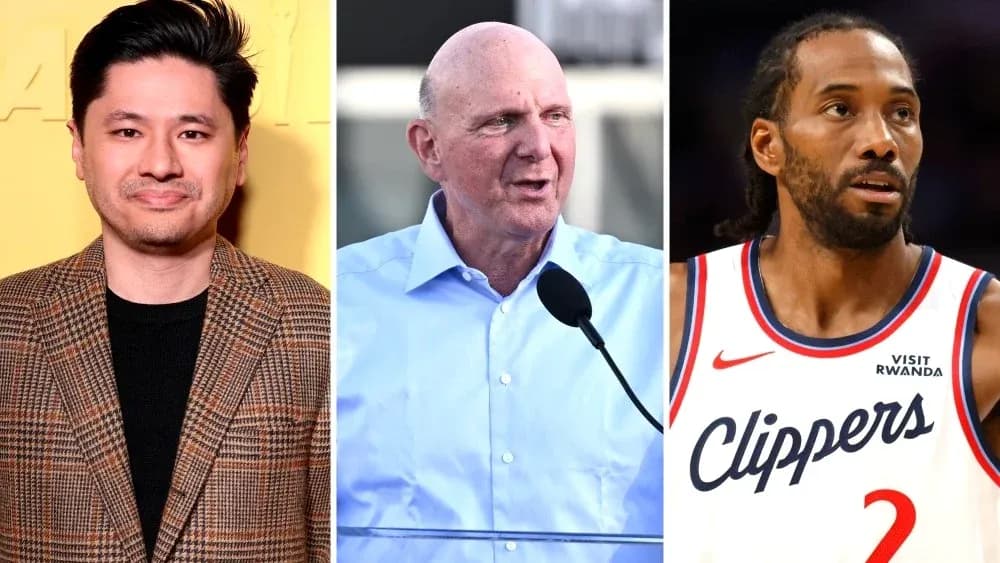
Pablo Torre didn’t wait for the NBA to validate his work. He couldn’t. Not when his reporting had already put him at odds with billionaires, former colleagues, and a powerful franchise that insisted it had done nothing wrong.
But when the league finally dropped the hammer on the Los Angeles Clippers and Kawhi Leonard, the plot of “Pablo Torre Finds Out” took a sharp turn. The monthslong investigation that many tried to dismiss suddenly had the full weight of an NBA ruling behind its core findings.
A $30 million fine. Five first-round draft picks stripped. A year-long suspension for Steve Ballmer. The harshest team punishment in league history.
The podcast host who’d been painted as a clout-chasing agitator now had the league’s own language echoing his work.
The league catches up to the podcast
The NBA hired the law firm Wachtell Lipton to run an independent investigation into allegations that the Clippers had worked around the salary cap by helping secure off-court money for Leonard. Torre’s podcast had already laid out the scaffolding: a $28 million no-show endorsement deal from Aspiration, whose co-founder is now serving 14 years in prison for defrauding investors, Ballmer among them.
The league’s findings were blunt. The Clippers, it said, had “committed multiple significant rules violations.” Leonard, through his uncle Dennis Robertson, had pushed the organization “to assist him in obtaining off-court income opportunities, successfully obtaining those opportunities, and failing to reimburse payments by the Clippers for personal expenses.”
Leonard’s public response tried to strike a careful tone. “I accept full responsibility for the lapses in judgment by people within my inner circle,” he said in a statement, while insisting that “integrity and respect for this game are fundamental to who I am.”
NBA commissioner Adam Silver went much harder. He called the violations “flagrant” and ripped the Clippers’ “institutional and leadership failures.”
Ballmer fired back, accusing the league of running “a heavily biased investigation” and vowing to explore “every legal remedy” against what he called a “gross injustice.”
For Torre, watching this play out was complicated.
On one hand, the league had essentially corroborated the backbone of his reporting. On the other, he refuses to treat an outside entity’s ruling as the final stamp of truth.
“Journalism does not exist to be validated by the entity it investigates or by the awards it receives,” he says. He’s grateful for both, but wary of the trap: that people only trust the work once the powerful figure under scrutiny is officially punished.
The irony is hard to miss. His series won a Pulitzer Prize, yet a large slice of the public instinctively sided with the billionaire owner and the superstar forward.
When the machine turned on him
Torre’s investigation didn’t just rattle the Clippers. It exposed the fault lines in how major media outlets handle stories that threaten power.
On Aug. 17, ESPN — Torre’s former employer — published a piece under the headline: “Sources: NBA has no evidence Ballmer funneled money to Leonard via sponsors.” The story landed like a counterpunch, framing the narrative in a way that seemed to undercut the podcast that had driven the conversation for months.
Torre watched it unfold from the outside.
“My experience with that report was… not great,” he says. He was struck not only by the framing, but by the process. ESPN never called him before publishing. Afterward, when he provided a statement — “We stand by our reporting. We look forward to the NBA’s ruling. And our investigation continues.” — he was told it would be included.
It wasn’t.
His own reporting pointed to a familiar playbook. According to Torre, the Clippers and a crisis PR manager hired by Ballmer were shopping around a version of events that would best protect the owner. The ESPN story, he notes, closely resembled the Clippers’ own press release, released almost at the same time — a version the NBA itself would go on to refute.
The question that lingers for him is not where that framing came from. That part, he says, is “not exactly a mystery.” What bothers him is why a major outlet, fully aware of his yearlong, document-backed investigation, decided that the Clippers’ preferred storyline felt more credible than the work of a former colleague whose reporting was already public, sourced, and detailed.
If ESPN’s piece felt like institutional coldness, what came from Puck felt more personal.
Character on trial
Puck’s founding partner Peter Hamby used his podcast to accuse Torre of chasing “clout and clicks and building your audience.” It was not a critique of method or evidence. It was a shot at motive and character.
To Torre, it was obvious the critics hadn’t really engaged with the material.
“This was the work of people who had seemingly no real interest in even consuming the work I’d put out but felt very comfortable attacking my personal standards and credibility as if they had,” he says.
He found it “darkly poetic” to be lectured on journalistic standards by a publication that, in his view, didn’t seem especially interested in following them in this instance. Whether it was incompetence or malice, he’s no longer sure the distinction matters.
“It felt strangely personal,” he says. “It did.”
The backlash wasn’t universal. Mark Cuban and Ty Lawson, who had publicly criticized him, later apologized. Torre appreciated both gestures — and the way they arrived.
But by then, the pattern was clear. Powerful interests had mobilized. Media allies had emerged. And the reporter at the center of it all had become part of the story.
A slap on the wrist, by design
The NBA’s punishment hit the Clippers like a wrecking ball. The treatment of Leonard, though, told a different story.
A $700,000 fine. No suspension. No ban. A fraction of the tens of millions he made during the period in question. And, crucially, the ability to move on — reportedly to the Toronto Raptors — with his record intact enough to keep playing.
To many, it looked like a star-friendly double standard. Torre sees something more calculated.
According to his reporting, the NBA made a strategic choice. By giving Leonard what he calls “a slap on the wrist,” the league secured an agreement from both the players’ union and Leonard to settle. That settlement, Torre says, removed one of Ballmer’s biggest weapons: arbitration.
Without that avenue, the Clippers owner, now staring at historic penalties, had fewer options within the league’s own system. His remaining move was to head to court — to sue the NBA, the commissioner, the law firm Wachtell Lipton, Torre himself, and anyone else his legal team decides to target.
To Torre, that’s a legal strategy, not a reflection of who bears how much blame.
“The league made a choice that is not the same thing as telling you what really happened,” he says. The evidence he collected — and that the NBA cited — painted Leonard as fully aware of what his uncle was doing on his behalf.
Leonard’s statement tries to thread a narrow needle. He claims “integrity and respect for this game” while accepting “full responsibility for the lapses in judgment by people within my inner circle,” as if those lapses happened at a distance from him.
Torre doesn’t buy that distance.
“Kawhi Leonard is an adult,” he says. A 35-year-old star who sat in meetings with teams, knew what his uncle was asking for, and signed documents that explicitly attested to his knowledge and consent. Torre says he has those documents. Leonard’s claim of being effectively unaware doesn’t square with the paper trail he’s gathered.
Yet the outcome works for Leonard. He pays the fine, issues a carefully worded apology, and moves on. “I’m out, this wasn’t great, I regret some things, see you in Toronto,” as Torre puts it.
The whole saga, in his telling, boils down to a simple dynamic: Steve Ballmer wanted Leonard so badly that he never fully grasped how exposed he’d become to a player whose interests could diverge sharply from his own.
What comes next
Amid all of this, Torre has been careful to swat away stray rumors. He’s not secretly circling the New York Knicks or Jalen Brunson, he says. “They are not a target. At the moment I’m absolutely not focusing on the Knicks or Jalen Brunson.”
His attention is already locked on another powerful figure in Los Angeles.
On his podcast, Torre is about to launch part one of a new investigation into Mark Walter, the Los Angeles Dodgers owner who is under federal scrutiny over $21 billion in undisclosed loans involving two insurance companies he owns. Walter recently sold the Lakers to Bob Iger and Joshua Kushner for $12.5 billion, a transaction that sits on the edge of this next story.
The new series, Torre says, again involves federal agencies, the public interest, Hall of Fame basketball players, and both a Los Angeles basketball team and a Los Angeles baseball team. The challenge is familiar: take something that looks impossibly complex and show people that it’s not only simpler than it appears, but directly relevant to their lives as fans and citizens.
“This is part one,” he says of the Walter investigation. The Lakers sale is one entry point, not the entire story. His team has spent months on it, accelerating their work in recent weeks.
The Clippers case showed what happens when journalism collides with money, power, and a league desperate to control its own narrative. The next investigation promises more of the same pressure, just aimed at a different corner of the sports empire.
The question now is not whether Pablo Torre feels vindicated. It’s who, exactly, wants to be on the other side of his next story.