Opals' World Cup Journey Ends with Injury and Elimination
The Opals walked into their quarterfinal with Spain already carrying the weight of a bruising tournament. Half an hour before tip-off, that burden became crushing.
Ezi Magbegor, the captain and cornerstone of Australia’s campaign, had torn her ACL. The news came not from team doctors in Sydney, but from her WNBA franchise, the Seattle Storm, who confirmed the diagnosis just minutes before the Opals took the floor.
By the end of the night, Australia’s World Cup was over as well.
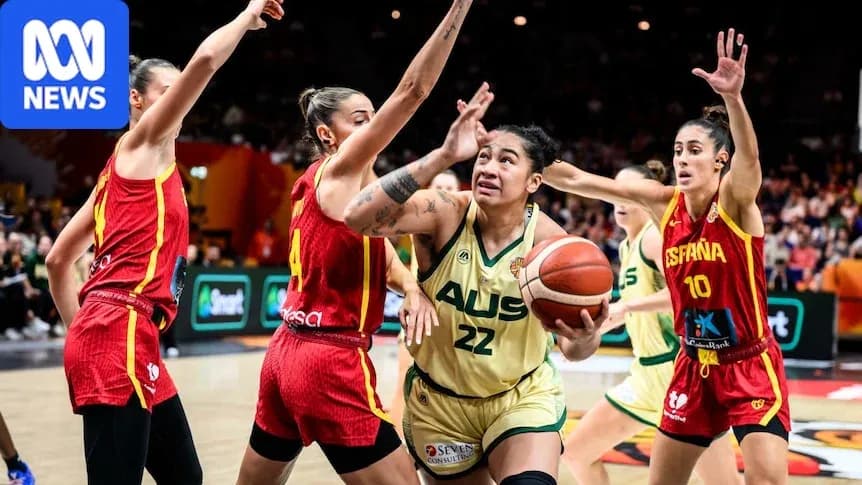
Spain ruthlessly exposed a depleted and shaken side, surging to an 89–66 win and sending the Opals out in the last eight. The margin – 23 points – told the story. So did the faces on the Australian bench.
A cruel twist for Magbegor
Magbegor’s injury cut particularly deep because of what came before it.
The 25-year-old had only just fought her way back from a partial Achilles tear suffered in March, returning to the court in early July. This World Cup was meant to be a marker of her resurgence, a reminder of why she is one of the most influential bigs in the women’s game.
Instead, it became another chapter in a brutal run of luck.
She went down early in Australia’s qualification final win over Italy after a knock to her right knee. The hope, initially, was that it might be minor. The Storm’s announcement before the Spain game ended that optimism in a sentence.
"It makes me emotional when I see anyone go down," coach Sandy Brondello said after the loss. "But Ezi's come back from an injury and it's just another injury. [It's] just really unfortunate. She's a key part of what we want to do. It sucks, but that's sport isn't it?
"She's got to have a great recovery and she'll get back, I don't have a doubt about that. Just disappointed for Ezi that she's going through another rehabilitation."
The Opals had to absorb that blow, then try to take down one of the best teams in the world with their leader on the sideline.
They never really recovered.
A roster stripped bare
Magbegor’s absence added to a list that already read like the spine of Brondello’s plans.
- Alanna Smith, so often the fulcrum at both ends of the floor, had suffered a lower-leg injury in the opening game of the tournament.
- Jade Melbourne, the energetic young guard, managed only three minutes against Italy and could not play at all in the quarterfinal.
- Sami Whitcomb, one of the most experienced backcourt options available to Australia, never even made it to tip-off for this World Cup, ruled out beforehand with injury.
- Cayla George, another veteran presence, did not play due to pregnancy.
By the time Australia lined up against Spain, the Opals looked like a team held together by tape and resolve.
Steph Talbot, one of the few remaining senior figures, admitted the reality hit them the moment they stepped onto the floor.
"It's very weird. It was very quiet, very unusual. We were all looking around like, 'Is this it?'" she said. "But a job's a job and we fought hard to the end. I'm really proud of the effort they put in. It's definitely a different experience."
Only eight teammates beside her. A World Cup quarterfinal. A powerhouse opponent. No margin for error.
Spain pounce as mistakes mount
Spain did not show mercy.
Australia coughed up 23 turnovers, many of them unforced, many of them punished. The Opals shot just 40 per cent from the field and never found a rhythm against a Spanish side that smelled vulnerability and attacked it.
Ally Wilson battled to keep Australia in the contest, finishing as the team’s top scorer with 13 points, but the offensive load had to be spread among players who, in a full-strength squad, might have been rotation options rather than primary weapons.
The contrast to the previous outing was stark.
Against Italy, the Opals had almost thrown away a 20-point three-quarter-time lead, only to escape thanks to a stunning 30-point eruption from 21-year-old Izzy Borlase. That performance hinted at a new generation ready to step up.
Against Spain, the missing experience, size, and composure told. There was no single scoring explosion to drag them out of trouble this time. Just long, punishing stretches where Spain controlled the tempo and Australia chased shadows.
Pain now, lessons for later
For Brondello, the tournament will be remembered as much for what it revealed as for how it ended.
Seven players in this squad were appearing at their first major international tournament. Thrown into the fire, they were forced to learn on the job, often without the veteran scaffolding that normally protects a young group at this level.
Veteran voices like Talbot could feel that rawness on court.
The Opals’ campaign never had the luxury of continuity. From Smith’s early injury to Melbourne’s illness, from Whitcomb’s absence to George’s pregnancy and finally Magbegor’s ACL tear, Australia spent the World Cup improvising line-ups and reworking roles on the fly.
Brondello, though, sees value in the struggle. This is not a group built solely for now. The 2028 Los Angeles Olympics already loom on the horizon, and many of the players blooded here will be in their prime by then.
The World Cup ended with a heavy defeat and a devastating injury to the captain. The real test is what this bruised, accelerated education looks like when the Opals get another shot on the biggest stage.