
Nottingham Forest's Frustrating Draw at Ipswich: A Season of Missed Chances
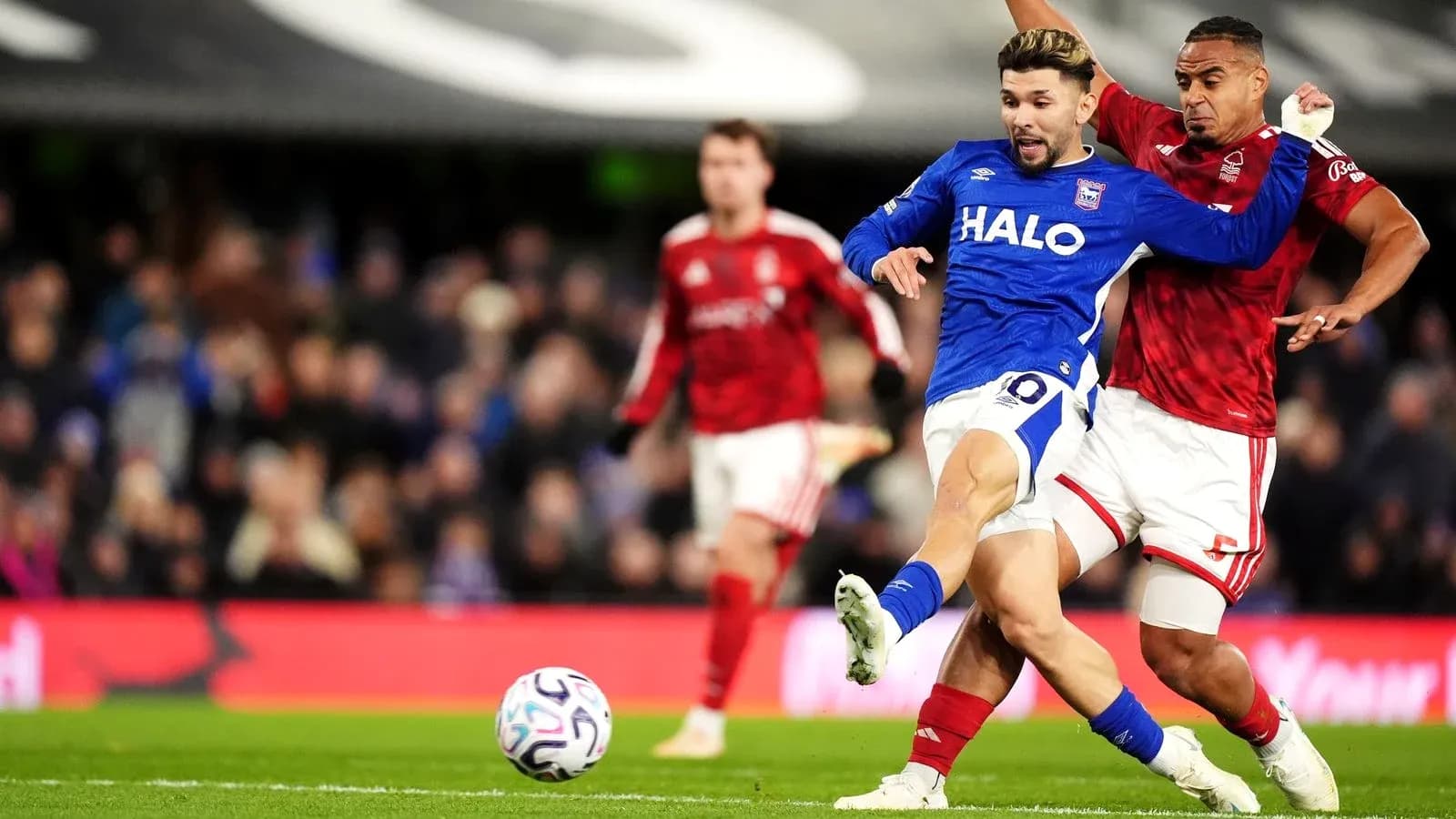
Nottingham Forest left Portman Road shaking their heads again, another night of dominance reduced to a single point and a familiar question: how on earth did they not win?
They pinned Ipswich back, racked up 17 shots to seven, piled up 2.31 expected goals, and still walked away with only Neco Williams’ first-half strike and a 1-1 draw to show for it. The story of their season, written all over another frustrating evening.
Forest on the front foot, Ipswich hanging on
With the wind literally at their backs, Forest started like a side determined to blow away the narrative that they cannot finish. Within six minutes, Jair Cunha had already stung the palms of Christian Walton, a warning of what was to come.
The pressure built quickly. Ipswich’s back line dropped, the crowd grew restless, and Forest moved the ball with a confidence that mocked their league position. The breakthrough felt inevitable, and on 13 minutes it arrived.
Daniel Muñoz bent in a superb cross from the right and Williams, ghosting in at the far post, swept it home. A full-back’s finish, calm and precise. Forest were ahead and fully deserved it.
The visitors could have buried the game before half-time. A scramble on 33 minutes saw Walton get just enough on a close-range effort, with Leif Davis and Morgan Gibbs-White combining on the line to hack the ball clear and somehow deny Forest a second. It was the first of several moments that underlined Ipswich’s sheer desperation in defence.
Then, out of nowhere, Forest undid themselves.
Milenkovic error, Enciso punishment
On 41 minutes, with the game seemingly under control, Nikola Milenkovic tried to roll a routine pass back to Matz Sels. He misjudged it horribly. Julio Enciso pounced, surged onto the loose ball and slid it past Sels with icy composure.
Ipswich, second-best in almost every department, were level against the run of play. Forest’s dominance had been wiped out by a single lapse.
The equaliser rattled Forest but it did not change the pattern of the match. Oliver Glasner’s side still carried the greater threat, still found spaces in the Ipswich half, still looked like the only team capable of stitching together flowing moves. What they could not do, once again, was finish.
The Diop decision that lit the touchpaper
Early in the second half, the contest veered into controversy. James McAtee burst through, Issa Diop came across, and the Forest midfielder was wiped out on the edge of the box. Referee Thomas Bramall initially allowed play to continue, then was called to the pitchside monitor by VAR to review a possible denial of an obvious goal-scoring opportunity.
The stadium held its breath. Forest wanted red. Ipswich prayed for yellow.
Bramall’s verdict: foul by Ipswich No.6, direct free-kick, yellow card. The explanation, broadcast over the tannoy, hinged on McAtee’s touch taking the ball to the right of goal rather than directly through on it.
Forest were furious. Glasner did not hide his view afterwards, saying: “It felt during the game it’s a clear red card. I think it was the wrong decision.” Former Forest boss Steve Cooper, watching on Sky Sports, called it “as clear a free-kick as probably there was in the whole game” and admitted the red card call would always divide opinion.
What was not in doubt: Forest felt a major decision had gone against them at a time when they were in complete control.
Davis the saviour, Forest the wasters
The sense of injustice only sharpened their edge. Glasner’s side came again, wave after wave, pinning Ipswich back in their own box. Davis, though, refused to yield.
On 64 minutes, Dan Ndoye looked certain to restore Forest’s lead, only for the Ipswich left-back to appear again on the line and clear. It was his second goal-saving intervention of the night, a snapshot of the defensive resolve that kept Ipswich alive.
At the other end, Forest’s forwards kept letting them off.
Liam Delap, facing his former club, endured the kind of night that haunts strikers. His big moment came on 74 minutes when Abdoul Ouattara’s miscued clearance looped invitingly into the box. Delap rose, unmarked, only to send his header over the bar. Soon after, he unleashed a 30-yard thunderbolt that flashed just wide. Close. Not close enough.
Callum Hudson-Odoi was no more clinical. Late on, with tired legs and tired minds all around him, he found space and drilled wide when the far corner beckoned. It summed Forest up: all the approach play, none of the ruthlessness.
To make matters worse, Williams – their goalscorer and one of their brightest performers – departed with a worrying arm injury, adding another layer of concern to a night already steeped in frustration.
Ipswich, who had offered little as an attacking force after Enciso’s equaliser, almost stole it at the death. Substitute Jack Clarke found a sight of goal in stoppage time but lashed his effort off target. It was their only real look in the second half. It was enough to remind Forest that dominance means nothing without a finish.
Numbers that tell a brutal story
The data behind Forest’s season is starting to feel like a running joke with a cruel punchline. No team in the Premier League has underperformed their expected goals more. They have scored just six times from 13.4 xG. That gap is not a blip; it is a chasm.
The consequence is stark: only one win from eight games, despite a string of performances like this one, where control and creativity never translate into the scoreline they deserve.
Gibbs-White, speaking afterwards, sounded as baffled as anyone: Forest work on finishing in training, he insisted, and the quality is there. Glasner struck a similar tone, proud of the display, convinced the goals will come, urging patience while the numbers suggest a correction must arrive at some point.
For now, though, the table does not care about xG. It only cares about goals.
Ipswich’s grind, Forest’s riddle
Gary O’Neil will not apologise for the point. Ipswich now have as many points at Portman Road this season as they managed in the whole of their previous Premier League campaign there in 2024/25: seven. That alone tells you how far they have come.
He knows survival will not be straightforward, even with this improved start. Nights like this, where his side are outplayed but not beaten, might prove just as important as the days when everything clicks.
Forest, by contrast, are left wrestling with a mystery that deepens with every game. The patterns are right. The spirit is there. The chances keep coming.
At some stage, though, patience runs out. When a team creates this much and still cannot win, how long before the finishing problem stops being a quirk of statistics and becomes a defining flaw in their season?





