Northwest Division Preview: Teams to Watch in the NBA
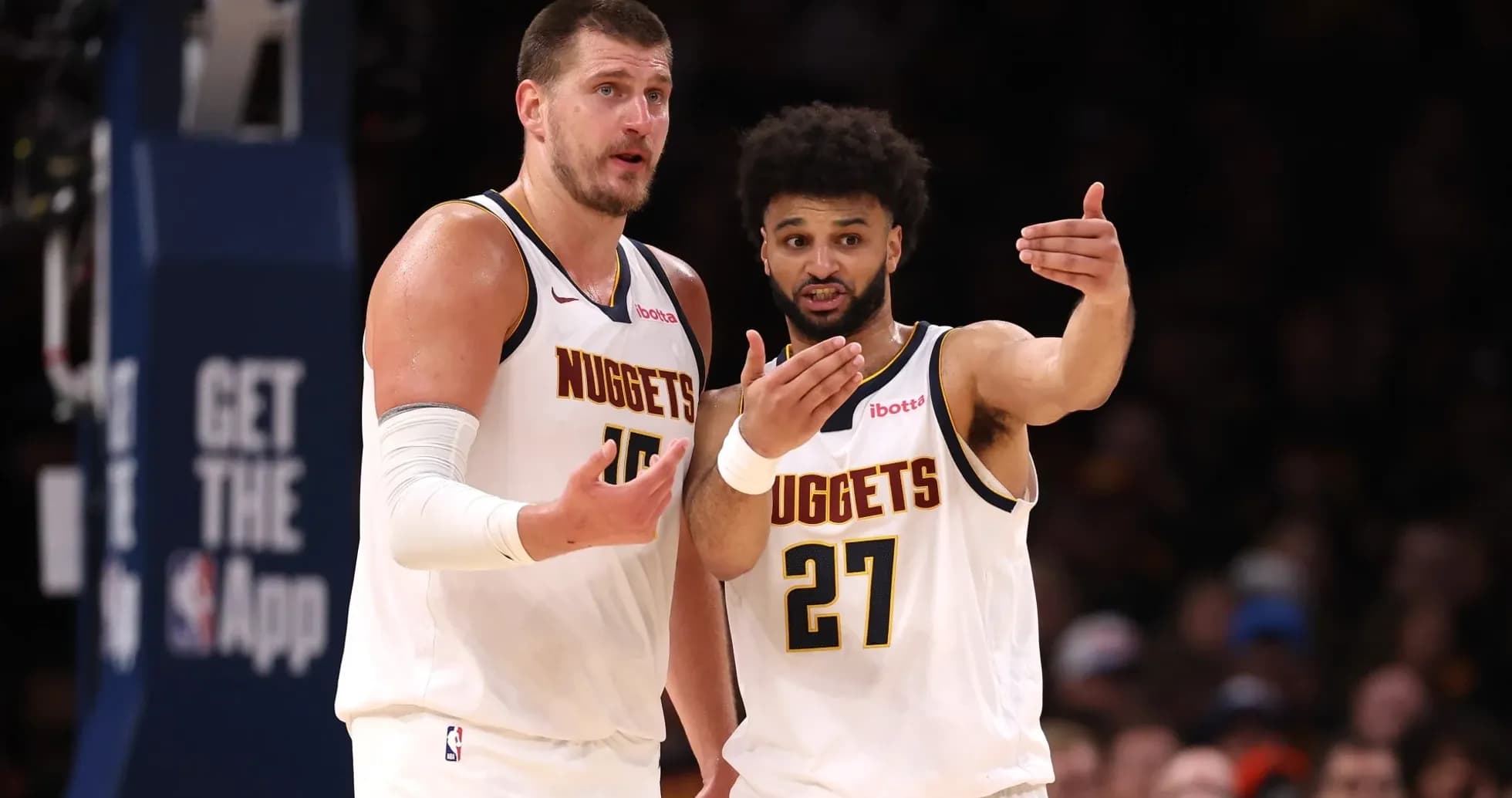
The Northwest Division used to be a scheduling line on the calendar. This season, it looks like a gauntlet.
Minnesota just dropped LaMelo Ball next to Anthony Edwards. Portland is rolling out Ja Morant and a returning Damian Lillard. Oklahoma City is defending a 64-win season with an MVP in his prime. Denver still has Nikola Jokić. Utah finally believes it has a future star.
Top to bottom, there’s nowhere to hide.
Denver Nuggets: Still Living in Jokić’s Window
The Nuggets just survived a season that would have buckled most contenders. Aaron Gordon played only 36 games. Nikola Jokić missed nearly a month. Denver still went 54-28, then crashed out in the first round.
The mission hasn’t changed. Squeeze every last ounce out of Jokić’s MVP years.
It’s the same tightrope the Warriors walked with Stephen Curry and the Bucks walked with Giannis Antetokounmpo. The difference? Denver’s core is intact. Jokić still has Jamal Murray beside him and, if his body finally cooperates, Gordon as the third pillar.
That trio alone keeps the Nuggets on a 50-win trajectory.
The question is what comes around them. Denver reshaped the edges of the roster: Marvin Bagley III, Bruce Brown, Trevon Brazile, Alpha Diallo and Bryce Hopkins arrive; Tim Hardaway Jr., Jalen Pickett, Jonas Valančiūnas and Peyton Watson exit, with Watson moved largely to clean up the books.
The pressure falls on the supporting cast. DeMar DeRozan, Cam Johnson, Christian Braun and Bagley have to bring scoring punch and energy in a Western Conference that just got younger, faster and bolder around them.
Jokić will set the standard, as always. Whether Denver climbs back to the top will depend on how loudly everyone else can sing in tune with him.
Minnesota Timberwolves: LaMelo Joins the Edwards Era
For two seasons, the Timberwolves lived in the West’s inner circle, reaching back-to-back Western Conference Finals. Last year, they stepped back, bowing out in the second round after a 49-33 campaign, despite another blistering year from Anthony Edwards.
So Minnesota changed the backcourt. Dramatically.
Out go Kyle Anderson, Mike Conley, Joe Ingles, Julian Phillips, Julius Randle and Naz Reid. In come LaMelo Ball, Isaiah Evans, Jonathan Kuminga, Trey Lyles and Cody Williams.
For the first time in his Minnesota tenure, Edwards has a genuine top-tier point guard beside him. No more carrying the full playmaking load while also being asked to score like a franchise savior. LaMelo changes the geometry of the floor.
He scans the court, threads passes into windows that barely exist and turns routine possessions into transition opportunities. He can be reckless. He can also be electric. And he has never shared the floor with an MVP-level force like Edwards until now.
The partnership should run both ways. Ball gets the kind of alpha scorer he’s never had. Edwards gets a creator who can unlock easier shots and punish defenses that load up on him.
Around them, the Wolves might have the most athletic group of Edwards’ time in Minnesota: Jaden McDaniels flying around the perimeter, Ayo Dosunmu and Terrence Shannon Jr. attacking in waves, Rudy Gobert still anchoring the back line.
The Wolves’ two-year conference finals streak is over. The window with this version of the roster might just be opening.
Oklahoma City Thunder: Depth Tested, Standard Unchanged
Oklahoma City carried the best record in the NBA last season at 64-18, powered by a repeat MVP campaign from Shai Gilgeous-Alexander and another deep playoff run to the Western Conference Finals.
It still ended with a thud.
Jalen Williams played only 33 games. The Thunder lost a Game 7 at home to the Spurs. One night that summed up everything that went wrong in their bid for back-to-back titles.
The offseason cost them pieces of that championship core. Lu Dort, their defensive heartbeat on the perimeter, is gone. So are Isaiah Joe and Aaron Wiggins, two guards who soaked up minutes, hit shots and gave Shai the breathing room he needed to stay fresh for May and June. Branden Carlson also departs.
OKC didn’t chase stars. It went back to its preferred lane: depth and development. Aday Mara, Otega Oweh and Bennett Stirtz arrive to refill the pipeline.
The advantage for the Thunder hasn’t changed. They come at you in waves. Ajay Mitchell and especially Jared McCain now step into the roles vacated by Joe and Wiggins, with the expectation that the system and the culture will carry them.
A healthy Williams returns. Chet Holmgren, fresh off an All-NBA season, gives them a two-way unicorn at the five. Gilgeous-Alexander remains one of the league’s most unguardable scorers.
The bar in Oklahoma City isn’t about respect anymore. It’s about rings.
Portland Trail Blazers: Dame, Ja and a New Charge
Portland wasn’t supposed to matter last season. Then Deni Avdija broke out, the Blazers scrapped their way to 42-40 and muscled into the playoffs before bowing out in the first round.
Now they’re something else entirely: dangerous.
Micah Nori steps in as a first-time head coach at a moment when the roster looks ready to jump. The Blazers have added Ja Morant, Branden Carlson, Micah Potter and Jeremy Sochan, while saying goodbye to Jerami Grant, Kris Murray, Matisse Thybulle and Blake Wesley.
The headline, though, is a familiar name.
Damian Lillard, one of the three greatest players in franchise history alongside Bill Walton and Clyde Drexler, is set to return after missing the entire season with injury. The nostalgia is obvious. The basketball question is sharper: how does Lillard mesh with Morant?
Morant arrives with something to prove after his Memphis chapter. Lillard comes back to reclaim his place in the city he defined. It’s a volatile, thrilling backcourt on paper — two All-Star guards who can tilt games on their own.
Shaedon Sharpe is still rehabbing a knee injury, but the depth around the perimeter is real: Lillard, Morant, Avdija, Jrue Holiday, Scoot Henderson and Donovan Clingan give Nori a deep, versatile nucleus.
Portland snuck into the playoffs last season. This time, if the stars stay healthy and coexist, sneaking in won’t be the expectation.
Utah Jazz: Betting the Future on Darryn Peterson
Utah spent last season where it has lived for much of the post-Donovan Mitchell, post-Rudy Gobert era: in development mode. The Jazz went 22-60, took their lumps and kept stockpiling young talent.
This summer, they might finally have found the player to build around.
Picking second overall, Utah landed Darryn Peterson, a guard whose shooting translates from deep, mid-range and at the rim. Some draft observers believe he has the quality of a No. 1 pick. If that skill set carries over to the NBA, the Jazz may have unearthed the star they’ve been chasing through a pile of draft picks.
The price of progress, though, was steep. Utah lost Walker Kessler, the seven-footer they had carefully developed into a defensive anchor with soft hands and elite instincts, sending him to the Lakers in a sign-and-trade. Hayden Gray, John Konchar, Kevin Love, Bez Mbeng and Cody Williams also depart.
To stabilize the frontcourt, the Jazz brought in Jaxson Hayes, still only 26, and Jusuf Nurkić, along with wings Josh Green and Josh Okogie. The message is clear: they’re willing to shuffle the bigs if it means getting the perimeter right.
Peterson now joins Keyonte George and Ace Bailey as the young engines expected to drive Utah forward, flanking established talents Jaren Jackson Jr. and Lauri Markkanen.
The Jazz have lived in the wilderness since dismantling their last contender. With Peterson in the fold and Kessler gone, they’ve made their choice. The future of the franchise now rests with this new core — and how quickly it can turn promise into wins in a division that suddenly refuses to wait.