Nmecha's Goal Celebration Sparks Debate on Faith and Football Culture
The gesture lasted only a few seconds.
The fallout is still rolling.
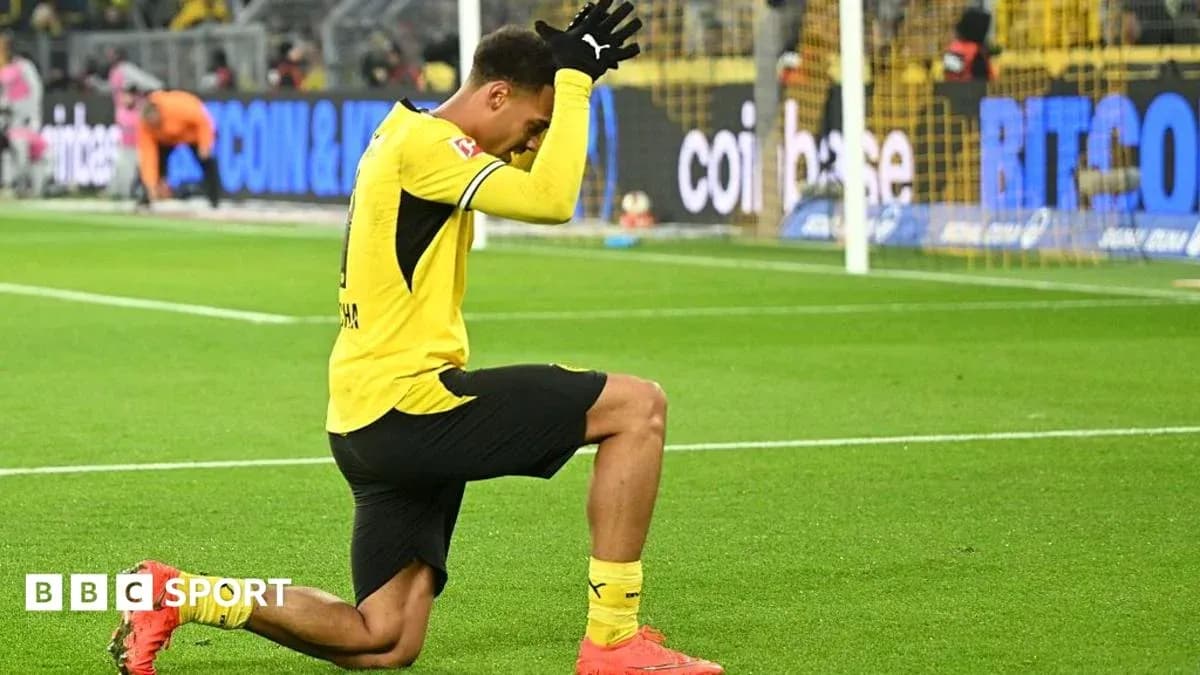
When Felix Nmecha scored twice in Borussia Dortmund’s 2-1 win over Elversberg on Saturday, the midfielder pointed to the sky, then mimed taking an invisible crown from his head and placing it on the ground. For some, it was a simple act of Christian devotion. For a section of Dortmund’s support, it was something very different.
A prominent fans’ group publicly objected, linking the celebration to “The King’s Return”, a campaign promoted by the Christian organisation Ballers in God. They argue that the campaign clashes head-on with the club’s stated values of tolerance and diversity.
Citing a recent investigation by German broadcaster ARD, the group said the movement advocates “extremely conservative positions against homosexuality and transgender identity”, and portrays abortion as “Satan’s plan”. In their view, that sits miles away from the inclusive image Dortmund have spent years projecting.
Nmecha, thrust into the centre of a culture war he insists he never meant to ignite, moved quickly to calm the storm.
He described “misunderstandings” around the celebration and stressed it was “not intended to promote myself or any organisation”.
“My message has never been about promoting intolerance, discrimination, or hate in any form,” he said, attempting to draw a clear line between his personal faith and the broader controversy swirling around The King’s Return.
The spotlight then swung to Ballers in God, founded by former Crystal Palace and Tottenham midfielder John Bostock and followed by high-profile players such as England internationals Marc Guehi and Bukayo Saka, as well as former Brazil forward Kaka.
In a statement responding to the criticism, the group tried to reframe the narrative around the campaign.
“We are encouraged by player-led movements such as The King’s Return, where footballers themselves take the initiative to express their faith in Jesus,” the organisation said. “Our desire is not only to share our hope, but to demonstrate love and respect towards everyone, including those who do not share our beliefs. Our focus has always been, and will always be, to point people to Jesus with grace and love.”
That emphasis on “love and respect towards everyone” sits at the heart of the defence from both Nmecha and Ballers in God. For the fans’ group, though, the issue is not the language of love but the real-world impact of messaging they view as discriminatory.
This is not an isolated flashpoint. It is the latest chapter in football’s increasingly fraught attempt to balance public commitments to equality with the private religious convictions of its players.
Last year, the Premier League stepped back from the Rainbow Laces campaign and ended its formal partnership with LGBTQ+ charity Stonewall, a decision that raised questions about how far top-level football was prepared to go in visible, institutional support for LGBTQ+ rights.
On the pitch, the tension has been even more personal. In 2024, then Ipswich Town captain Sam Morsy, a Muslim, said he chose not to wear a rainbow armband because of his “religious beliefs”. Marc Guehi, captaining Crystal Palace, wrote “I [heart] Jesus” on his rainbow armband – a small inscription that spoke volumes about the effort to reconcile faith with a symbol of inclusion. At Manchester United, plans to wear a jacket backing the LGBTQ+ community were dropped after a player refused to take part.
Each incident is different in detail, but the pattern is unmistakable. Clubs and leagues promote campaigns rooted in diversity and LGBTQ+ visibility; some players, guided by their religious convictions, hesitate or resist. The debate that follows rarely stays polite.
In Dortmund, that debate now has a face and a celebration. A young midfielder, a brief gesture, and a supporters’ base fiercely protective of the club’s inclusive identity.
The questions do not end with one statement from a player or one carefully worded response from a faith group. They linger over every future campaign, every armband, every pre-match photo.
Where, in modern football, does personal faith end and public messaging begin – and who gets to draw that line?