
Newcastle's Struggles: From Keegan's Glory to Jaissle's Challenges
Thirty years on from Keegan’s carnival, Newcastle’s feed lit up with nostalgia this week. A reminder of the night Manchester United were torn apart 5-0 at St James’ Park, the night the city felt like it sat at the top of the football world.
The timing was no coincidence. Because right now, the mood could hardly be more different.
From Keegan’s swagger to Jaissle’s stutter
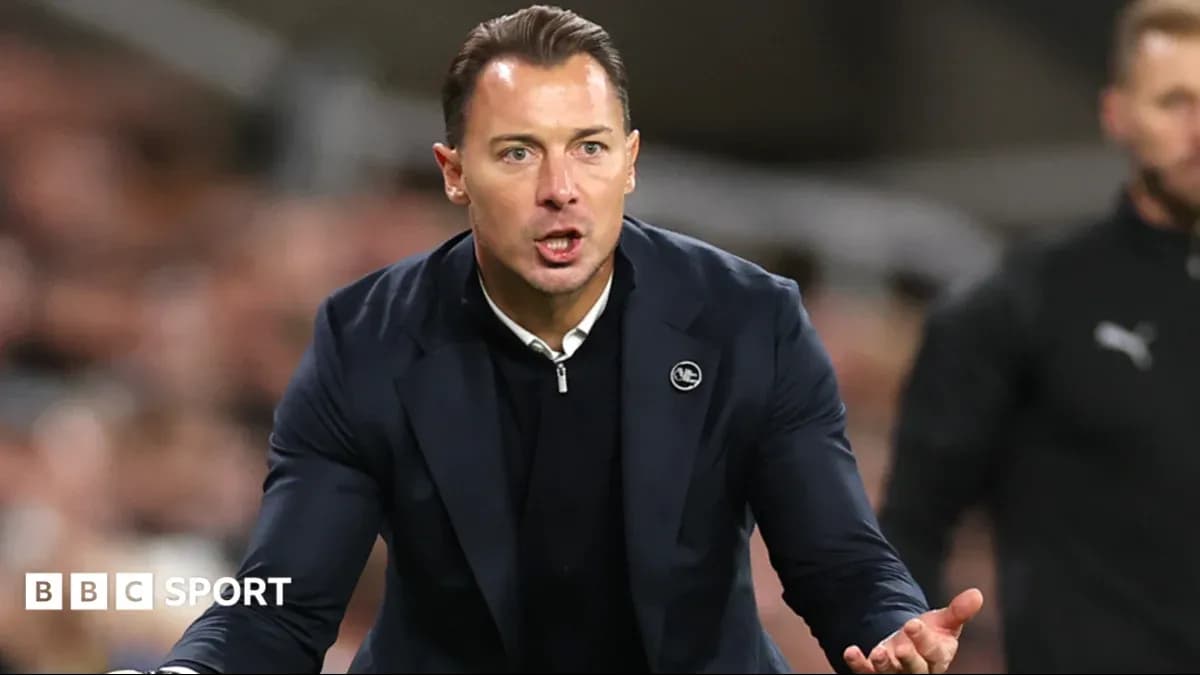
As that clip of Ginola, Beardsley and company rolled around social media, Matthias Jaissle was still searching for something far more basic: a functioning, coherent team.
Newcastle travel to Selhurst Park on Sunday to face a struggling Crystal Palace side knowing exactly what is at stake. Kick-off is 14:00 BST. The context is brutal: three defeats in their last four league games, including back-to-back 4-1 thrashings at Leeds United and Coventry City, and a home loss to Aston Villa that ended in a chorus of boos.
“The pressure will seriously be on if they don't get a result at Palace,” says Charlotte Robson from the True Faith Newcastle United podcast. That’s not melodrama. It’s a fair reading of the mood.
Supporters are already asking the question no new manager wants to hear this early: what is this team supposed to be?
A team without a face
Under Eddie Howe, Newcastle had a clear identity: front-foot, organised, aggressive, and crucially, successful. Howe delivered the club’s first major domestic trophy since 1955 and reattached pride to the shirt.
Under Jaissle, seven games into the Premier League season, that clarity has evaporated.
Chris Sutton, watching the Villa defeat for BBC Radio 5 Live, didn’t dress it up. Newcastle, he said, look “chaotic”. “There is not enough in the final third in terms of creativity and they have a vulnerability at the back,” he added.
The numbers back him up. Newcastle have conceded 14 league goals, an average of two a game. Only Crystal Palace (17) and Ipswich (15) have let in more. They have gone 16 home matches in all competitions without a clean sheet – the longest such run in the club’s history.
At the other end, the Villa game offered its own indictment. Newcastle managed one shot on target, their lowest at St James’ Park in the league since August 2024. It came from centre-back Sven Botman. By the end, Jaissle had pushed another defender, Dan Burn, up front in desperation.
This was supposed to be an “aggressive attacking team”. As Robson notes, “We are not there yet, we're still working it out.”
Shearer saw it coming
Alan Shearer did not need a spreadsheet to sense trouble. He could see it in the transfer business.
“Speaking purely as a fan, I think we have to get ready for a tough season and some very challenging times ahead,” he warned back in July, just after Howe’s departure. At that point, Newcastle had already sold Anthony Gordon to Barcelona for more than £69m and Sandro Tonali to Tottenham in a deal worth up to £100m.
A week later, Bruno Guimaraes left for Arsenal for £75m.
“You cannot keep on selling your best players and then hope to be in contention at the top of the table,” Shearer said. Seven games in, his prediction is holding up grimly well.
Newcastle sit on eight points. Two wins: away at Tottenham, at home to newly promoted Hull City. That’s it.
The sense of erosion did not stop with the midfield and attack. Kieran Trippier, 36, a standard-bearer for leadership and standards, also departed in the summer. Strip away your best players, your manager and one of your loudest voices in the dressing room and you do not just lose quality. You lose an identity.
Rory Smith, football correspondent of the Observer, summed it up on The Monday Night Club: “If you had said at the end of last season Newcastle would lose Gordon, Guimaraes, Tonali and Howe, you would probably get this [eight points from seven games].”
Big spend, small impact
None of this is happening in a vacuum. Newcastle did spend. Around £250m in the summer window. But they went young. Very young.
Many of the recruits are 21 or under. Two of them, Ivory Coast winger Bazoumana Toure and French midfielder Aladji Bamba, have yet to start a Premier League game despite being fit and available. Another, 18-year-old Sean Steur, impressed when he started against Hull in September, then disappeared from the league picture and has not played a minute since.
“The profile of the players Newcastle signed in the summer, and it may well bear fruit in time... they went very young and relatively inexperienced,” Smith said. “They didn't go out and sign a load of established Premier League players.”
That strategy might make sense over three or four seasons. It does not help a 38-year-old coach trying to impose a new style in real time, under the harshest glare the club has known in decades.
Jaissle arrived with pedigree – consecutive Asian Champions League titles at Al-Ahli, a strong track record at Red Bull Salzburg – and Newcastle paid Al-Ahli £9.5m in compensation to get him. Expectations were high when he landed on Tyneside just before the season started.
But this is the Premier League, and he is learning it from scratch.
Seventy-nine days into his reign, he is still trying to prise Howe’s fingerprints off the squad while putting his own on. The problem is, nobody can yet see what that new imprint is supposed to look like.
The Isak and Wilson void
If the defensive record is alarming, the situation up front is just as stark.
Newcastle have never truly replaced Alexander Isak, who left for Liverpool 14 months ago in a British record £125m deal. There is also a case that they have not properly replaced Callum Wilson, who departed in the same summer.
Yoane Wissa was signed as Wilson’s successor. Nick Woltemade arrived in a club-record deal worth up to £69m in August 2025 as the Isak replacement. Wissa has struggled for rhythm and consistency since returning from injury. Woltemade is not even in the building, currently out on loan at Juventus.
So when Sutton says, “They didn't look like scoring against Villa and that is what really concerns Newcastle fans,” he is not exaggerating. The threat has drained away, and the solutions are either unconvincing, unavailable, or still learning the league.
Calm at the top – for now
Inside the club, there is no sense of panic. Not yet.
Chief executive David Hopkinson and sporting director Ross Wilson are projecting calm. Jaissle, by all accounts, will be given time. It has not been a disastrous start, just a disjointed one. Eight points from seven games with this level of churn is not catastrophic.
But the concern is not just about results. It is about performances, patterns, and the feeling – or lack of it – that something is building.
“Newcastle fans have every right to be a little bit concerned,” Sutton says. Robson agrees that questions are growing louder. “There are more questions being asked now,” she says. “At the start of the season it was made clear in interviews we wanted to be an aggressive attacking team. We are not there yet, we're still working it out.”
Patience is the word she keeps coming back to. Patience with a new manager. Patience with a young squad. Patience after a summer of upheaval.
But patience in football is never unconditional. It has to be fed.
A defining fortnight?
Newcastle’s next stretch of fixtures will test that patience to its limits.
After Palace on Sunday, they face Everton twice in quick succession – first away in the last 16 of the Carabao Cup next Thursday, then at home in the league on 2 November – before travelling to Fulham five days later. Then comes the international break.
Jaissle will not want to hit that pause without a win in six league and cup games. The noise around him would be deafening.
For now, the club hierarchy stays calm, the manager talks of process, and the supporters cling to memories of nights like that 5-0 against Manchester United.
The question is no longer whether Newcastle can recreate those days. It is simpler, sharper, and far more urgent.
Can Matthias Jaissle give this team a recognisable face before the season starts to run away from him?





