New Zealand Breakers: A Rebuilt Club for Championship Glory
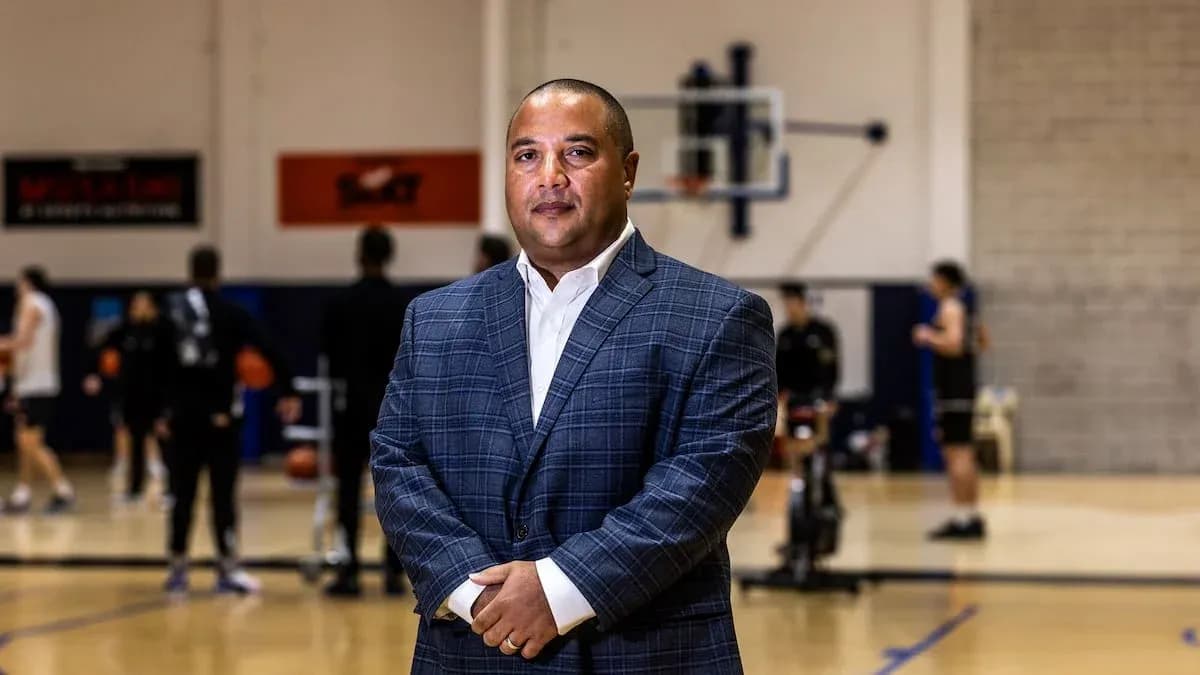
At Atlas Place, the New Zealand Breakers don’t just look different. They feel different.
New logo. New uniforms. New court – gifted by Steven Adams. New coaching staff. A rebuilt roster. Even the academy, once mothballed, is back in business.
Owner Matt Walsh – and the organisation he now fronts – have spent two years tearing the club down to its foundations and building it again. The aim is simple enough to say, far harder to deliver: a fifth NBL championship banner, and a club that looks, sounds and behaves unmistakably like New Zealand.
A club rebuilt, not just rebranded
For the first season under Walsh, not much shifted. Then the real work started.
Atlas Place has been transformed with modern facilities and that new court, signalling a reset that goes beyond aesthetics. Walsh talks about connection and community as the heart of everything, and the rebrand as a statement of identity.
“Our rebrand represents New Zealand and our heritage, the people and the land,” he says. When he bought the team, he felt they had to “restart everything” – including the culture. The first move was to bring back Dillon Boucher, a figure stitched into the fabric of the club’s history, to restore the ethos of winning titles and serving the community.
Step by step, he stacked the front office and basketball operations with people he believes fit that vision. The result is a club that looks refreshed but also anchored to its past, rather than running from it.
“We had a new team, new coach, and it’s the start of a great season,” Walsh says. That’s the bet. That all this disruption becomes a launchpad, not a distraction.
The Breakers remain the lone New Zealand outpost in the Australian-based NBL. Walsh wants that status to mean something every time they run out.
Two-year plan, World Cup coach
Walsh describes the overhaul as a two-year plan: get the right people in the right roles, build the infrastructure, and give the club a platform for sustained success. In his mind, they’ve hit that mark.
“I think we’ve done that. We’ve got a great set of people who are working every day to make this a great experience.”
Now comes the part that can’t be painted or wired into a building: winning.
Sunday’s home opener against the Illawarra Hawks at Spark Arena will be the first true test of the new era. The Breakers have kept a strong core led by Parker Jackson-Cartwright and Sam Mennenga, then layered in proven NBL winners Kouat Noi and Dejan Vasiljevic. They’ve added international size and versatility with Charles Bediako, a rim-protecting big, and Josiah-Jordan James, a defensive wing who can stretch the floor. James, though, will miss the start of the season with a hamstring injury.
The most eye-catching move sits on the sideline.
Gordon Herbert arrives with a résumé that towers over most of the league. The Canadian has coached at elite European clubs, spent time as an assistant with the Toronto Raptors, and in 2023 steered Germany to the FIBA World Cup title. Few NBL coaches can match that kind of pedigree.
“No one thought we could bring him to New Zealand, but we were able to do it,” Walsh says. “He’s excited to be here.”
Herbert will lean on a staff that blends local knowledge and international experience: New Zealanders Matt Lacey, Quinn Clinton and Josiah Maama, alongside lead assistant Sebastian Gleim, familiar to Kiwi fans from his time in charge of the Franklin Bulls.
The staff list reads like a statement of intent: this is a club that expects to be a destination, not a stepping stone.
A global brand with a Kiwi spine
That international reach is exactly what Walsh wants. He believes the Breakers now sit on the radar of players who once would have skimmed straight past New Zealand.
“Additionally, we brought in a lot of players who I think in years past might not have taken a hard look at coming to the Breakers,” he says. “We’re well represented around the world, but I think the Breakers brand is something that people now know and we’re going to be competitive in our league.”
Across the Tasman, the reaction has been less kind. Pundits have already started writing the Breakers off, tipping them to slide towards the bottom of the table. One reason being thrown around: they are the only team in the league without NBA experience on the roster.
Walsh brushes that away as a quirk, not a weakness.
“All of our guys are NBA level, played in the G League, played at high levels around the world, so it’s not necessarily a prerequisite,” he says. “We’ve found the right guys for this year and the guys who fit well together with the locals that we brought in before.”
He sees an NBL in rude health and a unique responsibility for the Breakers.
“The league’s in a great place. For us to be the one team in New Zealand that represents our country in the league is really an honour.”
Expansion, Asia, and the Breakers’ footprint
Talk around the NBL has shifted towards expansion: Gold Coast, Canberra, even a return to Asia. With any new club needing an arena that holds between 8000 and 12,000 fans, a second New Zealand team looks distant unless major upgrades arrive.
Walsh isn’t closing the door, but his focus is on where the league – and the Breakers – can stretch globally.
“I think right now what the league is looking to do is more about expansion of the footprint around the world,” he says. “Maybe into Asia a little bit. I think we’ll start to see more games for us played there in the pre-season, for example. We want to continue to expand the Breakers’ presence around the world.”
For now, expansion for the Breakers means deepening their roots at home while pushing their brand overseas.
The academy returns – and the pathway widens
One of the most significant moves sits away from the bright lights: the return of the Breakers academy after a six-year break.
The first intake features 20 male athletes from school years 11-13, drawn from six Auckland high schools. History suggests that matters. Earlier versions of the academy helped uncover players like Mennenga, Reuben Te Rangi and Anzac Rissetto – all now part of the senior setup.
Walsh wants young New Zealanders to see basketball as a pathway, whether that ends in a Breakers jersey, a college scholarship, or simply the life lessons sport delivers.
“The academy is really important because it is for the entire country to highlight the best young players,” he says. “One day we want them to be Breakers, but they’re not all going to be Breakers. But ... it allows them a pathway to continue to play at a high level, potentially to go to college and to use the sport for all the positive things that it can bring.”
That theme – opportunity, pathway, community – runs through almost every sentence when he talks about the club.
From Showtime to Spark Arena
Walsh knows some fans remain wary. His involvement in the previous ownership group lingers in the background. He answers that scepticism with people and with place.
He has re-engaged figures like Boucher and long-time club backers Paul and Liz Blackwell, and insists their presence is non-negotiable.
“We’ve moved on from that era, and it started by bringing in people like Dillon, bringing in people like Paul and Liz Blackwell, who are always part of this,” he says. “As long as I’m part of this, they will be a part of this. It’s about the history, and it’s about doing things the right way.”
His connection to New Zealand is also personal. His wife Jessica is a Kiwi, and the family has lived here, including 18 months during Covid with the borders shut. He has been visiting the country for 21 years and plans to be in the stands for most home games this season, splitting his time between Los Angeles and New Zealand.
His love of sport – and of basketball in particular – traces back to growing up in LA during the Lakers’ Showtime era, under legendary owner Jerry Buss and with Magic Johnson and Kareem Abdul-Jabbar lighting up the Forum. He still holds Lakers season tickets and watched first-hand how a winning team can electrify a city.
That’s the template he wants the Breakers to chase: success on the floor that spills into the community.
Swansea, Snoop and a wider sporting play
Walsh’s sporting interests now stretch far beyond the NBL.
In 2023, he fronted a consortium attempting to launch an Auckland-based A-League team, only to lose out to a bid led by Bill Foley, Ali Williams and Anna Mowbray. He has since joined the ownership group of EFL Championship side Swansea City, a consortium that includes Martha Stewart, Luka Modric and Calvin Cordozar Broadus jnr – better known as Snoop Dogg.
Swansea’s squad features All Whites World Cup players Elijah Just and Marko Stamenic, tying his football interests back to New Zealand.
“Sports in general to me is a passion. And when this came about, it was something I looked hard at and something I couldn’t pass up,” Walsh says of the Swansea move. “They approached me to be involved, and I was happy to join the team.”
As for Snoop?
“I have, but not in this context, actually. I look forward to meeting him and the rest of the other investors shortly,” Walsh says. He recently spent time in Swansea with his family, meeting coaches, front-office staff and players, and came away impressed with the club’s direction. As of Friday morning, Swansea sat second in the Championship table.
He hints that more New Zealand sporting ventures could follow. One project already locked in is the Breakers’ first Celebrity Golf Invitational in January, an event he believes can showcase the country, attract international names and funnel support back into basketball development.
The standard remains the banner
Strip away the rebrand, the academy, the global ambitions and the golf days, and the Breakers’ target is still brutally simple: win again.
They own four NBL titles from the 2010s and were the first New Zealand side to claim a championship in an Australian sporting competition. That history hangs over everything they do now.
“Last year, we were off to a good start, we won the pre-season tournament, we won the in-season tournament, but that’s not why you play,” Walsh says. “Those are steps along the way. The ultimate goal is to get to a championship, so we’re trying to do everything in our power to allow our guys to do that.”
He talks about borrowing best practices from around the world, then adding “a little Kiwi dust” and bringing them home.
The banners in the rafters say the Breakers once set the standard for New Zealand teams in Australian leagues. The question now is whether this bold, rebuilt version can climb back to that height – and stay there.