
Netherlands Shred Greece 7-0 in Nations League Showdown
The rain lashed down in Belgrade. The goals poured in from Amsterdam.
On a wild Nations League night, the Netherlands and Germany moved in lockstep toward a heavyweight showdown, their new-era coaches Xavi and Jürgen Klopp now set for a straight fight for top spot in Group A2.
Oranje run riot in Amsterdam
This was not a win. It was a statement.
The Netherlands shredded Greece 7-0 in Amsterdam, staying unbeaten under Xavi and equaling the biggest victory in the eight-year history of the Nations League. By halftime, it was 5-0. The contest had evaporated; only the spectacle remained.
Crysencio Summerville lit the fuse in the sixth minute, sweeping in the opener to tilt the evening firmly orange. From there, the Dutch attack moved with a ruthless clarity, carving Greece apart with quick combinations and aggressive runs.
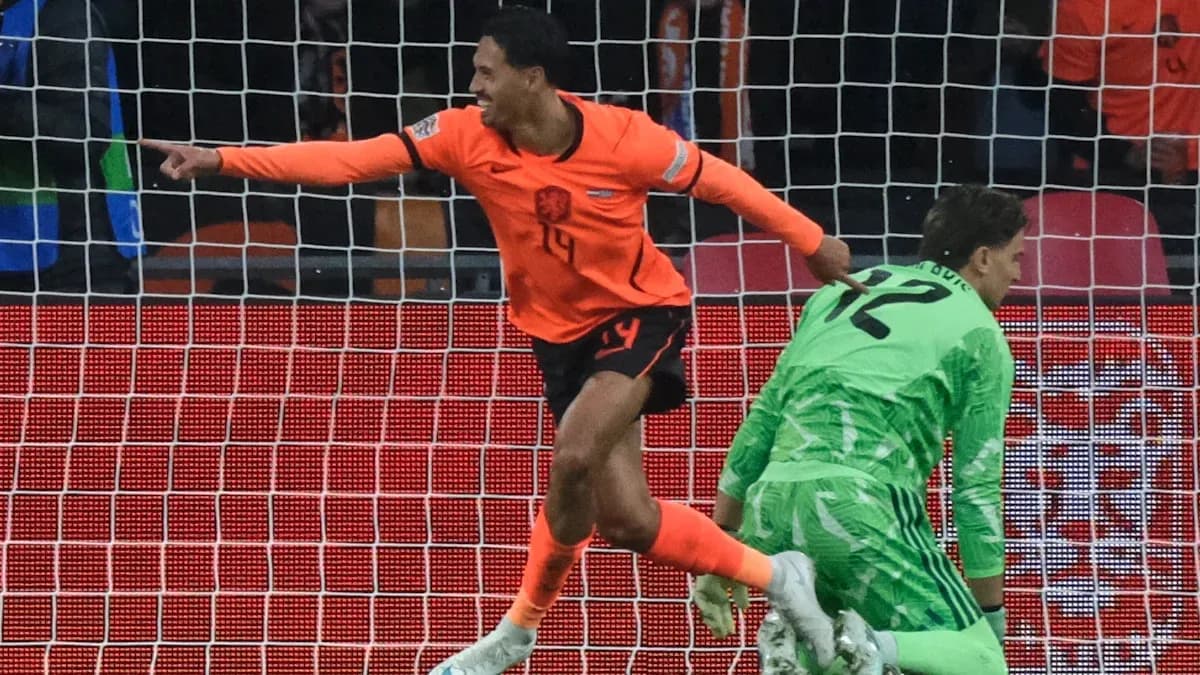
Tijjani Reijnders took center stage. He struck three times in 21 minutes, each goal the product of slick, rehearsed patterns that Greece simply could not read, let alone stop. When he wheeled away beaming, three fingers raised to mark his hat trick, it felt less like an individual triumph and more like a symbol of Xavi’s blueprint taking root.
Behind him, Jurrien Timber joined the party with two goals of his own, surging forward from the back to finish moves like a seasoned attacker. Donyell Malen added a seventh to complete the demolition, a final flourish on a night when everything the Netherlands tried seemed to come off.
Xavi’s reaction matched the scoreline for intensity, but not for complacency. He praised an “amazing” first half, saluted the players’ work on the training ground, then cut straight back to the theme that will define his tenure: this is only the beginning. The performance thrilled him; the standard, he made clear, must now be sustained.
With that 7-0, the Netherlands joined England, Germany and Finland as the only teams to win a Nations League game by seven goals. England’s 7-0 over Croatia last month now has company in the record books.
The table reflects the dominance. The Dutch sit three points clear at the top of Group A2, with Germany in pursuit and everything pointing toward Monday’s meeting in Berlin. The head-to-head record will decide any tie, the top two will reach the quarterfinals, and, on paper, all of the Netherlands, Germany and Greece can still qualify. Serbia, beaten in all five of its games, is stranded at the bottom.
Klopp’s Germany grind it out in the rain
If Amsterdam showcased flair, Belgrade was about control.
Under driving rain and in front of banks of empty red seats at the Rajko Mitic stadium, Germany handled a tricky night and Serbia’s volatility to win 3-1 and keep Klopp’s project moving, if not yet fully purring.
They needed barely three minutes to break through. Kai Havertz’s header forced a defensive intervention from Srdjan Babic, but the Serbia defender only succeeded in turning the ball into his own net. Germany led before the game had settled into any rhythm.
The second goal underlined their sharpness around the box. Vanja Milinkovic-Savic parried another effort from Havertz, only for Florian Wirtz to react first, delicately flicking the rebound over the goalkeeper to make it 2-0. In the teeming rain, Germany had a grip on the game and on the group.
Klopp had rotated again, fielding an experimental squad that included Freiburg winger Derry Scherhant and left no place for Barcelona’s Karim Adeyemi. The changes did not blunt Germany’s edge. Leipzig’s Brajan Gruda, on debut, provided the highlight of the night, driving straight through the heart of Serbia’s defense and finishing with authority for the third goal.
For Gruda, it was a dream start. For Klopp, a second win in five matches as Germany coach and a sign that the younger faces in his squad can carry responsibility on nights that demand resilience as much as talent.
Serbia refused to disappear completely. Babic atoned for his early own goal by pouncing on a rebound to pull one back, briefly raising the possibility of a contest. That flicker vanished with one reckless challenge.
Vanja Dragojevic lunged in late on Joshua Kimmich’s ankle and saw red, ending any realistic hope of a Serbian comeback. Tension rose, frustration boiled over, and Andrija Zivkovic followed him down the tunnel late on for dissent after arguing with the referee. Serbia finished with nine men and no points.
The stands told their own story. In a 50,000-capacity arena, only around 5,000 children and teenagers, accompanied as part of a controlled attendance, watched on. UEFA’s punishment for previous offensive fan behavior left the Rajko Mitic almost eerily quiet, the echo of shouts and whistles replacing the usual roar.
Klopp acknowledged Germany could have scored more but saw no need to nitpick. On a sodden pitch, in awkward circumstances, his side had done enough.
Switzerland steady, Scotland edge through
Lower down the ladder, Switzerland’s push to climb back into the Nations League’s top tier stayed on track. Playing in League B for the first time, they held closest rivals Slovenia to a 0-0 draw in Group B1, a result that keeps their promotion bid intact.
Scotland, meanwhile, found the cutting edge Switzerland lacked. They edged North Macedonia 2-1, a win that keeps their own campaign alive and humming.
All of it feeds into Monday, when Berlin will stage the night this group has been building toward. The Netherlands, rampant and free-scoring under Xavi, against Klopp’s evolving Germany, still ironing out the creases but steadily gathering force.
One game, two big-name coaches, first place on the line. Who blinks now?





