Morocco vs Spain: The 2030 World Cup Final Battle
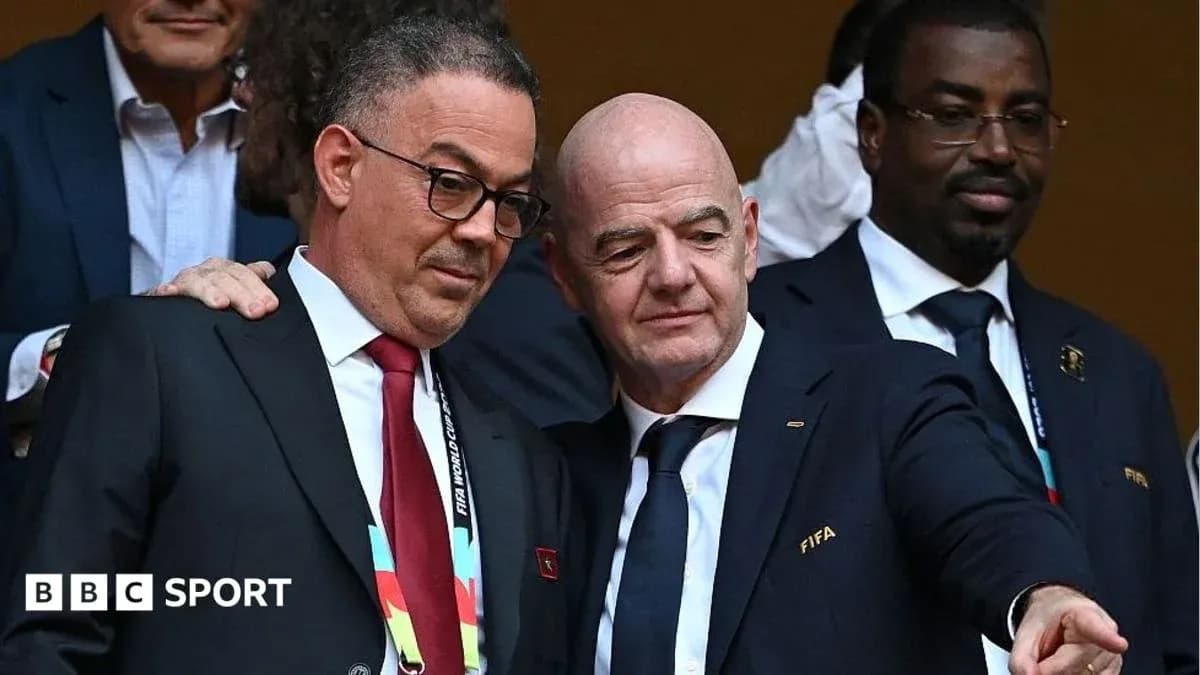
The battle to host the 2030 World Cup final has moved from boardrooms to political stages, with Morocco’s prime minister publicly rebuking his own federation chief as Spain steps up its claim to stage world football’s biggest game.
The tournament, shared between Morocco, Spain and Portugal, already has a unique structure. Three symbolic opening matches will be played in Uruguay, Argentina and Paraguay to mark 100 years since the first World Cup. Everything else, including the final, remains officially open.
That hasn’t stopped the jostling.
Casablanca claim sparks backlash
Fouzi Lekjaa, the powerful president of the Moroccan football federation (RMFF), recently told a political party event that Casablanca would have the “honour” of hosting the final. It was a bold, crowd-pleasing line in a country pouring money and pride into its football project.
Too bold for the government.
At a rally, prime minister Aziz Akhannouch turned his fire on Lekjaa in front of supporters, making it clear that such promises had gone too far, too fast.
“Do not offer to host the big final game in Morocco while we still have not discussed the matter with our allies, Spain and Portugal,” Akhannouch said, calling for “respect” and warning against using “electoral promises to pull the rug out from under us.”
“These are huge matters. Deciding where the final will be held is a major issue,” he added, underlining that the question of the final is as much diplomatic as it is sporting.
The message was unmistakable: Morocco may want the final, but it cannot unilaterally claim it.
Fifa, for its part, stayed above the fray, offering only a familiar line – “a decision will be made in due course” – and leaving the three core hosts to keep lobbying behind the scenes.
Spain push their world champion case
Spain, meanwhile, have wasted no time in presenting themselves as the natural home for the 2030 showpiece.
Rafael Louzan, president of the Spanish football federation (RFEF), has already said publicly that he expects the final to be played on Spanish soil. That conviction has only hardened since Spain lifted the men’s World Cup for a second time this summer.
“Even though no decision has been taken, I believe Spain is the place because it cannot be any other way,” Louzan told Cadena SER. “As you know, we are currently world champions.
“I believe Spain’s organisational capacity for major events is beyond question and that is why reality dictates that the grand final cannot and must not be held anywhere other than in Spain.”
The argument is simple: Spain have the trophy, the infrastructure and the experience of staging major events. In their eyes, the final is a natural extension of that status.
There is also precedent for late calls. For this year’s World Cup, New Jersey was only confirmed as host of the final in February 2024, two years before the tournament and long after the broader hosting rights had been awarded. The message to all three 2030 hosts is clear: the race is still on.
Stadiums as statements of intent
Behind the rhetoric lies concrete – and a lot of it.
Morocco are pushing ahead with a proposed 115,000-seat stadium, which would become the largest football arena in the world. That project is more than a construction plan; it is a statement of ambition aimed squarely at Fifa and the global audience.
Across the Mediterranean, Spain can counter with history and modernisation. Real Madrid’s revamped Bernabeu now holds 83,000 and has been refitted as a multi-event, high-tech venue built for nights exactly like a World Cup final. Barcelona’s Spotify Camp Nou, once its renovation is complete, will host 105,000, another heavyweight candidate on the Iberian side of the bid.
Size, prestige, logistics, symbolism – all of it will land on Fifa’s desk when the final call is made.
For now, Morocco’s politicians want their federation to temper the rhetoric, Spain’s leaders and football chiefs continue to talk up their credentials, and Portugal watch with interest as the two bigger partners in the bid flex their muscles.
The World Cup is still four years away. The final whistle on where its greatest match will be played has not yet sounded.