
Mikel Arteta's Anfield Challenge: Overcoming the Psychological Test
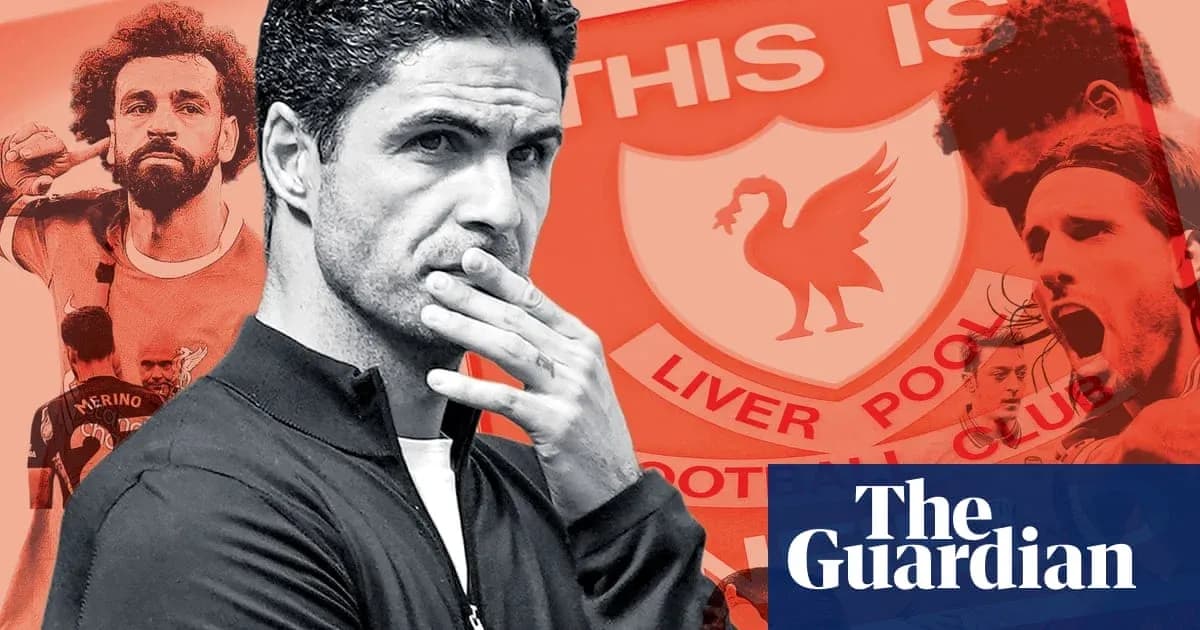
Mikel Arteta has a word for what Anfield can do to a footballer.
Bajar.
A cyclist flying uphill, then in a single kilometre, “boom” – the legs go, the road steepens, the race runs away. In Amazon’s All or Nothing, he described how, in 2011 with Everton, the match suddenly dissolved into a blur of red shirts and helplessness. “The game is passing all over me and I cannot react,” he said. “I only had that feeling in my career once, and it was at Anfield.”
On Sunday, he walks back into the same arena with a different weight on his shoulders and a familiar knot in his stomach. Liverpool away, again. Only this time it is not just about his own history on Merseyside. It is about Arsenal’s, too.
A ground that doesn’t forgive
Arteta’s personal record at Anfield is scarred and complicated. He finally won there as a player in September 2012 with Arsenal, after five failed attempts in the Merseyside derby, only to finish the night in hospital with concussion after a collision with Jordan Henderson. He has called that moment “the biggest fear of my life.”
Six months later he returned and won again, part of an Arsenal side lifted by new signings Lukas Podolski and Santi Cazorla. That 2-0 victory remains the club’s last Premier League win at Anfield. Thirteen league games without success since then, a run that equals Arsenal’s worst at Liverpool. The only win in that time came on penalties in the League Cup in 2020, on Arteta’s second visit as manager.
The ground has become a psychological test as much as a tactical one. In November 2021, he tried something different: “You’ll Never Walk Alone” blaring over the training pitches, an attempt to inoculate his players against the noise. Liverpool 4 Arsenal 0. The soundtrack stayed; the plan didn’t.
Last season, criticism bit harder. A late Dominik Szoboszlai free-kick ended a sequence of three draws at Anfield and left Arteta accused of timidity. He had started Mikel Merino as his No 10, and Gary Neville accused Arsenal of lacking “the mentality to go and win big matches at big away grounds.” It stung because it hit a nerve. Arsenal have not beaten Manchester City at the Etihad in the league since 2015 under Arsène Wenger. The charge is not new.
Fleetwood scars and a thin squad
This trip comes at a difficult moment. Arsenal were bundled out of the Carabao Cup by Fleetwood in midweek, beaten on penalties by a team 84 places below them in a ground that holds fewer than 6,000 people. It was the sort of night managers replay in their heads on the flight home. Arsenal did exactly that, flying back to London with a shootout defeat that will have stirred painful echoes of May’s Champions League final loss to Paris Saint‑Germain.
Arteta had surprised many by starting Kai Havertz and Viktor Gyökeres together, a move that looked designed to ease the creative burden on Martin Ødegaard. It did not work. Both strikers looked short of rhythm and confidence, and Arsenal’s attacking play never settled.
The injury list offers little comfort. Bukayo Saka is out with a thigh problem. There are doubts over Noni Madueke’s ankle. An appeal against Max Dowman’s red card failed, so the teenager begins a three‑match suspension. For a manager who likes control, this is the sort of preparation that frays the edges.
All of which nudges Arteta towards what he knows best.
Lessons from 1989
If Arsenal are to win at Anfield, the odds suggest they will not do it with chaos. Arteta’s best chance is to lean into the caution and structure that underpinned last season’s title triumph. Keep it tight. Suffocate space. Make the game smaller, not larger.
He does not have to look far into the club’s history for a template. Thirty‑seven years ago, George Graham took his Arsenal side to Anfield needing a 2-0 win to lift the title. It was one of the most famous nights in English football, sealed by Michael Thomas’s stoppage‑time surge and finish, and the end of an 18‑year wait for the championship.
Graham’s plan that night was simple and ruthless. “I told my players to keep things tight in the first half – it was imperative we did not concede,” he recalled in an interview marking the 20th anniversary of that finale to the 1988‑89 season. The newspapers demanded a blitz from kick‑off. Graham refused. “If Liverpool had scored an early goal it would have been over. But they did very little attacking and played into our hands.”
Before that game, Arsenal’s players ran to all four corners of Anfield to hand flowers to Liverpool supporters, a gesture of sympathy and solidarity after the Hillsborough disaster the previous month. The idea came from Ken Friar, the club’s longstanding director, who died this month. It was a night when emotion, strategy and steel all aligned.
There are echoes between the two managers. Graham and Arteta both won their first league titles at 44. Graham, a former Scotland midfielder who scored almost 80 goals for Arsenal and helped deliver the 1971 Double, built his reputation on defensive discipline. “1-0 to the Arsenal” became his calling card, especially towards the end of his reign. Arteta has revived that old tune. Since taking over in December 2019, he has overseen 32 1-0 Premier League wins – more than any club apart from Everton.
Tight margins, set plays and a familiar mantra
The current Arsenal side showed a glimpse of that old efficiency in last weekend’s 2-0 win over Everton, a routine home victory but notable for their first set‑piece goal of the season. Against a Liverpool team still adjusting to Andoni Iraola’s demands, those details could matter.
Liverpool have looked vulnerable from dead balls at times. Arsenal, for all the talk of patterns and positional play, have quietly become one of the league’s more dangerous sides from rehearsed routines. A tight game at Anfield, decided by a corner flicked on at the near post or a free‑kick worked short, would suit Arteta far more than a wild, end‑to‑end spectacle.
He has never hidden how central defending is to his vision. “Collectively, we acknowledge the importance of defending,” he said last year when comparisons with Graham surfaced. “We know that if we excel in that part of the game, the chances and the probabilities to win more matches is going to be very, very high.” It was a manager’s sentence, precise and clipped, but the message was blunt: everything starts with the clean sheet.
The Carabao Cup has stretched his squad in the last two seasons, first to the semi‑finals and then to the final. From a purely physical standpoint, early elimination removes a layer of strain from a group that already looks thin in key areas. Arteta will not frame it as a blessing. He is too competitive, too scarred by the manner of defeat at Fleetwood, to accept that line. But the calendar has quietly opened a little.
What remains closed is the question that has followed him from those Everton days: can he walk into Anfield, feel the surge of red shirts and noise, and keep his team from bajar? On Sunday, with his childhood friend Iraola in the opposite dugout and a bruised squad behind him, he gets another chance to find out.





