
Michael Carrick's Press Conference: A Defiant Stand at Manchester United
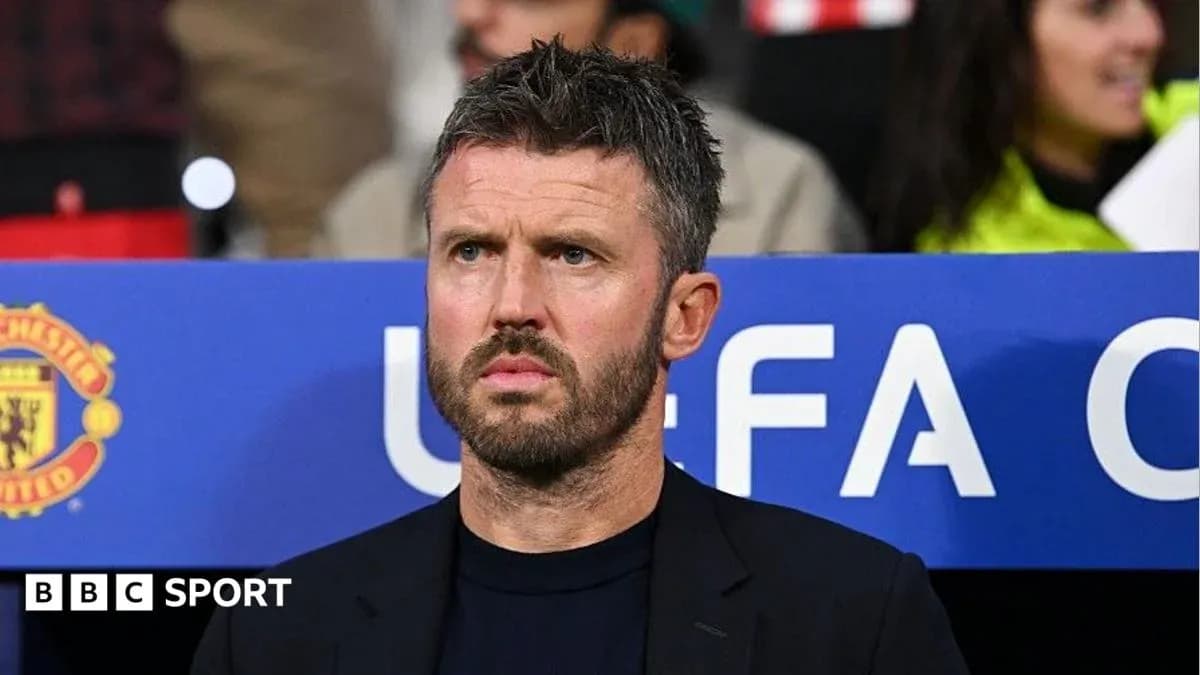
Michael Carrick walked into the press room at Carrington on Friday and made it clear this was going to be on his terms.
No polite preamble. No easing into questions. Under severe pressure and with his job on the line, the Manchester United manager stood up, asked to speak first and delivered a five-and-a-half-minute address that felt more like a manifesto than a media briefing.
The backdrop was grim: seven games without a win, a 4-1 humiliation by Como in the Champions League on Wednesday, public criticism of the club hierarchy from Lisandro Martinez and a very public questioning of Carrick’s tactics from his own captain, Bruno Fernandes. The noise around Old Trafford has been growing by the day. Carrick clearly decided it was time to plant a flag.
“Recently we haven't had a good time, I think that's pretty obvious,” he said. “Wednesday was a bad night, and it hurt me to see us play like that. It was unacceptable.”
No attempt to sugarcoat it. No excuses. He went straight for the core of the issue: identity.
“My responsibility is to get a team on the pitch that represents this football club, and the supporters, and they can be proud of in the identity we show. We have gone away from that recently. It's important we all recognise that.”
Carrick spoke about “foundation and values” that have “been etched for many years” at United. He referenced resilience, humility, hard work. Words that have echoed around Old Trafford for decades, but which have often felt distant in recent seasons.
“Entitlement cannot be at this football club,” he said. “It was based on being humble, having humility, and hard work. We can never lose that, and I won't let us lose that.”
It was impossible not to think of Sir Alex Ferguson. The Scot occasionally used the same tactic, opening a press conference with a monologue to seize control of the narrative. But Ferguson rarely went on for as long as Carrick did here, and rarely under such scrutiny.
Fernandes in the firing line
If Carrick wanted to reclaim authority, the subject waiting for him was the most delicate of all: his captain.
Bruno Fernandes has not just questioned the team’s performances. In the aftermath of the Como defeat, he openly criticised the tactical approach in Italy. Then, in a separate interview with Sky Italia, he took aim at the club’s obsession with its own past.
“At this club, there's too much focus on what's been done in the past,” Fernandes said. “But we're not those people anymore. The club and the players need to understand that.
“Unfortunately for us – especially when it comes to the players – those who join expect to win trophies, win games, and reach the highest level, that's been very difficult at this club in recent years.”
Those comments cut to the heart of what Carrick had just been defending: the weight and worth of United’s history. Whether he had heard Fernandes’ full remarks before speaking was unclear, but the collision of views was obvious.
Asked directly whether he had considered dropping his captain for Sunday’s Premier League game against Bournemouth at Old Trafford, Carrick did not close the door.
“The most important thing for me is the team, the squad and dynamics in the squad,” he said. “It's about the football club. I'll always do what is best for the football club.”
That line returned more than once. When pressed on whether Fernandes might be stripped of the armband, Carrick repeated: “I will always do what is best for the football club.”
Club sources had already indicated on Thursday that Fernandes would not lose the captaincy or be fined for his post-match comments. Carrick stayed away from any explicit endorsement or condemnation. He also refused to say whether he had spoken privately to the 32-year-old about his conduct.
“I don't think this is the time to go into too much detail,” he said.
The message was clear enough. The captain is not untouchable. The shirt, the club, the dressing-room balance come first.
Dressing room fault lines
With a senior defender criticising the hierarchy and the captain questioning tactics and tradition, the obvious question followed: is the dressing room split?
Carrick pushed back.
“No, it's not,” he said. “We just need to get back to doing what we do best.”
What that “best” looks like has become the central question of his tenure. Performances have drifted. Results have collapsed. The identity he spoke so forcefully about has not been evident on the pitch for weeks.
Yet in that room at Carrington, Carrick tried to reframe the story. He talked of resilience he has “seen with my own eyes” at United, of individuals he knows “closely” who built the club’s history. He leaned on those experiences to argue that this is not a club that accepts entitlement, nor one that folds under pressure.
Away from tactics and tension, there was also a human concern. Carrick confirmed the club are “doing everything” to support Fernandes and his family after their Cheshire home was burgled on Wednesday.
“Thankfully they weren't directly affected even though it is an awful situation,” he said.
A manager on the brink, a club at a crossroads
Sunday against Bournemouth now feels bigger than a routine league fixture. It is a test of authority, of unity, of whether Carrick’s words can still reach this dressing room.
He has drawn a line in the sand, publicly restated what he believes Manchester United should stand for and hinted that even his captain is not beyond consequences.
The question now is simple: will the players follow him onto the pitch, or will this be remembered as the speech that came just before everything finally gave way?





