
Michael Carrick's Plea for Manchester United's Identity
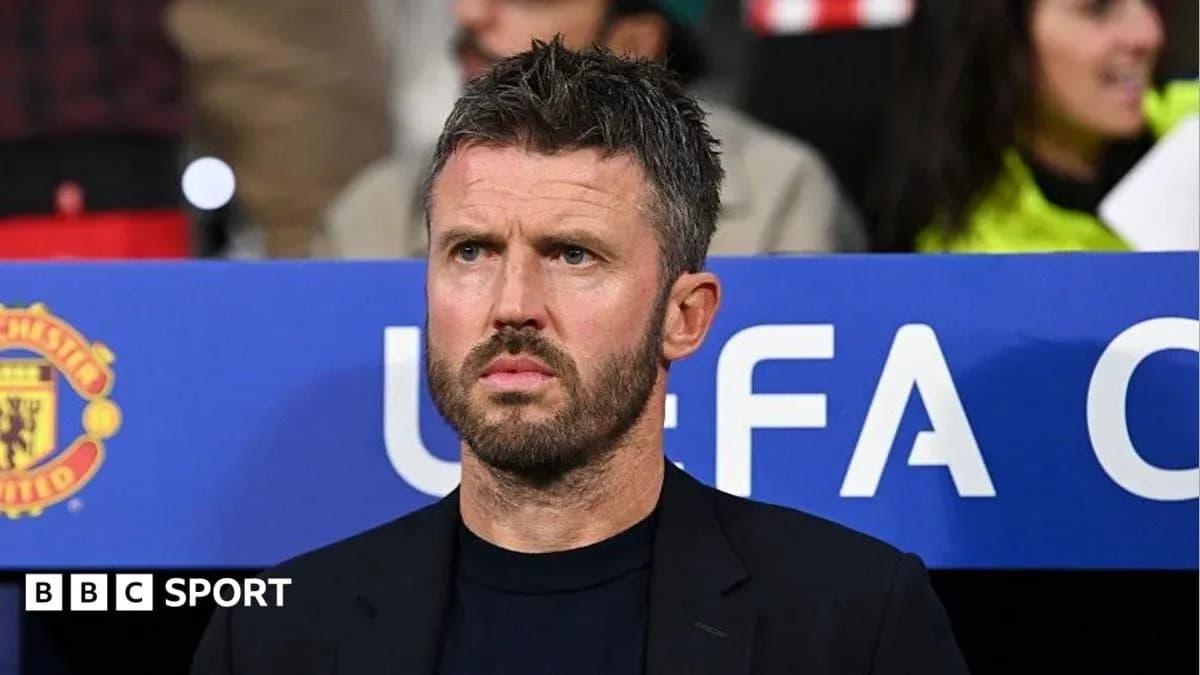
Michael Carrick walked into the press room at Carrington on Friday knowing the questions were coming. He didn’t wait for them.
Before a journalist could speak, the under-pressure Manchester United manager launched into a five-and-a-half-minute address that felt less like a routine briefing and more like a plea for the soul of the club he once captained from midfield.
No PowerPoint, no preamble. Just a man fighting to keep his job and, in his mind, his club’s identity.
Carrick takes the floor
Instead of sitting down and easing into the usual pattern of questions and answers, Carrick announced he wanted to start. It was a move straight from the Sir Alex Ferguson playbook, a deliberate attempt to seize control of the narrative. Ferguson, though, rarely went on this long.
United are seven games without a win. The nadir came on Wednesday: a 4-1 collapse in the Champions League against Como that stunned even a fanbase hardened by a decade of turbulence. In the aftermath, Lisandro Martinez publicly criticised the club’s hierarchy. Bruno Fernandes questioned Carrick’s tactics in Italy.
The noise around Old Trafford has been deafening. Carrick chose to confront it.
“Recently we haven't had a good time, I think that's pretty obvious,” he said, his words measured but edged with frustration. “Wednesday was a bad night, and it hurt me to see us play like that. It was unacceptable.”
He didn’t hide, didn’t deflect. He went straight to the core of the issue: the way United are playing, and what that says about them.
“My responsibility is to get a team on the pitch that represents this football club, and the supporters, and they can be proud of in the identity we show. We have gone away from that recently. It's important we all recognise that.”
Identity, values and a warning
This was not a tactical breakdown. It was a reminder, almost a manifesto.
“The foundation and values of this football club have been etched for many years. I totally understand and get every single one of them,” Carrick insisted.
He spoke about resilience, about the deep-rooted steel he believes still runs through United despite the current chaos.
“There's a resilience about this football club that runs very deep. I've seen it with my own eyes, I've felt it, I know some of the individuals closely who have been a big part of that history.”
Then came the line that will linger with supporters and players alike.
“Entitlement cannot be at this football club.
“It was based on being humble, having humility, and hard work. We can never lose that, and I won't let us lose that.”
This was as much a challenge to his dressing room as it was a message to fans. The subtext was clear: reputations no longer guarantee protection.
Fernandes in the spotlight
Which is why the next question cut straight to Bruno Fernandes.
The captain has been central to United’s modern era, for better and worse. His public criticism of the approach in Como added another layer of tension to an already volatile week.
Asked directly whether he had considered dropping his skipper for Sunday’s Premier League game against Bournemouth at Old Trafford, Carrick did not close the door.
“The most important thing for me is the team, the squad and dynamics in the squad,” he replied. No guarantees. No automatic picks.
“It's about the football club. I'll always do what is best for the football club.”
It was a pointed answer. Fernandes is not immune. No one is.
A crossroads at Old Trafford
Sunday against Bournemouth now feels bigger than a standard league fixture. It is a test of Carrick’s authority, of the players’ response, of whether his words on humility and hard work translate into actions on the pitch.
He has nailed his colours to the mast: identity, effort, standards. The next 90 minutes at Old Trafford will show who inside that dressing room is still willing to follow him.





