Memphis Grizzlies: A Surprising Start to the Season
Ten games do not define a season. They rarely even tell the full truth about a team.
But with these Memphis Grizzlies, ten games have revealed something impossible to ignore: there is a real basketball team taking shape here, not just a rebuilding project ticking boxes on a timeline.
A soft opening schedule has helped. No one in the building is pretending otherwise. Yet that doesn’t explain the sheer sharpness of what Memphis has put on the floor.
A Shooting Profile Memphis Has Never Had
Over their last ten games, the Grizzlies have hit 152 threes at a 38.6% clip and knocked down 195 free throws at 84.6%. Those are not just “good for a young team” numbers. They’re historic.
Memphis has previously flirted with each of those benchmarks in separate stretches. Doing both at once to open a season? Only one other team in NBA history has managed that combination over the first ten games.
The league table backs it up. The Grizzlies sit second in 3-point percentage, first in free throw percentage. Nobody projected that. Not with this roster, this age profile, this stage of a rebuild.
It won’t last at this level. It never does. Regression is coming, and everyone around the league knows it.
But that’s not the point. The point is that this might already be the best pure shooting group the franchise has ever assembled.
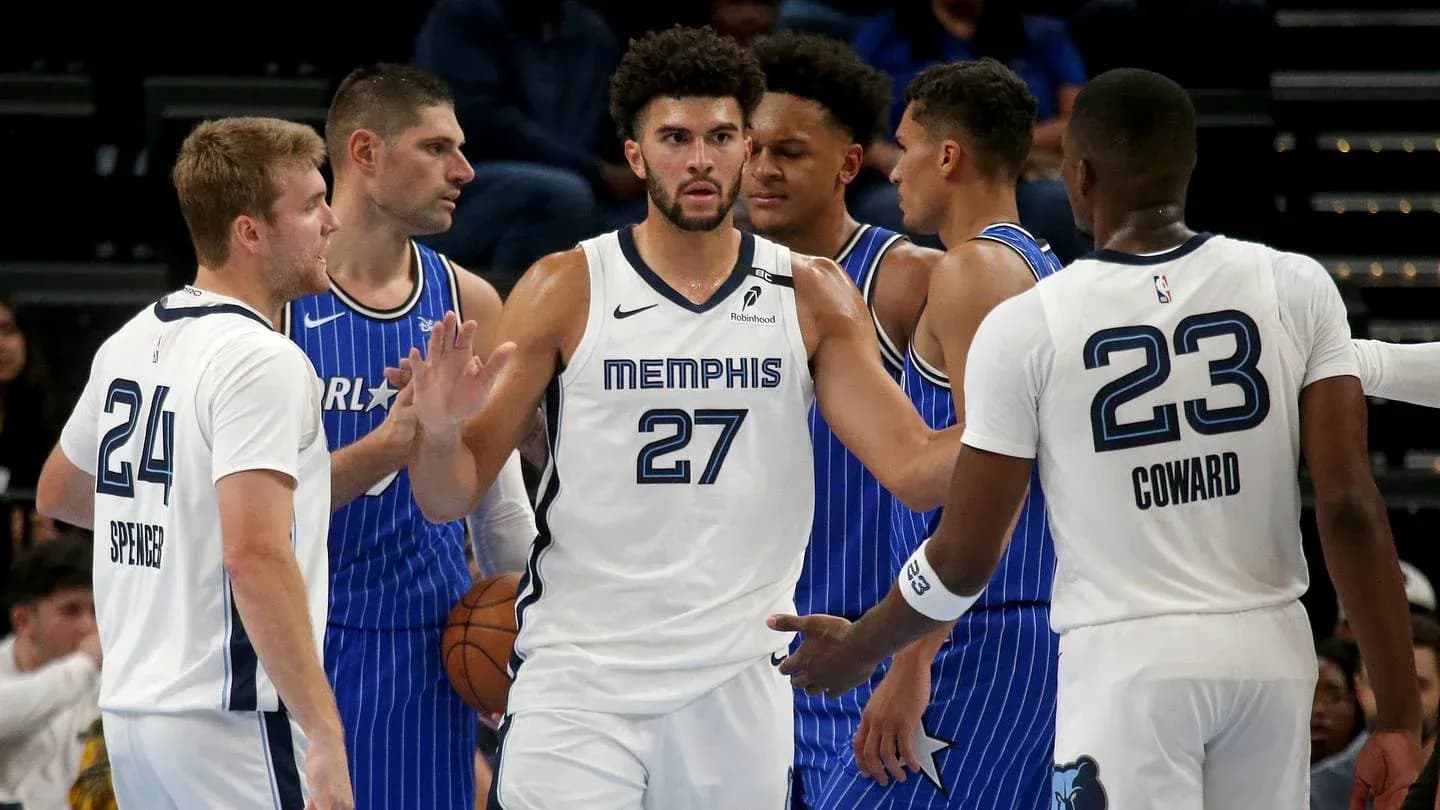
Cam Spencer is not just a good shooter; he’s tracking as one of those rare, historically efficient specialists. Ty Jerome has shown before he can catch fire for long stretches that stack up with the league’s best. Off the bench, Jerami Grant is burying 45% of his threes on nearly four attempts a night, a luxury release valve most second units can only dream about.
The real surprise has come from Jaylen Wells and Ced Coward. Both arrived with questions about how real their spacing would be at this level. Ten games in, they’re answering those questions with clean mechanics, confident volume, and the kind of reliability that reshapes scouting reports.
Memphis wanted a higher offensive floor to define this new era. Early returns say they’re getting it. The Grizzlies rank 6th in true shooting, 10th in offensive rating, and 12th in half-court offense. Those are the numbers of a team that can survive cold spells and still find ways to score.
Once the shooting cools, the percentages will slide. But if this group settles in as simply “one of the better shooting teams in the NBA,” that alone changes the trajectory of the rebuild. Memphis has never had that as a foundational trait. Now it might.
A Young Core That Already Fits
Young teams usually need time to figure out how to play together. Roles blur. Possessions get messy. Chemistry lags behind talent.
This group skipped a few steps.
The core of Cam Boozer, Zach Edey, Coward, and Wells has come out of the gate looking far more cohesive than any reasonable projection. Health helps. So does the way their games fit.
When those four share the floor, they look like a proper NBA unit, not a developmental experiment. They rebound with force. They execute offensively with a clarity that belies their inexperience. They defend as a group, not as four individuals chasing the ball.
Add Ty Jerome to that mix, and you have one of the most productive starting units in the league so far.
The key is buy-in. Each player has a role that highlights what he already does well, and each has revealed something extra.
Coward and Wells were supposed to be question marks from deep; they’ve become steady outlets. Edey, labeled by many as a situational big, has already shown he can anchor possessions defensively. Boozer is starting to turn his offensive processing into something tangible: the ball moves, the reads are quicker, the decisions cleaner.
The schedule will stiffen. The numbers will flatten. But that doesn’t erase what these first ten games have given them: proof. Proof that this group, as young as it is, can win NBA games together right now.
That kind of early validation can harden into confidence. And confidence, for a young core, often becomes the difference between a brief spark and a sustained rise.
Where the Cracks Still Show
The 7–3 record is real, and so is the excitement around it. The flaws are real, too.
Turnovers sit near the top of the list. Memphis ranks 20th or worse in both giveaways and takeaways. That’s a bad combination. Losing the turnover battle night after night chips away at the advantages they build on the glass.
Given the shooting and decision-making upside on this roster, that’s an area that should improve. But right now, it’s a pressure point.
So is rim pressure.
The Grizzlies have benefited from some three-point luck, both in their own shooting and in what opponents have missed. Early November offered a reminder of how quickly that can flip. When the shots stop falling, you need something else.
At the moment, that “something else” is too thin. Memphis ranks 27th in the percentage of total shots taken at the rim and 19th in finishing there. That’s a dangerous profile for a team leaning this heavily on perimeter success.
They don’t have elite self-creators who can bend a defense at will. They’re not a blur in transition. That means the half-court offense has to hum. The ball has to move, not just side to side, but downhill, to create layers of pressure and better looks at every level.
If they can’t find more consistent ways to get to the rim, the offense will feel fragile when the outside shooting cools. That’s the next big test.
Expectations, Adjusted
Make no mistake: this team is ahead of schedule. That doesn’t mean it’s wrong to raise the bar.
This version of the Grizzlies can compete most nights. They shoot it well enough, they care about the details, and they have a core that hates losing. That matters over 82 games.
The season will expose them at times. The schedule will tighten. The hot stretches will fade. But ten games into this new era, one truth is already on the board:
The wait for sustainable winning in Memphis might not be as long as anyone thought.