
Melvine Malard: From Reunion Island to Chelsea's Star Forward
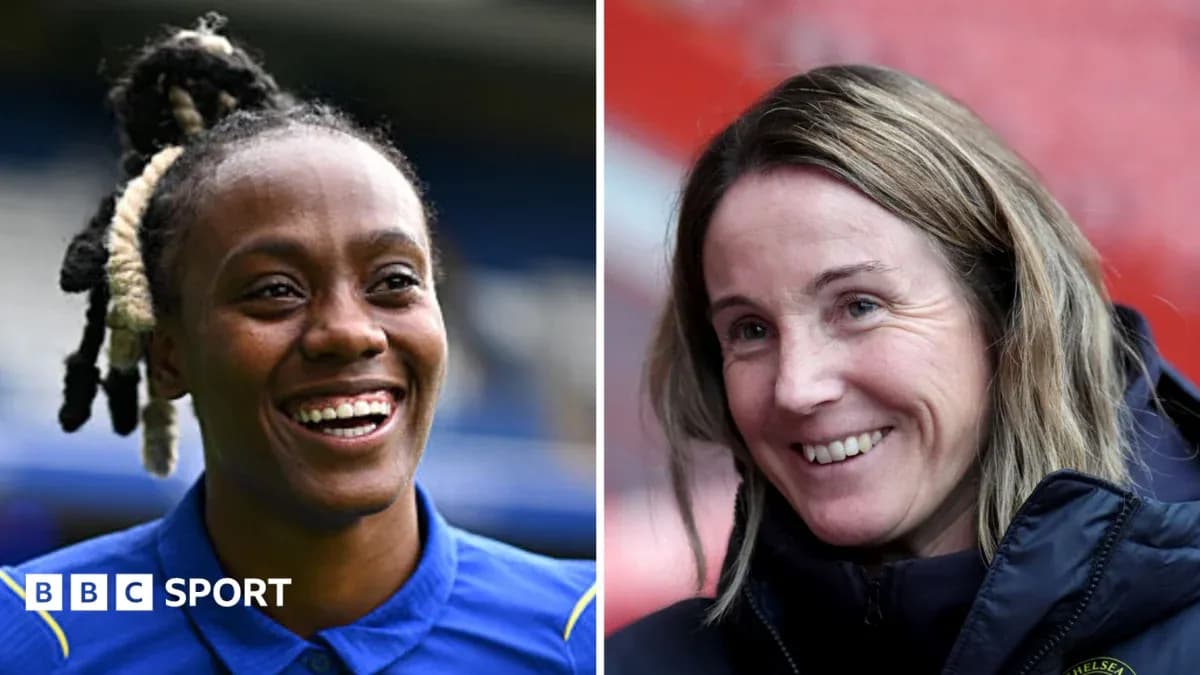
The girl from Reunion Island had never felt cold like it.
Fourteen years old, thousands of miles from home, Melvine Malard stood in the chill of a French winter at Clairefontaine, wrapped more in nerves than in clothing. In the trees beyond the pitches, the mist hung low. On the touchline, one of the most powerful figures in French women’s football watched in silence.
Sonia Bompastor saw enough in a few touches.
Within months, the teenager from the Indian Ocean would be uprooted from Reunion and dropped into the hard, unforgiving environment of Lyon’s academy. A decade later, that same girl now leads the line for Chelsea, the trusted No 9 for the very coach who once phoned her mother from almost 6,000 miles away and asked for the family’s faith.
From tropical heat to Lyon’s deep freeze
Clairefontaine has produced Kylian Mbappé, Thierry Henry and a roll call of French greats. For Malard, it was the place where a life split into a before and after.
Bompastor, then Lyon’s head of youth development and already a two-time Champions League winner, watched Malard at a youth tournament and moved quickly. Talent that raw doesn’t wait.
Convincing the player was easy. Convincing the mother was not.
“It’s a lot of responsibility for you as a coach to bring a young player like this and move her from her own family,” Bompastor says. The call had to be right. The message had to land. Trust me — not just as a manager, but as a woman, as a guardian of her daughter’s future.
That trust held. Malard left a tropical island where the temperature rarely slips below 20C for winters in Lyon that bite and linger. The football was elite. The climate was a shock.
One conversation still makes Bompastor laugh.
“I’m so sorry, Sonia,” Malard told her. “I think I need to go back to my place. It’s so cold here. I can’t play football any more!”
She stayed. Of course she did. “When Lyon calls you, it’s maybe just one time in your life,” Malard says now. “So you need to take your opportunity when it comes.”
The opportunity was not just about football. As head of the academy, Bompastor monitored everything, including school reports.
“When I did bad in school, she called me,” Malard remembers. “‘Mel, where are you? The school called me – it’s not good what you’re doing!’ That was a nightmare – Sonia is always here.”
Always here. On the pitch, in the classroom, in the background of every major decision.
From academy prospect to Champions League stage
The relationship survived the awkward teenage years and the homesickness. It grew as Malard climbed the ladder at Lyon, breaking into the first team at 17 in 2017.
By the time Bompastor took over as Lyon head coach for the 2021-22 season, Malard was no longer a project. She was a weapon. That season ended with the pair standing on the biggest stage of all.
In Turin, against Barcelona, Malard started the Champions League final. Lyon won 3-1. For Bompastor, that night still carries a particular weight.
“When you look at all the journey and Melvine coming as a young kid into a different environment, far away from her family… and how she improved to be starting that game and for us to win that game,” she says. “It’s a big achievement.”
The coach had taken a girl from a distant island and turned her into a European champion. The story could have ended there. It didn’t.
A new home, the same demanding voice
Fast forward to west London. Different badge, same voice in her ear.
Malard arrived at Chelsea from Manchester United in July. New league rivals, new dressing room, new expectations. No Sam Kerr, either. A gaping hole through the middle of the attack.
It took her just six Women’s Super League appearances to match her entire six-goal tally from last season. The void Kerr left suddenly looked smaller.
“I knew she had the potential to be a really good player,” Bompastor says. “Having known her for so long and all the hard work she has put in, I’m really proud of her.”
Pride, though, is not the end goal. Production is. Output is.
At United in 2025-26, Malard flashed her talent early, scoring four in the first two games, but then needed 17 matches and 1,206 minutes to reach six league goals. At Chelsea, she hit that mark in just 341 minutes.
The numbers behind the goals tell the story of a forward reborn in a system built to feed her.
At United, she averaged 3.4 shots per 90 minutes and 6.2 touches in the opposition box. At Chelsea, those figures have surged to 5.4 shots and 11.8 touches in the area per 90. She is living in the penalty box now, not just visiting.
Her chances are better, too. Expected goals per 90 have more than doubled from 0.5 to 1.1. The finishing has sharpened: her shot conversion has jumped from 10.5% to 22.2%. More chances, better chances, more ruthless execution.
It is not just a hot streak. It is a player operating in the part of the pitch where she can do the most damage, with a coach who has known for a decade exactly how to get her there.
Bompastor insists the growth goes beyond the obvious.
“She developed herself in terms of technical skills, knowledge of the game, understanding the game a little bit more, reading the game better,” she says. “She can play in different positions so we know we can use her as a nine or as a winger.”
That versatility gives Chelsea options, but it also underlines how complete a forward Malard has become.
Chelsea’s response to a broken dynasty
Bompastor walked into Chelsea and delivered the domestic treble in 2024-25. The bar could hardly have been set higher. The following season, the club slipped, collecting only the League Cup and finishing third in the WSL. A run of six straight league titles snapped. A dynasty interrupted.
This year, the response has been sharp. Nine games into 2026-27, Chelsea boast the league’s best attack and meanest defence. The machine looks rebuilt.
Yet even the best machines can misfire. A disappointing draw at home to Everton last weekend allowed champions Manchester City to jump above them. The margin for error in this rivalry is measured in single points and single moments.
Now the two sides collide at Stamford Bridge on Saturday, live on BBC One, in a match that already feels like it will leave a mark on the title race.
Malard is expected to lead the line. A girl who once begged to go home because she was too cold now stands as one of the central figures in English football’s fiercest modern duel.
The next challenge: from Chelsea blue to France’s No 9
For Bompastor, the horizon stretches beyond club football. She has never just coached for the next game. She has always coached for the next level.
When Malard asks what her manager wants from her this season, the answer is clear, and it is anything but modest.
“I would like you to play for France next summer as the number nine and to win the World Cup,” Bompastor tells her.
No hedging. No soft landing. France’s starting striker at a World Cup, and lifting the trophy.
Twelve years on from that first meeting at Clairefontaine, the dynamic has barely changed. The coach still pushes, still demands, still believes there is more. The player still chases, still adapts, still delivers.
From a frozen training pitch near Paris to a packed Stamford Bridge and, perhaps, a World Cup summer in French blue, the journey is already remarkable.
The real question now is not how far Melvine Malard has come — it is how much further Sonia Bompastor can drive her.





