Mauricio Pochettino Reflects on World Cup Challenges and Future Ambitions
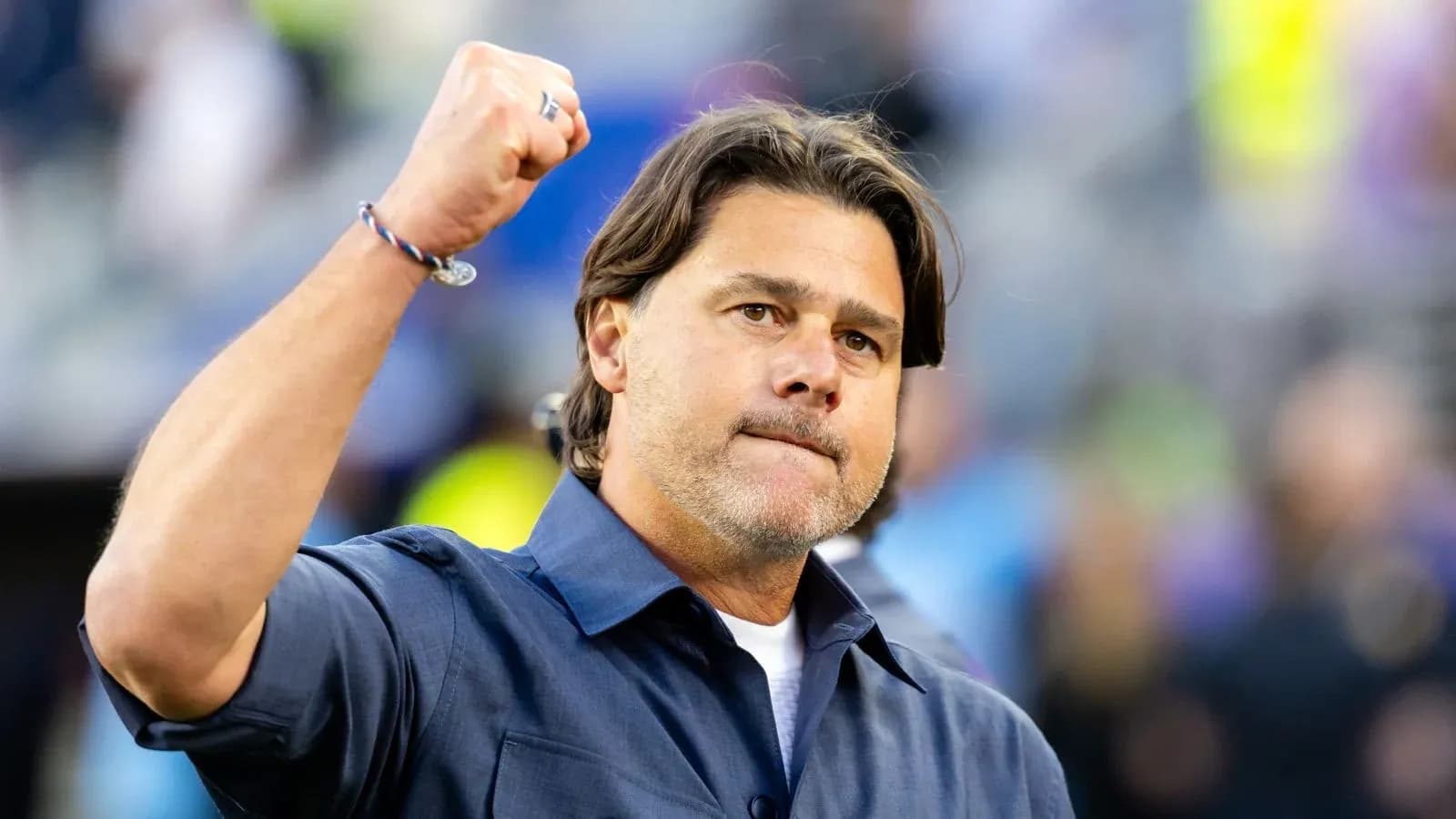
Mauricio Pochettino walks into the room and it feels less like an interview, more like a reunion. Hugs, jokes, stories from the summer. The difference is his summer involved a World Cup, a president, FIFA politics, a fashion storm and, eventually, a four-year contract that ties him to the USA until 2030.
Everyone else got a holiday. Pochettino got a whirlwind.
‘We are much better coaches now’
He starts where all good football stories start: the World Cup.
The USA’s run ended in the last 16 against Belgium, a harsh full stop on a campaign that had gripped a host nation. On paper, it’s a respectable finish. In his mind, it was something deeper.
“We are much better coaches now,” he says, without hesitation. The tournament, he explains, sharpened him and his staff, including long-time assistant Jesus Perez. The margins were brutal, the details obsessive. International football gave him a new kind of challenge: imprinting complex ideas on players who spend only short, intense bursts together, not the day-to-day rhythm of club life.
“Everything needs to be perfect,” he says. Every session, every meeting, every decision. Get one wrong, and the whole thing can tilt.
The environment was already high-pressure. A home World Cup turns that up again. Add Donald Trump into the mix and you get something close to chaos.
Trump, FIFA and the Balogun storm
There are World Cups, and then there is managing at a World Cup with a president who thrives on the spotlight. Pochettino treads carefully when the subject of Trump comes up, choosing to highlight the backing and support the team received.
The calm tone masks what was going on around him. The Folarin Balogun case dragged FIFA, politics and public anger into the heart of the USA’s campaign. His “suspension of his suspension” became a saga in its own right, overshadowing the build-up to the Belgium game.
Pochettino understood the fury swirling outside. He also knew he couldn’t live in it.
“If you pay attention to the noise, you become crazy,” he says. When FIFA’s letter landed the day before the game confirming Balogun could play, the football decision was, in his words, “straightforward”.
The noise, though, never really went away. And it has followed Balogun into club football. His proposed move from Monaco to Everton collapsed late on Deadline Day, leaving the striker stuck where he started. Pochettino hasn’t called him yet.
He is giving him space. He knows how hard that kind of failed move hits a player. He admits he would have liked to see Balogun in the Premier League. For now, the hope is simple: that Balogun settles, plays, and finds his rhythm again in Monaco.
The accidental style icon
While the football raged, something else took off: the Pochettino look.
The navy touchline ensemble became an unlikely talking point of the tournament. It wasn’t new that Pochettino cared about how he dressed. What was new was the reaction. It spawned headlines, social media threads and, famously, a shopping trip.
Wayne Rooney went out and bought the outfit.
“I saw him. He looked good on him, like a top coach,” Pochettino laughs. It’s a rare moment where the pressure of the job melts away and the man who once prowled the touchline at White Hart Lane just enjoys the absurdity of it all.
It really was a summer that had everything: drama, politics, fashion and, at the end of it, a decision that surprised plenty.
Four more years – but not the end of the Premier League story
As the World Cup dust settled, the rumour mill spun up. Pochettino’s name flickered around Europe’s vacancy lists. AC Milan were mentioned. Other clubs too. It never got far.
He had already chosen. The USA wanted him to stay. He signed on until 2030.
Six years away from club football sounds like a long exile for a coach who once stood 90 minutes from Champions League glory with Tottenham. Does that close the door on the Premier League?
He doesn’t blink.
“I have the ambition,” he says. His dream now is clear: four years with the USA. After that? He leaves the door wide open.
“Why not? We are still young, and I think coming back is always my goal; to win the Premier League, to be in the Premier League and to build a project with the possibility of winning.
“I love the football here. I think to have the chance again is one of my wishes and I hope that happens.”
The words are measured, but the intent is sharp. He doesn’t just want to return. He wants to come back to win.
The Spurs question that never goes away
With Pochettino, the conversation always circles back to Tottenham eventually. It has to.
Eighteen months ago, he spoke about unfinished business at Spurs. He made no secret of his desire to return one day. Since then, the club’s dugout has been a revolving door. Ange Postecoglou struggled and left. Thomas Frank and Igor Tudor came and went as the club slid dangerously close to the relegation trapdoor.
So, did the call ever come?
“Always I say, one day, why not?” he replies when the idea of a Spurs return is raised again. This time, though, the reality never matched the romance.
“People talk and maybe we receive some approach, but it never was close.” Not this time.
As for those other links – Milan and the rest – he draws a clear line.
“We were not open during the World Cup to talk with different clubs that were interested,” he says. Were there clubs interested? “Yes, always,” he adds, as if it’s simply part of the job description. “Yes, always have different, you know, options.”
He admits nothing got near. “We never gave the opportunity to be close. We always closed the door before it got close.”
The USA project took priority. Everything else waited.
Spurs, Chelsea and the cost of ambition
Talk turns to his old clubs. Tottenham first, because with Spurs it is never dull.
“They are investing like other clubs,” Pochettino notes. After a couple of bruising seasons, Spurs have switched strategy, throwing serious money at players who already know the Premier League. It’s a far cry from the more cautious spending of his own era, when he pushed them to the brink of a title and a Champions League crown on comparatively modest outlays.
What would he have done with £300m to spend? He just smiles, feigning ignorance of what that kind of budget even looks like.
So does he think this bold new approach will work?
“You never know,” he says. Decisions in football are always gambles, whether made by a coach on a team sheet or a club on a transfer. “We need time to see if that works or not.
“Like in all the games, when you make a decision like a coach that can work well or not. I think it’s a different strategy and a different way to operate. I always wish the best for Tottenham because it’s in my heart.”
Chelsea, the other London chapter of his career, have also changed direction. The role he once held as head coach is now labelled “manager”. The transfer policy has shifted too. Under Xabi Alonso, the club are targeting Premier League-ready players rather than long-term projects.
Pochettino is careful not to draw straight lines between his tenure and the current one, but he recognises the intent.
Buying proven players carries a clear message: Chelsea expect to fight for the Premier League.
The early evidence has been mixed. A defeat to Arsenal has already given Alonso a harsh introduction to the league’s reality. Pochettino, though, urges patience.
“Of course they are disappointed after the defeat against Arsenal, but I think we need to give time to Xabi’s first season after three games in the Premier League,” he says.
“I think we need to give time, and of course for Tottenham the same.”
Arteta and the standard to beat
If Spurs and Chelsea are searching for stability, Pochettino is clear about who currently sets the benchmark.
For him, Arsenal are in pole position.
“Mikel [Arteta] is the best coach in the Premier League today,” he says. No caveats. No qualifiers. He believes Arteta knows exactly what he needs to do, and that makes Arsenal a formidable obstacle for anyone with title ambitions.
The line hangs in the air. Pochettino, tied to the USA until 2030, still talking about projects, titles and the Premier League with the same intensity as ever.
He has a World Cup behind him, another on the horizon, and a national team to shape. Yet somewhere beyond that, in a future he clearly still thinks about, lies a simple question.
When he comes back to England, who will be ready for the version of Mauricio Pochettino that says he is “much better” than before?