
Mauricio Pochettino's Vision for US Soccer: Belief and Challenges
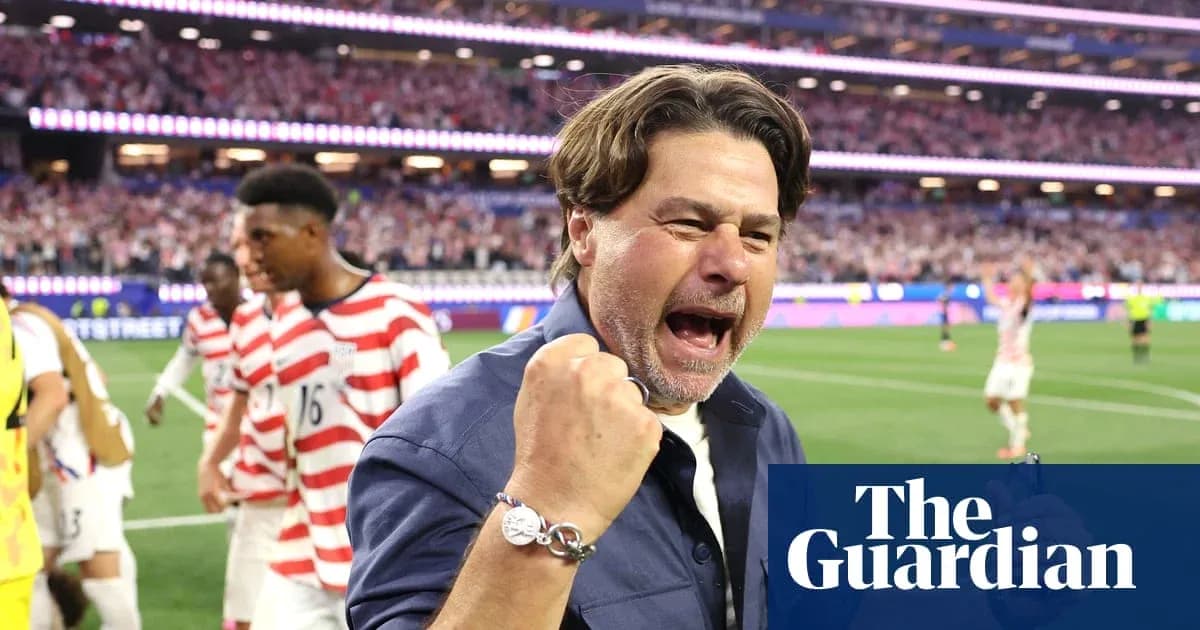
Mauricio Pochettino walked into New York selling belief.
Freshly hired after the US men’s national team crashed out of the 2024 Copa América and sent his predecessor packing, he sat high above the Hudson River on the 24th floor, the city spread out beneath him, and set his sights even higher. Asked about culture, about mindset, he reached straight for the gold standard: the four-time world champion US women.
“We need to believe that we can win,” he said that September day in 2024. “That we can win not only a game: We can win the World Cup.”
For a fan base conditioned to skepticism, it sounded like a transmission from another planet. US men’s supporters have spent decades juggling hunger and humiliation – craving a breakthrough while being reminded, at home and abroad, of their supposed place in the sport’s hierarchy. Even now, with American players entrenched in Europe’s elite, the idea of the US lifting a men’s World Cup still feels, to many, like a fantasy.
Pochettino never treated it that way. He hammered that line again and again: the US could make a miraculous run in 2026 and win the whole thing. He said it in press conferences, in private conversations, and even, notably, to Donald Trump – a bold sales pitch that would later feed into a political narrative he couldn’t control.
Belief sells. It pulls in casual fans who know the game more from Apple TV than from late-night CONCACAF qualifiers. It promised a new era.
But belief, under Pochettino, rarely matched behavior.
A coach with one eye on the door
From early on, the drumbeat started. Reports from England. Whispers about Premier League jobs. A constant hum linking Pochettino back to club football, long before Manchester United finally came calling.
The US Soccer Federation knew what it was signing up for. Hire a coach of Pochettino’s stature and you don’t get silence; you get noise, speculation, suitors. It’s like dating a supermodel and expecting nobody else to look. Yet too often, it felt like Pochettino was the one keeping the rumor mill spinning.
Mornings in the US would begin with fresh clips of the Argentinian praising the Premier League, reminiscing about his time there, or openly entertaining the idea of a return. None of it was scandalous. Professionals protect their futures. Bridges stay unburned. But for a country trying to rally around a once-in-a-generation home World Cup, it jarred.
This was the man tasked with galvanizing a program and a fan base. At times, he sounded like someone already halfway out the door.
Wrestling with America
Pochettino also appeared perplexed, even irritated, by the uniquely American quirks he was supposed to help navigate.
After losing the 2025 Gold Cup final to Mexico in Houston, he took aim at the lopsided crowd, bristling at the idea that the US would play a de facto away game on home soil. The phenomenon is older than MLS itself and deeply rooted in demographics, history and identity. Any brief study of US soccer would have flagged it as a given.
He picked at other threads too. The lack of real jeopardy in Major League Soccer. The sense that American players are overly protected in their youth development. Those critiques struck chords; they weren’t without merit. But they sat uneasily alongside his clashes with media who questioned the impact of a group-stage loss to Turkey at the World Cup.
For all his talk about pressure and standards, Pochettino operated in a far more forgiving environment with the USMNT than he would have in almost any other major football nation. In many ways, it was the softest big job he could have taken.
The contrast became hard to ignore. He’d been hired to reshape how Americans see the sport, yet he often seemed exasperated by the very landscape he was meant to change.
Whiplash on the world stage
Then came the highs. And they were real.
The US’s 4-1 dismantling of Paraguay at the World Cup was not just a good night. It was, by any measure, the team’s finest performance on the biggest stage. They played with conviction, tempo, and ruthlessness rarely associated with the crest. For once, the belief Pochettino preached seemed to pour out of his players.
There he was afterward, close to tears, roaring out “Country Roads,” leaning hard into the American experience. He spoke glowingly about the country, its fans, its football culture. In moments like that, it felt as if he’d finally plugged into the heartbeat of the program.
And then, just as quickly, came the crash.
Belgium 4, United States 1 in the round of 16. A beating that will sit alongside the darkest days in US World Cup history. Given the expectations, the platform and the opponent, it may be the most scarring of the lot. A night when the dream of 2026 didn’t just fade; it was ripped apart under the harshest floodlights.
This was the Pochettino era in miniature: emotional surges followed by brutal reality checks. Every time the country leaned in, something jolted it back.
Legacy without a clean line
Ask most athletes or coaches about their legacy and they recoil. It sounds like an epitaph, an invitation to close the book. Legacies shift with time. Successors rewrite them. Perception mutates.
Pochettino is different. He has always been a big-picture thinker, comfortable talking about values, identity, and grand projects. Even so, when the Guardian pressed him on Friday to define his impact, he hesitated.
“I am not arrogant,” he said, smiling, before catching himself. “Well, not arrogant enough. I am a little bit arrogant.”
Eventually, he landed where he often does: on relationships, on process, on doing things “the right way.”
“The most valuable feeling that we get isn’t one victory, or that we helped in the program,” he said. “It is that relationship in the program – even when you cross the sea, you look and smile because I think you share the values that are very important in life, more important than anything else. That is our principal that we respect always.”
It was classic Pochettino: expansive, emotional, sincere. A man more comfortable talking about bonds than about brackets.
An unfinished project
He arrived in the US with a broad remit. Deliver a respectable home World Cup. Nudge the sport further into the American mainstream. Lay foundations for something that could last beyond 2026.
On some fronts, he delivered. The US produced a World Cup performance against Paraguay that will be replayed for years. He forced uncomfortable conversations about MLS, youth development and competitive stakes. He gave the program a louder, more ambitious voice on the global stage.
On others, he left a hollow echo. The World Cup exit to Belgium stung deeply. The constant flirtation with club jobs undercut his calls for unity and belief. His visible frustration with the realities of American soccer made it hard to fully buy into his vision.
In the end, Pochettino asked a nation to believe in something extraordinary. The irony is hard to escape: for all his words, for all his gestures, the lingering question is whether he ever truly believed it himself.





