
Mauricio Pochettino's Premier League Legacy: Numbers and Challenges
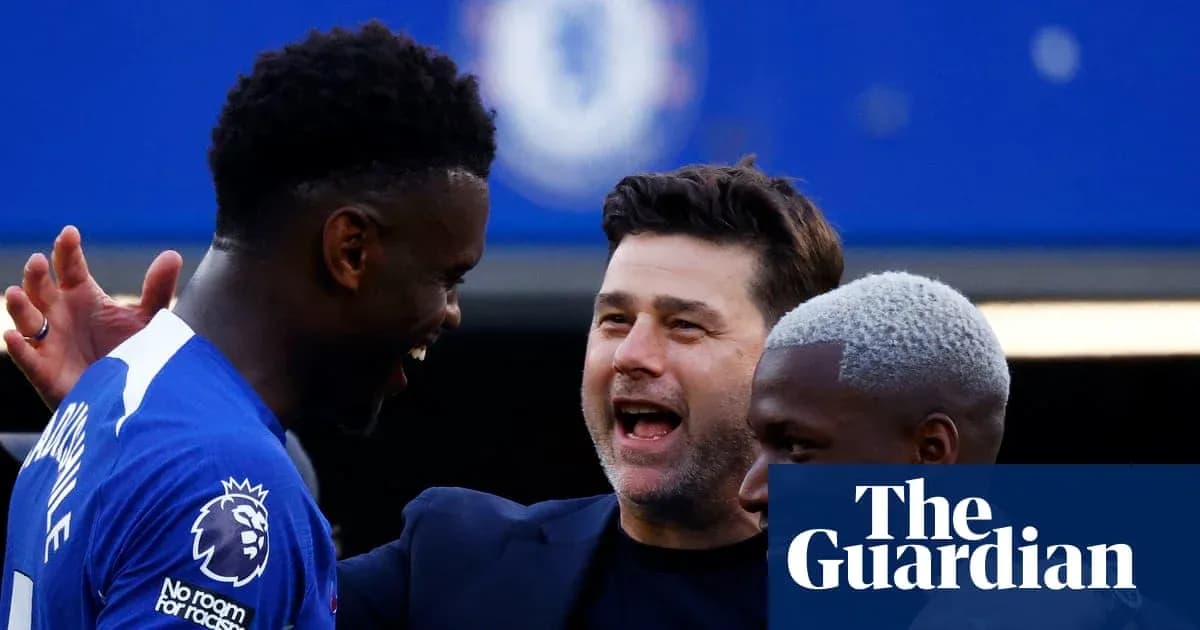
Mauricio Pochettino belongs in the Premier League’s penthouse. The numbers say so.
Among managers with more than 290 games in the division, only Alex Ferguson, Arsène Wenger, José Mourinho, Jürgen Klopp and Pep Guardiola boast a better points-per-game return. That’s the sport’s managerial aristocracy – and Pochettino is on the same floor, even if his trophy cabinet does not shout as loudly.
His career in England has always been about elevation. He walked into Southampton midway through their first season back in the top flight in 2012-13, with the club still shaking off seven years in the lower leagues. By the end of his only full campaign, they were eighth, punching well above their financial weight and playing with a clarity that turned heads higher up the table.
Tottenham was the logical next step and again his presence shifted the club’s ceiling. Second in 2016-17, third in the seasons either side, and that improbable run to the 2019 Champions League final. Spurs did not simply improve; they started to behave like a serious contender under a manager who could organise, energise and, crucially, convince.
Then came the break. Across the past six Premier League seasons, Pochettino has been on the touchline for just one of them. The spell at Paris Saint-Germain brought Ligue 1 and Coupe de France titles, but in that environment, domestic success proves very little about a coach’s edge. The real test for any prospective Manchester United manager lies in his most recent English work: the wild, uneven, and often bewildering 2023-24 season at Chelsea.
Chelsea had crashed to 12th the previous year, the first full campaign under Todd Boehly and Clearlake Capital. Pochettino was almost guaranteed to take them higher. He did. The question is how much of that rise truly belonged to him.
Opta’s pre-season model had Chelsea pegged for sixth. They finished sixth. On one level, Pochettino hit par. On another, the bar should have been higher. Transfermarkt valued his squad as the third-most expensive in the league by October 2023, a reflection of staggering investment. When your squad sits in that financial bracket, sixth can feel less like stability and more like underachievement.
The money poured in relentlessly. Across the three transfer windows from summer 2022 to summer 2023, Chelsea outspent every club in Europe’s big five leagues each time. It was squad-building at breakneck speed, a revolving door of potential and promise. For Pochettino, it was chaos training for any future job at Manchester United – the politics, the noise, the churn – even if United’s new regime is unlikely to match that level of spending.
Trying to weld a coherent, winning side out of that constant flux is a brutal assignment. Yet the underlying numbers suggest Pochettino brought some order to the storm. Chelsea produced the fifth-highest expected points total in the league in 2023-24: 63.4. That figure sat well behind Arsenal (81.2), Manchester City (79.3) and Liverpool (76.2), but for a first season in a rebuild, it was not a disaster. It was, in many respects, a base camp.
The surface told a stranger story. Chelsea conceded 63 league goals, their worst defensive record in the Premier League era. At the same time, they scored 77, a figure they have bettered only twice in the competition’s history. They slightly outperformed their expected goals at both ends, but the volume of chances for and against largely matched the data. This was not a freak season; it was a structural one.
Even those xG numbers come with caveats. Chelsea won 12 penalties in the league, the joint-second-highest tally across the last decade of Premier League football. Since Pochettino left, they have earned 14 penalties in 86 league matches – a far more ordinary rate. His Chelsea also conceded five penalties and racked up 22 Opta-defined defensive errors leading to shots, the joint-most in the division that year.
This was a team that could not sit still. Across three games in April 2024, they drew 2-2 with bottom club Sheffield United, smashed Everton 6-0, then were dismantled 5-0 at Arsenal. Earlier in the season they had lost 4-1 at Tottenham, been thrashed 4-1 at Newcastle, and squeezed a 4-4 classic out of Manchester City in between. By the end of the campaign, Chelsea had set a Premier League record: 12 matches in a 38-game season where they both scored and conceded at least twice.
How do you pin that on a manager’s report card? Genius, chaos, or both?
The low point, emotionally at least, came at Wembley. After losing the 2024 Carabao Cup final to Liverpool, Gary Neville branded Chelsea “billion-pound bottle jobs” on commentary. The nuance – that Chelsea had created enough chances to win – vanished under the weight of the phrase. Pochettino fronted up, absorbed the criticism, and carried the questions. Less than three months later, he was out.
While he has been in and out of the English spotlight, the Premier League has shifted again. Arne Slot arrived, won the title, and departed. Guardiola’s exit has stripped the league of its last towering managerial figurehead from the previous decade. On the pitch, the game has become more combative and detailed: more man-to-man marking, more set-piece routines, more matches decided by rehearsed dead-ball skirmishes than feels entirely healthy.
Opta’s data suggests that Pochettino’s likely next team will look different from his Chelsea side. They move the ball upfield more quickly, but they do not press with the same intensity. That gap will demand work. So will the perception problem. At Chelsea, one well-placed source described his training methods as “antiquated” – a loaded word in a league that fetishises innovation and marginal gains.
Can an elite coach who built his reputation on ferocious pressing and emotional connection retool himself fast enough for the next United cycle in 2026-27? The history says Pochettino adapts. His Premier League record demands respect. The doubt lies not in who he was, but in how sharply what he has done lately maps onto the brutal, accelerated reality waiting for him next.





