
Mauricio Pochettino Takes Charge of Manchester United
Old Trafford is about to get a shock to the system.
Manchester United have handed the keys of the club to Mauricio Pochettino, confirming on Friday that the Argentine will take over from Michael Carrick on 18 November on a deal running to June 2029. With it comes a clear message to a squad long accused of drifting: the holiday is over.
‘Brutal’ means brutal
Ask anyone who has worked under Pochettino and one word keeps coming back: brutal. Not in his personality, but in what he demands from a body, from a dressing room, from a club.
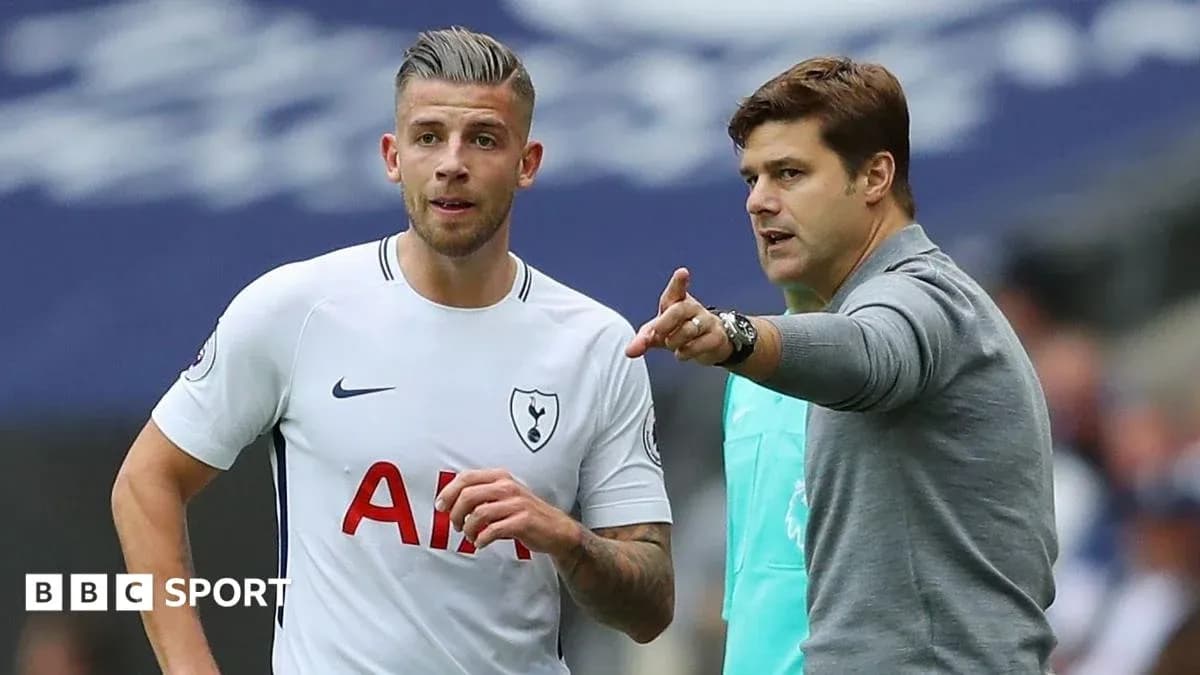
Toby Alderweireld knows the drill. He spent four years under Pochettino at Tottenham, a spell that took Spurs to a Champions League final and a second-place finish in the Premier League. At 37, with distance from the intensity of those days, his verdict has not softened.
Pochettino, he says, is approachable, open, human. But only on his terms.
He listens. He talks. He understands that players have families, problems, lives outside the training ground. Then he draws a line: the team comes first. Always. If you cannot live with that, you do not play.
Follow the plan or step aside. And once you are on the outside, Alderweireld is clear – you rarely find a way back.
The main man, not a committee
United have spent years searching for a “big character” manager, someone capable of aligning a fractured squad and a restless club. Pochettino will not pretend to be anything else.
He has his own ideas. You might agree with them or not. It does not matter. You follow him.
If you do not, there is “no problem”, as Alderweireld puts it – you can go. The hierarchy is not up for debate. Pochettino is the main man, and everyone else falls in behind the plan or falls away.
That clarity is something United have sorely lacked. Managers have spoken about projects, processes, long-term visions. Pochettino deals in something simpler and far more unforgiving: standards.
Us against the world
The Argentine is also a master of mood. He knows exactly how to handle the cameras and microphones, when to protect his players, when to shield the club and when to turn the outside noise into fuel.
At Tottenham he built a siege mentality. It was Spurs against everyone. Expect the same at Old Trafford.
He will tell his players they are together, that the criticism does not matter, that the only answer is work and more work. He will bind fitness, unity and results into one message: we suffer now to win later.
And he will live that message himself. At Spurs, he did not simply delegate and disappear. He was on the grass, on the training pitch, in the analysis room. If he was not physically present, he was watching video and data. He knew everything – how they trained, how they recovered, what they did on and off the pitch.
Alderweireld calls him a “control freak” in a positive way. For Pochettino, a player’s body is a weapon. If it is not ready, it is wasted.
A rude awakening for United’s runners
That mantra collides head-on with one of United’s most damning statistics this season. They sit in the bottom five in the league for distance covered and for high-intensity runs. For a club that once defined itself by relentlessness, it has become a brutal mirror.
Pochettino will smash that mirror.
His number one demand is simple: run. Then run again.
Pre-season under him is notorious. Alderweireld does not dress it up. It was brutal at Spurs. And that was for a squad already conditioned to press, to play on the front foot, to squeeze up with a high line and harry opponents into mistakes.
The football Pochettino wants is dynamic, aggressive, suffocating. You cannot fake that. You either have the fitness to sustain it or you get exposed.
Every manager talks about needing a good pre-season. Pochettino turns it into a test of character as much as conditioning. Players feel the difference immediately. The level goes up, every day, every session. There is no cruise control at the training ground. It is 100% or it is not enough.
At United, where questions about running and intensity have echoed around every poor performance, that shift will be stark. Some will thrive. Some will struggle. All of them will feel it.
Belief, intensity, and Amsterdam
If all this sounds like a lecture in fitness, it is not. Pochettino’s football is also emotional. He leans on belief as hard as he leans on running.
Alderweireld reaches for one night to explain it: Amsterdam, Champions League semi-final, 2019. Tottenham 3-0 down on aggregate to Ajax and going out with a whimper.
Half-time in that second leg could have been a tactical clinic. A reshuffle, a tweak, a whiteboard full of arrows. Pochettino chose something else.
No grand tactical speech. No complicated instructions. Just a demand: be physical, fight, believe that one goal changes everything. Win your duels. Ask yourself how badly you want it.
From there, Spurs turned the tie on its head, powered by intensity, long balls to Fernando Llorente, and a refusal to stop running. It was not about a clever system. It was about mentality and the fitness to sustain it.
United’s players will hear that kind of message. Then they will be expected to live it.
A new reality at Old Trafford
So what awaits the United squad when Pochettino walks through the doors at Carrington at the end of next week?
A manager who will watch them, relentlessly. A staff led, not just staffed. A dressing room where “team, team, team” is not a slogan but a non-negotiable rule.
Training will spike in intensity. The excuses will dry up. The numbers – distance covered, sprints made, duels won – will matter as much as touches, passes and social media metrics.
For some, it will feel like a rebirth. For others, a reckoning.
Pochettino has signed until 2029. That is a long contract in modern football, but his message will be immediate: you are either coming with me, or you are not coming at all.





