
Mauricio Pochettino Appointed Manchester United Head Coach
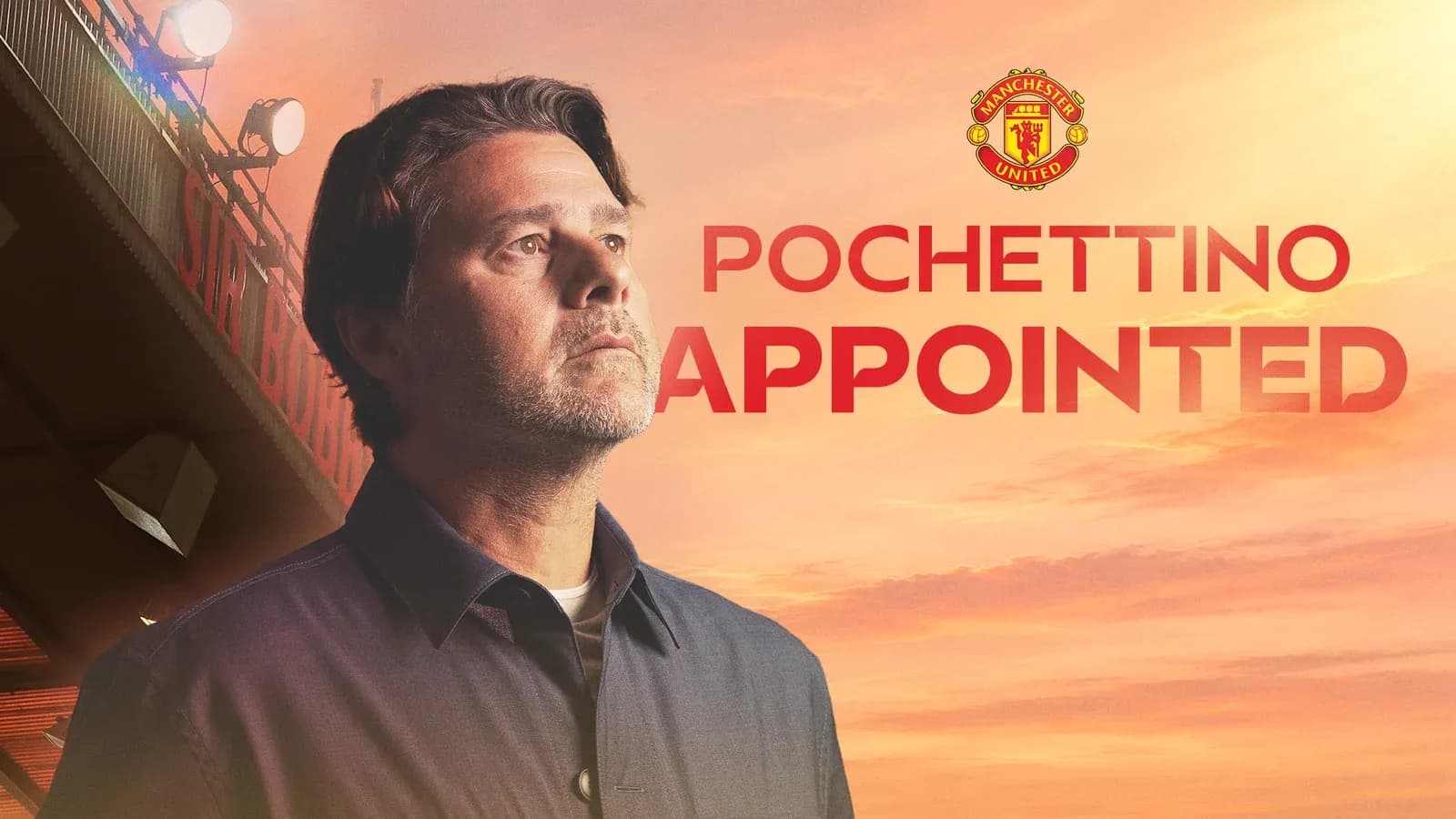
Manchester United have turned to Mauricio Pochettino as the man to drag them out of crisis and into a new era, appointing the Argentinian as head coach on a deal running until the summer of 2029 after sacking Michael Carrick.
Pochettino will formally start on Wednesday, once he has completed his duties in charge of the USA’s fixtures against Haiti. He is due in Manchester that afternoon or evening to meet the club’s hierarchy for the first time, then on the grass with his new players on Thursday. Three training sessions. Then Anfield.
His first game? Liverpool away on Sunday November 22. Live on Sky Sports. A gentle introduction this is not.
United have agreed to pay around £7.4m to buy him out of his freshly signed contract with the USA, a figure that underlines just how firmly the club’s leadership believed he was the right – and only – choice.
A club on its knees, a coach who thrives in chaos
Carrick’s dismissal came after the worst start to a Premier League season in United’s history. Ten games, relegation zone, a team stripped of conviction and identity.
Into that turmoil walks a coach renowned for intensity, structure and emotional connection. In their statement, United leaned hard into the Pochettino brand: “high-intensity, attacking style of football, his dedication to building strong, cohesive teams and his outstanding record of developing individual players.”
They know exactly what they are buying. Pochettino has built reputations at Southampton and Tottenham, managed egos and expectation at PSG, and carried a clear tactical blueprint into every job. Press high, run hard, play on the front foot. Demand everything.
He has not, though, lifted a major trophy in England. That remains the asterisk. He took Spurs to a League Cup final and a Champions League final, and later won Ligue 1 and the French Cup at PSG, but the question has always lingered: can his methods deliver the final step at the very top?
United, desperate for a coherent football identity, are betting that the platform comes first. The medals can follow.
‘Unanimous choice’ after Monaco summit
This appointment has been years in the making. Pochettino has been linked to the Old Trafford job in several previous cycles; this time, United moved decisively.
A key meeting in Monaco on Wednesday brought together club chiefs Omar Berrada and Jason Wilcox with owner Sir Jim Ratcliffe to finalise the next steps. Out of that summit came a clear outcome: at 54, Pochettino was the unanimous recommendation of the football leadership, and the ownership signed it off.
Club sources have dismissed as “categorically false” reports of a split between the board and the owners over the identity of the next head coach. Internally, the message is that there was no debate in the end. Pochettino was the only candidate they spoke to directly, despite the usual swirl of speculation around other names.
For once, United’s process appears streamlined. Now the hard part starts.
Supporters demand backing, not just words
If Pochettino needed a reminder of the scale of the club he is joining, it came quickly from the Manchester United Supporters’ Trust. Their statement carried both warmth and warning.
“We warmly welcome Mauricio Pochettino to the club,” it read. “When he arrives in Manchester, he will find a fanbase that, whilst furious with the owners, always gives the manager and team on the pitch full-throated support. We now hope the club backs the new manager and gives him all the power, resources and tools he needs to succeed.”
The message is clear: the manager will get their backing. The owners will not, unless they match their rhetoric with investment and authority.
That tension will frame Pochettino’s early months. He is walking into a club where patience with the board is exhausted, but where the appetite to believe in a coach with his profile remains strong.
A brutal first run: Anfield and Europe
There will be no easing-in period. After three days on the training ground, Pochettino takes United to Liverpool in the Premier League on Sunday November 22. The fixture list then tightens around him.
His first six matches:
- Liverpool (A) – Premier League – Sunday November 22, live on Sky Sports
- Sporting (A) – Champions League – Wednesday November 25
- Brentford (H) – Premier League – Saturday November 28
- Newcastle (A) – Premier League – Wednesday December 2, live on Sky Sports
- Coventry (H) – Premier League – Saturday December 5
- RB Leipzig (H) – Champions League – Tuesday December 8
Anfield, a hostile European away day, a resurgent Newcastle, and key Champions League group fixtures. Any illusion of a quiet bedding-in period disappears at a glance.
The pressure will be immediate. So will the scrutiny of his selections, his system, his handling of big personalities.
January power play and contract crossroads
Behind the scenes, the next fault line is already visible: the January transfer window.
According to Sky Sports News, United are expected to back Pochettino “considerably” in the market, even though the club traditionally prefers to do the bulk of its business in the summer. The recent window was subdued partly because United could not move several players out, restricting what they could bring in.
One aborted deal summed up the mess. United had expected to receive £36m for Marcus Rashford under the terms of a contract with Barcelona. Barcelona walked away and chose Anthony Gordon instead. The money never arrived, the squad never properly turned over, and the wage bill remained bloated.
This summer, the situation sharpens. A number of key players are out of contract, including Harry Maguire, Bruno Fernandes and Luke Shaw. United hold one-year options on those deals, but each decision carries sporting and financial weight.
Many of them are on huge wages. Fernandes is the club’s second-highest earner behind Rashford. Both are out of contract in the summer. Do United trigger the options and commit big money to the same core? Or does Pochettino oversee a ruthless reset?
The answers will shape not just one window, but the entire arc of his tenure.
What Old Trafford can expect from ‘Poch-ball’
If there is one thing Pochettino brings that United have lacked, it is clarity of idea.
At Southampton, his tactical blueprint was unmistakable: aggressive pressing, compact lines, quick vertical attacks. At Tottenham, he layered youth and dynamism on top of that structure, building a side that ran harder and thought quicker than almost anyone in the league. At Paris Saint-Germain, he had to bend his principles to accommodate superstars, but the core themes remained: intensity, discipline, collective responsibility.
United’s own statement leaned heavily on his “outstanding record of developing individual players”. That line will not be accidental. This is a club that once prided itself on turning raw talent into world-class operators. In recent years, too many have stalled.
Under Pochettino, players know the demands. Training is hard. Distances covered matter. Off the ball work is non-negotiable. Those who buy in tend to improve. Those who don’t tend not to last.
The question now is whether a fractured, underperforming United squad can be welded into the kind of cohesive, hard-running unit that defined his best Spurs sides – and how quickly that transformation can begin.
Three days, one statement game
The timeline is unforgiving. Pochettino meets his bosses on Wednesday. He meets his players on Thursday as the squad returns from the international break. He gets three training sessions. Then he walks out at Anfield as Manchester United manager.
For a club that has spent a decade searching for the right voice on the touchline, the symbolism is stark. A coach famed for intensity and identity, taking charge of a team that has lacked both, thrown straight into one of the fiercest fixtures in world football.
United have made their choice. They have paid their money. They have handed Pochettino time on paper – a contract to 2029 – and promised him support in the market.
Now comes the only verdict that matters: what this looks like on the pitch, and whether a manager who once came so close to glory in England can finally turn promise into something more tangible under the brightest, harshest lights of all.





