
Mauricio Pochettino Takes Over Manchester United Amid Emotional Farewell
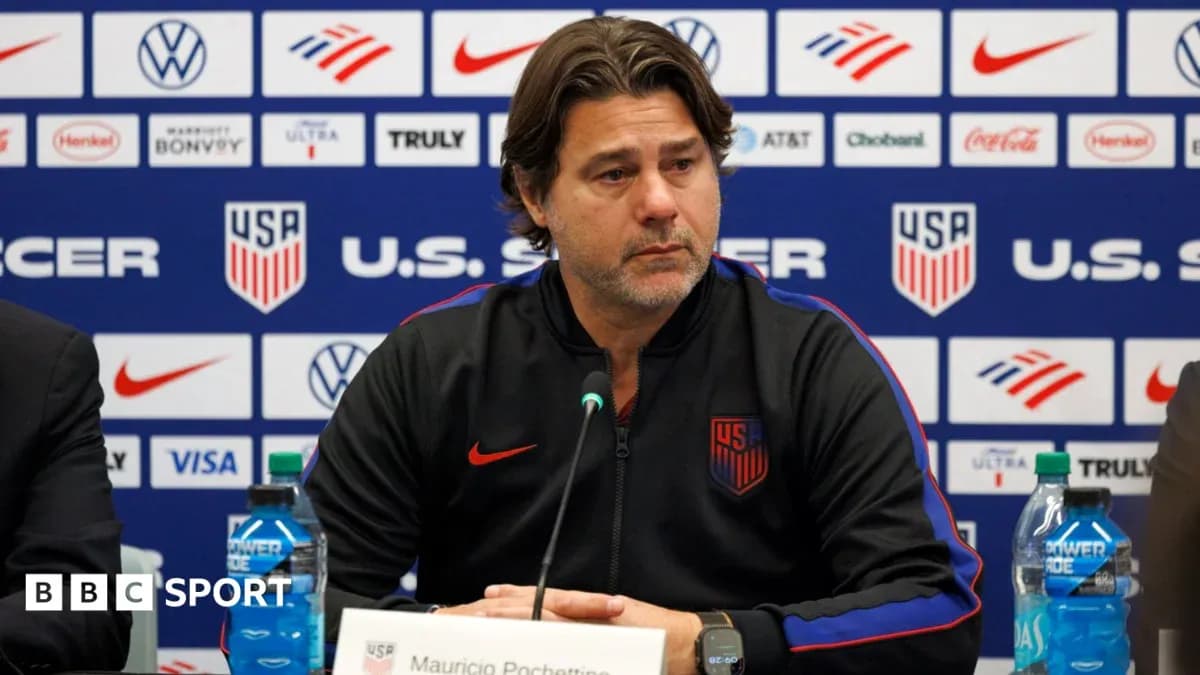
Mauricio Pochettino wiped away tears as he tried to explain it.
Leaving the USA national team, walking away from a four-year project he had only just recommitted to, for a Manchester United side marooned in 18th place. On paper, it looks brutal. In his voice, it sounded painful.
"It's difficult to talk now," he said, struggling to keep his composure. "I'm a very emotional guy. It's a very sad decision. But we are professionals and we are trying to make our dreams come true."
At 54, Pochettino has taken on what may be the defining gamble of his career. United confirmed his appointment as head coach on Friday, handing him a two-and-a-half-year contract and paying a release clause of around £7.4m to prise him out of his USA deal, with extra compensation for his backroom staff. He will see out the national team’s fixtures against Haiti on 14 and 18 November, then fly into a storm.
His first game? An away trip to Liverpool on 22 November. No gentle introduction. No soft landing. Anfield, under the lights, with United one point off the bottom and scarred by their worst domestic start in 40 years.
A decade in the making
Pochettino’s arrival at Old Trafford closes a long, tangled chapter. United have circled him for the best part of a decade, flirting repeatedly but always choosing someone else at the last moment.
He first forced his way onto their radar at Southampton. In just 18 months on the south coast he turned a mid-table side into a slick, aggressive team that finished eighth in his only full season. Tottenham pounced in 2014, sensing they had found one of Europe’s sharpest young coaches.
That judgment proved right. Before Pochettino, Spurs had reached the top four twice in 22 years. Under him, they did it four times in five full seasons. He built a high-pressing, fearless side that reached a Champions League final and pushed for titles without ever truly owning the budget to match England’s super-clubs.
United watched closely. In 2016, as Louis van Gaal’s reign unravelled, Pochettino sat down for a now-famous dinner in Mayfair with Sir Alex Ferguson. The symbolism was obvious: the club’s greatest manager and the man many inside Old Trafford thought could be his spiritual heir.
Yet when the time came, United turned to Jose Mourinho.
They did the same again in 2018. When Mourinho was sacked, Pochettino’s name surged to the top of the conversation, only for Ole Gunnar Solskjaer’s intoxicating interim run to secure him the job permanently. In 2022, it was a straight contest between Pochettino and Erik ten Hag. United chose the Dutchman, fresh from leading Ajax to the Champions League semi-finals in 2019 – a campaign that ended with that shuddering late collapse against Pochettino’s Tottenham.
Even in 2024, after his Chelsea exit, he was interviewed once more. This time Ruben Amorim got the nod. Four near-misses. Four changes of direction. Each time, United’s hierarchy stepped back from the man they kept coming back to.
This week, they finally committed. Internally, club officials have been adamant: Pochettino is the only coach they spoke to directly about taking over from Michael Carrick. Names like Eddie Howe, Julian Nagelsmann and Antonio Conte were tossed around in the aftermath of that wretched 3-0 home defeat by Bournemouth three weeks ago, but the search never truly widened. United had made up their minds.
Walking away from America
The timing, though, makes the move raw.
Pochettino only signed a new four-year contract with the USA in the summer. He talked then about building something lasting, about nurturing a generation of young American talent. Now he is leaving before that project has really begun.
Asked why he committed to the national team only to accept United’s call a few months later, he didn’t hide behind platitudes.
"I never said I wanted to go back but they know there aren't too many opportunities that happen in your career like Manchester United," he said. "When it arrives, it's difficult to turn down."
The US Soccer Federation, he insisted, had backed him fully. He thanked them through tears at his first news conference after the United move became public. For all the emotion, the calculation is clear. International football offers stability and time. Manchester United offers something else: risk, scrutiny, and the chance to etch your name into the game’s most demanding stage.
A club on edge
The scale of the task is stark.
Carrick’s sacking on Thursday came with United 18th in the Premier League, their worst start to a domestic campaign in four decades. One win in 10 league matches. One point above bottom-placed Sunderland. Three managers gone in three seasons. A fanbase exhausted by false dawns and furious at the direction of the club.
Sporting director Jason Wilcox has taken much of the flak for recruitment, but those inside Old Trafford are quick to point higher. The budget, they stress, is set above his head. There has been heavy, sustained criticism of the Glazer family’s ownership, even after Sir Jim Ratcliffe bought into the club and was handed control of football operations in December 2023.
This week, whispers surfaced of a mechanism by which the Glazers could claw back that control from Ratcliffe. No such move has been confirmed on the Stock Exchange, and United officials have moved quickly behind the scenes to insist any suggestion of a split between the Glazers and Ratcliffe is "categorically false".
They want to project unity. They need to, with the team in freefall and supporters questioning every decision from the boardroom down. Yet the numbers don’t lie. Eighteenth place. Another manager gone. A squad that looks unbalanced and brittle.
Into that environment walks Pochettino, with his pressing drills, his emotional intensity, and his belief that players can be shaped into something greater than the sum of their transfer fees.
The right man at the wrong time – or the only time?
United’s hierarchy will argue this is the moment they should have grasped years ago. Pochettino brings Premier League experience, a track record of improving players, and an ability to build a clear identity under financial constraints. He understands the weight of a big club, the noise, the scrutiny. He has lived it at Tottenham, at Paris Saint-Germain, at Chelsea.
But this is different. This is Old Trafford, stripped of its old certainties, running on memory and frustration.
His first steps will be unforgiving. Liverpool away is more than a fixture; it is a measuring stick, a psychological test. A heavy defeat and the mood darkens instantly. A performance with bite and organisation, and he buys himself breathing room with a fanbase desperate for something to believe in.
Pochettino has waited a decade for this call. United have spent that decade searching for the right voice, the right project, the right identity to replace the one Ferguson took with him. Now both finally meet in the same place, at the same low point.
One of them is going to be transformed by the other.
The question, as Pochettino wipes away those early tears and turns towards Anfield, is whether it will be him – or Manchester United.





