
Mauricio Pochettino Leaves USMNT for Manchester United Job
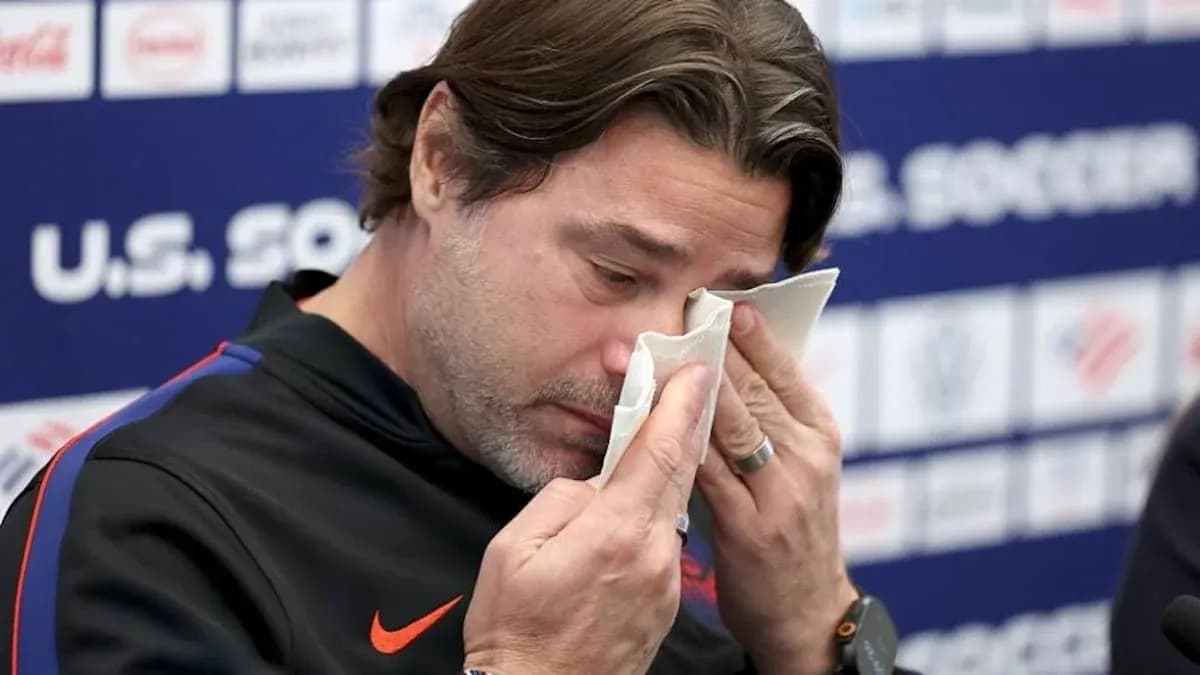
Mauricio Pochettino walks away from the United States with a suitcase full of credit and a ticket back to the Premier League – to the one job he simply could not refuse.
Speaking in Fayetteville, Georgia, the 52-year-old cut an emotional but resolute figure as he confirmed he will leave his role as USA head coach after this month’s CONCACAF Nations League double-header against Haiti to take charge at Manchester United.
“We learned a lot from you all, from this amazing country,” he said, calling it one of the most difficult decisions of his career. The sentiment felt genuine. The decision felt inevitable.
From American project to Old Trafford calling
Pochettino has spent the last year reshaping the USMNT, guiding them to the last 16 at this year’s World Cup and signing a contract extension with US Soccer as recently as August. At that point, he insisted, a return to England was not on his mind.
He repeated that line again in Georgia. “I never said I wanted to go back in the Premier League,” he said. Then came the twist that has defined so many managerial careers over the last decade. “Not too many opportunities can happen in your career with a side like Manchester United. That is difficult to turn down when it arrives.”
For US Soccer, the blow is softened slightly by the numbers. The federation is set to receive around US$10 million in compensation, plus additional sums to cover the exit of Pochettino’s backroom staff. For a national setup still building its identity, the bigger loss is the man himself.
JT Batson, US Soccer’s chief executive and secretary general, praised Pochettino’s “leadership, professionalism and commitment to our players and culture”, underlining the impression he leaves behind in a relatively short stint.
United gamble on a rebuild specialist
Manchester United, in their announcement, leaned heavily into the idea that they have finally hired a coach aligned with the club’s traditional identity. They hailed Pochettino as “renowned for his high-intensity, attacking style of football, his dedication to building strong, cohesive teams and his outstanding record of developing individual players”.
“Pochettino has consistently performed at the highest level of football across multiple leagues,” the club added, presenting him as both a modern thinker and a proven operator.
He becomes the eighth permanent manager since Sir Alex Ferguson retired in 2013, another name added to a list that has included serial winners and short-term fixes but never a long-term successor. United, 20-time English champions and once the standard-bearers of English football, have spent the last decade chasing their own shadow.
Pochettino’s résumé explains why they have returned to him after years of on-and-off links. He arrived in the Premier League with Southampton, transformed them into one of the division’s most watchable sides, then turned Tottenham into a regular top-four force. Across his five full seasons in north London, Spurs never finished lower than fifth and reached the 2019 Champions League final, a peak that still shapes his reputation.
Silverware finally arrived at PSG, where he won the 2021 French Cup and the 2022 Ligue 1 title, though he did not see out his contract in Paris. A brief, turbulent season at Chelsea followed in 2023, another high-pressure job in a fractured club environment.
Now comes the biggest rebuild of all.
A fractured giant and a brutal first test
Pochettino walks into a dressing room and a fanbase split in several directions. He must stitch it together quickly.
The first chapter will be unforgiving. His league debut as United manager is set for November 22 at Anfield, home of fierce rivals Liverpool. It is a fixture that exposes any weakness, tactical or emotional. For a new manager, it is a baptism of fire.
The problems run deeper than one game. United’s captain, Bruno Fernandes, was dropped last month after criticising Michael Carrick’s tactics. Lisandro Martinez went public with his anger at the hierarchy over what he saw as a lack of investment. Those are not isolated grumbles; they are symptoms of a club that has been arguing with itself for years.
Supporters, too, are raw. The sacking of Carrick – a popular figure who won multiple trophies as a player and tried to steady the club as a manager – triggered another wave of fury towards the ownership. Protests have rumbled on for two decades against the US-based Glazer family, who took control in 2005 via a leveraged buyout that loaded the club with huge debts.
The partial arrival of British billionaire Jim Ratcliffe as a minority owner in 2024 was supposed to signal a reset. That optimism has already dimmed. The Glazers still hold the majority stake. The structural questions remain.
Carrick, for his part, bowed out with dignity on Friday, issuing an emotional statement wishing United “nothing but success” and insisting his love for the club “never dies”. It read like a farewell from a loyal servant, but also like a reminder of what the club used to be.
Legacy in the US, expectation in Manchester
As Pochettino prepares for his final two games with the USA, he does so knowing he leaves a program he helped stabilise and modernise, even if his tenure was brief. Players and officials speak of higher standards, clearer ideas, a stronger culture. That will be his legacy there.
In Manchester, there is no such luxury. He arrives not as a builder with time on his side, but as the latest man asked to restore an empire while the foundations are still shifting.
He has handled fractured squads before. He has lifted underachieving players, galvanised fanbases, and gone toe-to-toe with Europe’s elite. Now he steps into a club that has forgotten how to be itself.
The question is not whether Pochettino is ready for United.
It is whether United, at last, are ready for him.





