Marta Eyes Historic Farewell as Brazil Hosts 2027 Women’s World Cup
Marta's Final World Cup on Home Ground
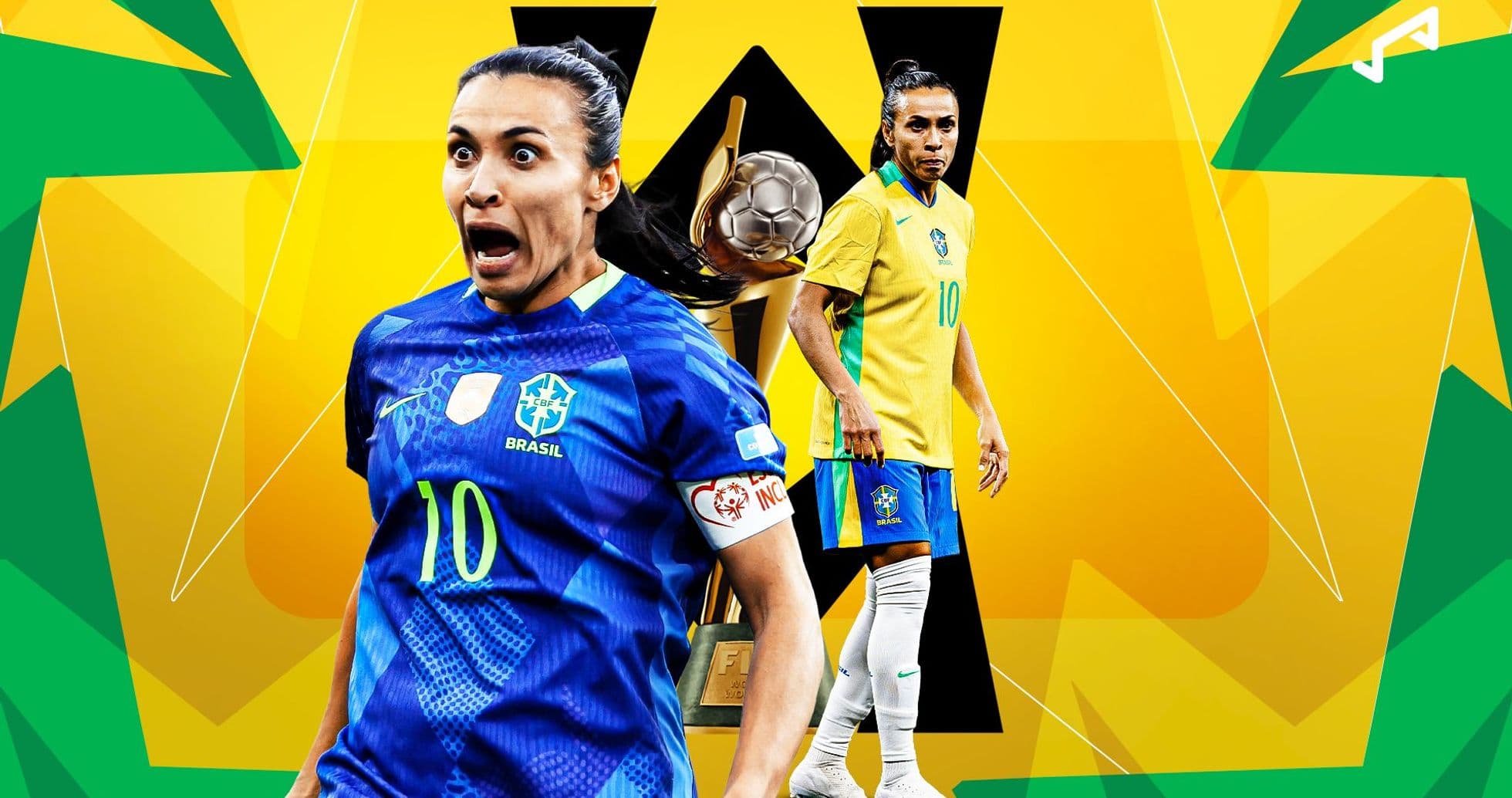
Widely celebrated as the greatest female footballer ever, Marta is preparing for a legendary farewell by leading Brazil in the 2027 Women’s World Cup on home soil. At 41 years old when the tournament begins, she aims to inspire her nation one last time on the world’s biggest stage.
The GOAT of Women’s Football
Almost every sport has its GOAT debate. Men’s football often circles around Lionel Messi and Cristiano Ronaldo, with legends like Diego Maradona and Pelé also in the mix. In women’s football, though, Marta stands apart, famously dubbed ‘Pelé in a skirt’ by the Brazilian legend himself. Her dazzling style and longevity have set her apart long before the women’s game reached today’s popularity.
Alongside triumphs like the Champions League and Copa América, Marta holds the record for most goals scored in Women’s World Cup history. Yet, despite these achievements, a World Cup winner’s medal has eluded her.
After initially retiring from international play following the 2024 Olympics—where Brazil narrowly lost the gold medal match to the United States—she reversed course and played a crucial role in Brazil’s 2023 Copa América victory. With Brazil hosting in 2027, it looks like Marta will have one last chance to chase glory on home turf.
A Golden Generation’s Near Misses
Back in 2007, Marta was the standout star as Brazil reached the Women’s World Cup final. Though they lost 2-0 to Germany, that team featured remarkable talent: Cristiane, a prolific scorer who ranked high in FIFA Player of the Year votes; Formiga, an enduring midfield powerhouse with the most caps in international football history; Pretinha, known for scoring critical goals; and Rosana, who later played for Lyon and helped win multiple Champions League titles.
This group was widely seen as Brazil’s golden generation, destined to win the World Cup. Yet, despite their skill, they never captured the top prize.
Struggles with Support and Funding
One persistent issue was insufficient backing from the Brazilian Football Confederation (CBF). Rosana has lamented that investment arrived too late, forcing the women’s game to prove itself first rather than being nurtured early.
Dominant in South America with nine Copa América Femenina wins since 1991, Brazil repeatedly fell short internationally. Olympic silver medals in 2004 and 2008 were highlights but left a feeling of unfulfilled potential. Some regard this as perhaps the strongest Brazilian women’s team ever, yet without a major international title.
“The generation we had was possibly the strongest Brazil had seen,” Rosana said in 2021. “Not having the investment come in before to achieve our goal is disappointing.”
Marta’s Club Career and Accolades
Outside the national team, Marta’s star only rose higher. She moved to Sweden’s Umea IK in 2004, winning four straight Damallsvenskan titles and a UEFA Women’s Cup (now Champions League). The then-coach noted her unique problem-solving on the pitch, saying her style broke patterns and secured victories.
Her journey took her to the United States, where she claimed two national titles, and back to Sweden—a country she now holds citizenship in and speaks fluently after many years there. Throughout, she earned numerous individual awards including five consecutive FIFA World Player of the Year trophies from 2006 to 2010.
International Challenges in the 2010s
Despite her brilliance, international titles remained elusive. Brazil fell in the 2011 World Cup quarterfinals to the U.S. on penalties, and in the 2012 Olympics, Japan ended their run at the same stage. The 2015 World Cup exit in the round of 16 to Australia raised concerns. Hosting the 2016 Olympics saw Brazil reach the semifinals, but losing the bronze medal match was a setback.
An Emotional Farewell and Renewed Hope
The 2019 Women’s World Cup appeared to be Marta’s swan song. At 33, with no guarantee of a future World Cup, she left the tournament with tears and a heartfelt plea to the next generation:
“There’s not going to be a Formiga forever, not going to be a Marta forever, not going to be a Cristiane. Women’s football depends on you to survive. Think about it, value it more. We’re asking for support.”
Although she seemed ready to step away, Marta returned. In 2023, at 38, she helped Brazil reach the Olympic gold medal match for the first time since 2008 and guided Orlando Pride to NWSL Shield and Championship titles.
Looking Ahead to 2027
No other player from the 2007 squad remains on the current team except Marta. While she may not hold the same central role, her legacy helps fuel a new generation aiming to bring Brazil its first Women’s World Cup crown.
With the captain’s armband firmly on her arm, Marta will lead the Selecao into the 2027 tournament at home, hoping to turn decades of near misses into a storybook ending.