
Manchester United's Summer Confusion: Carrick's Dismissal and Transfer Failures
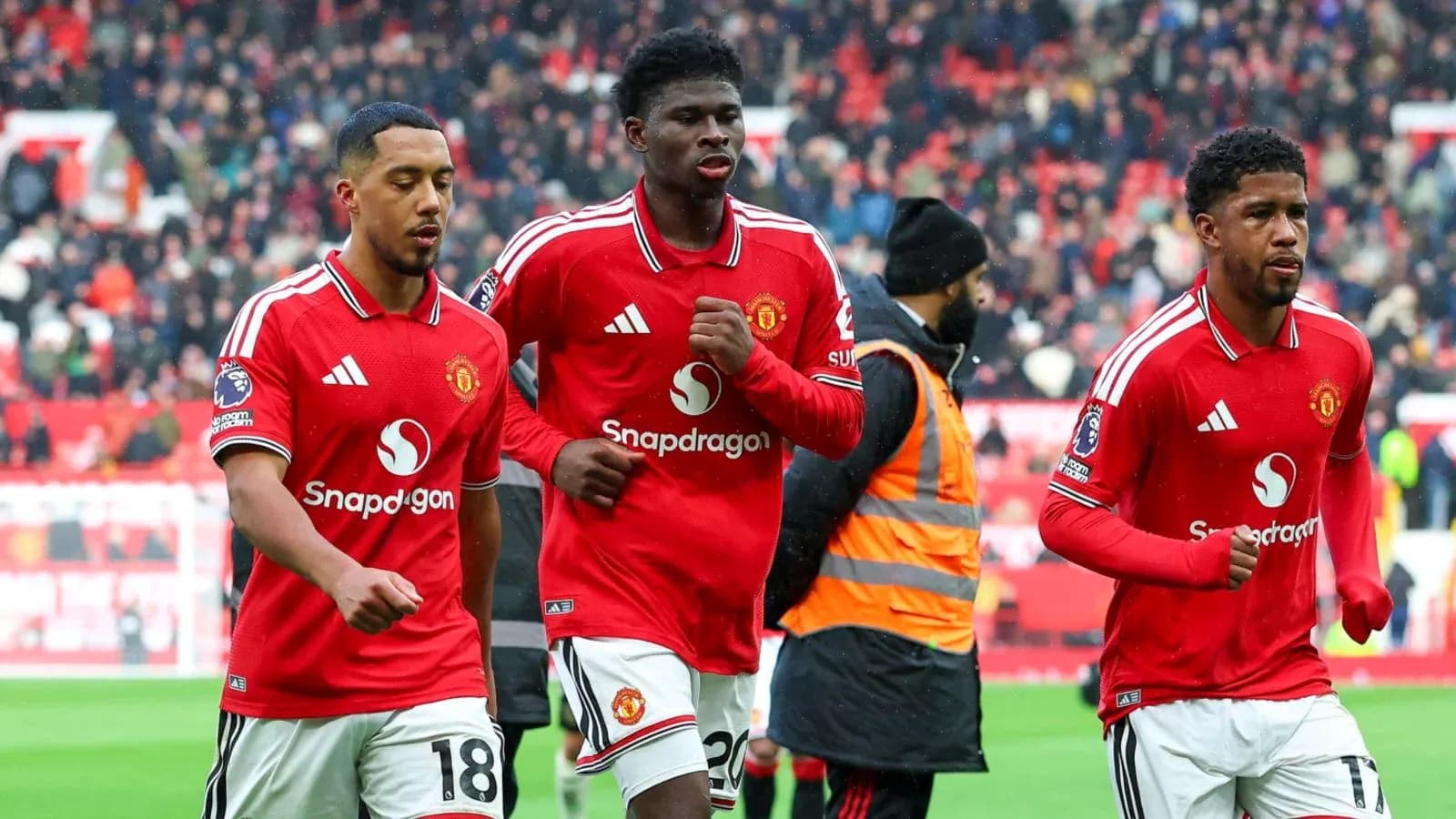
Manchester United’s summer of confusion has claimed its first major casualty. Michael Carrick is out, the club marooned in 18th with eight points from ten games, and Mauricio Pochettino is waiting in the wings to inherit a squad built on compromise and committee.
This is not just a story about a manager sacked. It is about how United tried to rebuild their midfield, spent £150m, and still ended up with players who were, by their own internal reckoning, nowhere near the top of the list.
A shortlist that never truly materialised
United went into the summer needing a reset in the middle of the pitch. Casemiro had gone, the club had effectively given up on Manuel Ugarte, and Carrick wanted a proper rebuild to match the ambition of returning to the Champions League.
He did not get it.
The club landed Andrey Santos, Carlos Baleba and Youri Tielemans for a combined £150m. On paper, that looks like decisive business. Under the surface, it reads very differently: those three were, according to internal rankings, around seventh or eighth choices on an eight-man shortlist.
At the top of that list sat Elliot Anderson. After him came Mateus Fernandes, Sandro Tonali, Aurelien Tchouameni, Alex Scott, Ederson and Ayyoub Bouaddi. All admired. None signed.
The gap between what Carrick wanted and what he received stretched beyond midfield. He had pushed for “significantly more than was delivered, not least a backup striker and left-back”. The club’s response was a thinner squad, a patched-together midfield and a manager left to carry the consequences.
A transfer race United never really ran
The Anderson saga captures United’s dysfunction in miniature.
A report this week revealed that Anderson actually wanted to join Manchester United. The interest was mutual, the need obvious, the fit clear. Yet negotiations barely moved. Jason Wilcox, the club’s director of football, failed to come close to Newcastle’s valuation, the deal stalled, and Manchester City stepped in with a £116m offer for the England international.
United watched a priority target cross the city.
They also weighed up a move for Leon Goretzka, seriously considering signing him as a free agent instead of Tielemans. In the end, Goretzka went to Aston Villa, where he promptly replaced Tielemans and scored against United in what turned out to be Carrick’s final game in charge.
Those details sting inside a club that spent heavily but still feels light in crucial areas.
Six signatures and no clear direction
Behind the scenes, agents have been left exasperated by what they describe as a “complicated” transfer process at Old Trafford. The word keeps coming back: complicated. Not ambitious. Not elite. Just slow, tangled and indecisive.
To get a deal over the line, six different figures need to be satisfied.
- Omar Berrada, the CEO.
- Jason Wilcox, director of football.
- Christopher Vivell, director of recruitment.
- Matt Hargreaves, director of negotiations.
- Then, finally, Sir Jim Ratcliffe and the Glazer family must ratify every move.
Agents talk of calls that go nowhere, proposals that drift, and negotiations that stall because too many people need to be “looped in or convinced”. In a transfer market that rewards speed and conviction, United operate like a committee meeting that never quite ends.
It jars with Ratcliffe’s promise of “best in class” when he bought a minority stake in February 2024. Supporters, already furious with the Glazers for loading the club with £600m of debt since their leveraged takeover 21 years ago, have quickly added the new co-owner to their list of targets.
They look at the structure he has endorsed and see drift, not direction. Few inside or outside the game would currently describe Berrada and Wilcox as standard-bearers in their fields. The Athletic’s account of Carrick’s sacking only reinforces the sense that the hierarchy, like the manager they have just dismissed, are out of their depth.
Carrick pays the price
Carrick’s dismissal has drawn sympathy from fans who watched him drag United back into the Champions League last season. They continued to back him through a wretched start to this campaign, not because the football was inspiring, but because the problems feel so much bigger than the man in the dugout.
He wanted a deeper squad. He wanted a clearer plan. He wanted more than seventh-choice midfielders and no backup in key positions. Instead, he walked into a season carrying the weight of years of mismanagement, a fractured recruitment model and a fanbase at war with its owners.
Now he has gone. Pochettino will arrive to find the same maze of sign-offs, the same recruitment structure, the same protests ringing around Old Trafford.
The question is not whether he can coach. It is whether anyone can truly succeed while Manchester United keep tripping over their own processes.





