
Manchester United's Ongoing Struggles Under Carrick
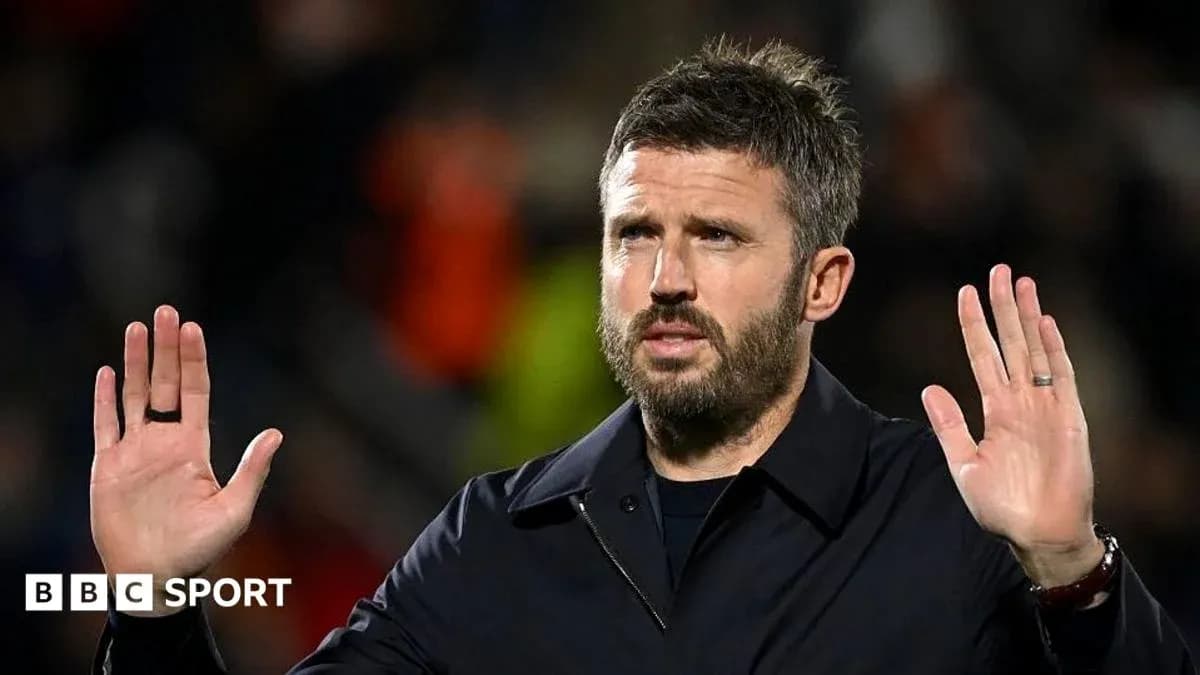
The scene felt painfully familiar. Michael Carrick, shoulders heavy, hands raised in apology, walked towards a travelling support that had just watched Manchester United dismantled 4-1 in Como.
Ole Gunnar Solskjaer did the same walk after a 4-1 defeat at Watford in November 2021. It cost him his job. Carrick now stands in the same storm, swallowed by the same cycle that has chewed up every Manchester United manager since Sir Alex Ferguson walked away in 2013.
The unmanageable giant?
Carrick is the seventh full-time manager to sit in Ferguson’s old chair. David Moyes, Louis van Gaal, Jose Mourinho, Solskjaer, Erik ten Hag, Ruben Amorim, now Carrick. All of them, in their own way, arrived as answers. All of them left as problems.
There were trophies. Van Gaal’s FA Cup in 2016. Mourinho’s League Cup and Europa League double in 2017. Ten Hag’s FA Cup win over Manchester City in 2024, a day that felt like a turning point and turned out to be a stay of execution.
Slim pickings for a club that once measured itself in eras, not seasons.
The football is poor. The mood is poisonous. Lisandro Martinez publicly took aim at director of football Jason Wilcox after the Champions League defeat at Atletico Madrid. In Como, captain Bruno Fernandes questioned the tactics. When players start pointing upstairs and sideways, it usually means they have stopped looking in the dugout for solutions.
So the question hangs over Old Trafford like a cloud: is this now an unmanageable club?
A decade of wrong turns
United’s decline did not arrive with Carrick, or Amorim, or Ten Hag. It has been a long, clumsy fall, shaped by a botched succession plan and a series of decisions that now look, in the cold light of hindsight, like a manual in how not to run a superclub.
Ferguson’s handpicked choice, Moyes, found the job far too big after leaving Everton. Van Gaal and Mourinho brought heavyweight reputations, Champions League medals, proven authority. Solskjaer arrived as the feelgood antidote to Mourinho, a club legend without a managerial CV that justified the scale of the gamble.
Ten Hag was hired on the back of that thrilling Ajax side that reached a Champions League semi-final. Amorim was the fashionable choice from Sporting, hailed as one of Europe’s brightest young coaches.
They all left the same way. Sacked. Overwhelmed by the unwieldy beast United has become.
And while United flailed, the elite turned them down. Carlo Ancelotti, Pep Guardiola, Jurgen Klopp – all working within 35 miles of Old Trafford in 2019. None of them at United. Ancelotti at Everton, Guardiola at Manchester City, Klopp at Liverpool. United had Solskjaer, appointed on sentiment after a sparkling interim run, gone inside three years.
Solskjaer Mark II
Carrick’s story feels eerily similar.
Another former favourite. Another caretaker bounce. Another man whose only previous permanent job ended in a sacking in the Championship, at Middlesbrough. Solskjaer, of course, had been dismissed by Cardiff City in 2014 as they floundered in the same division.
United have reached the point where the questions bite harder than the results. Has it been worse than this at any time since Ferguson left? Has hope ever felt thinner? Has morale ever sunk lower?
The club will always find someone willing to take the job. The badge still carries weight. The stadium still roars. But the lure has faded. The best managers in the world now see Old Trafford not as a dream, but as a risk. A place where, more often than not, you end up as the next man blamed.
Given the current squad, even a proven elite coach would struggle to promise a quick fix without vast investment. That is the reality Carrick has walked into: front of house for a broken operation, likely to pay the price for failures that run far beyond the touchline.
He was the easy choice after guiding United back into the Champions League. The comfort pick. The familiar face. That comfort has been ripped away by a string of heavy defeats.
Power, protests and paralysis
Responsibility stretches higher than the manager’s office.
United supporters have railed against the Glazer family ever since their leveraged buyout in 2005 loaded the club with debt. They remain majority owners, largely unmoved by years of protests and fury.
Sir Jim Ratcliffe’s arrival as part-owner was supposed to signal a reset. Instead, his alliance with the Glazers turned anger towards him as well. Another billionaire discovering that football is not like any other business he has conquered.
Ratcliffe has said football decisions sit with others – Jason Wilcox, new chief executive Omar Berrada and the sporting structure around them. Yet instability and misjudgement have followed his rise to prominence.
United were ready to sack Ten Hag before the 2024 FA Cup final. Beating City at Wembley saved him. He then received a contract extension and around £200m to spend, only to be sacked six months later. The compensation bill for him and his staff exceeded £10m. A costly, confused half-measure that satisfied no one.
Then came the Dan Ashworth saga. Lauded as one of the sharpest sporting directors in the game, Ashworth finally arrived from Newcastle in July 2024 after a lengthy spell on gardening leave. Five months later, he was gone after a behind-the-scenes dispute.
He spent as long waiting to join United as he did actually working for them.
Theories swirled. Some said he was blamed for backing Ten Hag’s continuation. Others claimed he wanted to pivot towards English managers such as Graham Potter or Gareth Southgate rather than chase Amorim. United turned to Amorim anyway, despite his rigid devotion to a 3-4-3 system that had already cooled Liverpool’s interest and pushed them towards Arne Slot.
That tactical inflexibility sank him. Fourteen months after he arrived, Amorim was out, leaving with a blast at the club’s hierarchy and a hostile exchange with Wilcox.
A club cutting costs, not problems
By the time Carrick stepped in, Old Trafford was already a grim place to work. Ratcliffe’s cost-cutting drive had led to staff departures and sweeping “efficiencies” that chipped away at morale.
The relationship with supporters took another hit when the club launched a ticket-touting investigation in the summer. Fans were told to explain shared accounts or risk losing season tickets. United later admitted they had underestimated how many supporters share details and softened some of the threats, but they stood by the investigation itself. The damage to trust lingered.
On the pitch, the football has been underwhelming. Off it, the finances still creak, despite Ratcliffe’s vow to sharpen them.
Figures released in September showed overall debt stuck at £1bn. United did post record revenue of £678m and a £23m operating profit, even without European football for the first time in a decade – a stark turnaround from the £113m loss in 2023-24. They also spent £64m buying land for a new stadium, the project Ratcliffe wants as his lasting legacy.
Berrada has spoken of a 100,000-seat arena, a £2bn monument to United’s ambition. The vision is grand. The reality on the pitch is anything but.
A giant drifting into the distance
Behind the glossy revenue numbers and stadium plans lies a harsher truth: this is a club poisoned by years of bad calls and short-term thinking, trapped in a loop of churn and instability.
Managers come and go. Sporting directors arrive with fanfare and leave in silence. Players turn their fire on executives. Executives brief against managers. Supporters protest against owners, then part-owners, then the direction of travel itself.
Meanwhile, the clubs United still like to call their peers – City, Liverpool, others across Europe – pull further away, becoming specks on the horizon.
Carrick may be the next man to fall. The deeper question is more uncomfortable: how many more managers will they burn through before they finally admit the real problem isn’t in the dugout at all?





