
Manchester United Turns to Pochettino Amid Decade of Drift
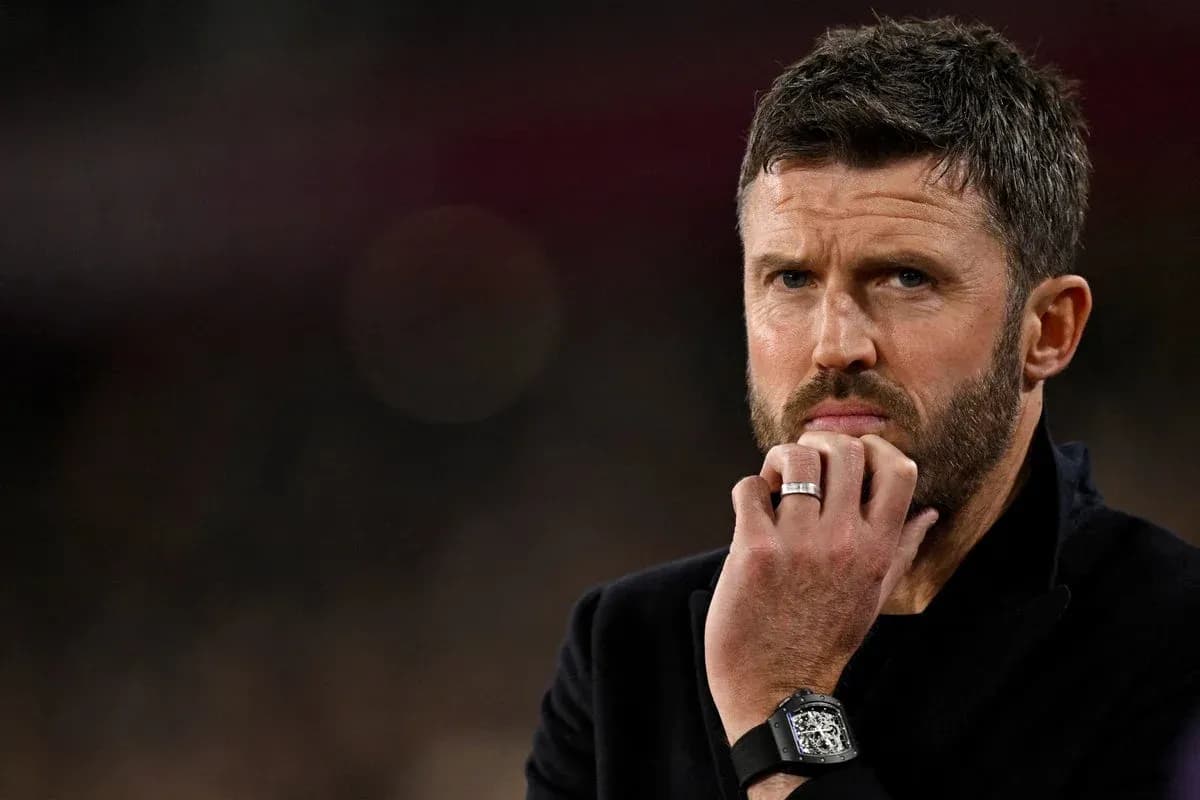
When Manchester United finally moved for Mauricio Pochettino, it wasn’t romance. It was necessity.
After more than 10 years of on-and-off admiration, the club’s hierarchy boiled their thinking down to two demands: someone who had handled a super-club before, and someone who could offer “something extra”. Experience and edge. Gravitas and spark. In their minds, Pochettino ticked both boxes.
The timing tells its own story. United thought they had chosen stability in Michael Carrick. Instead, they watched the season fall apart almost in real time.
Carrick, stability – and the trap everyone saw coming
Inside Old Trafford, there had long been affection and respect for Carrick. His work last season earned him the job. His calm presence, his tactical planning, his ability to steady a listing ship – all of it convinced decision-makers he would at least guide United back into the Champions League.
Some even sensed opportunity. Pep Guardiola’s departure from Manchester City, Xabi Alonso and Andoni Iraola starting new eras at Chelsea and Liverpool – the traditional powers were in flux. This, many felt, was the moment for a coherent, settled United to attack the gap.
They just didn’t think United themselves would join the chaos.
The speed of the collapse stunned the board. Performances nosedived almost from the moment Carrick was confirmed. One source described senior figures as simply not knowing “which way to turn”. They believed they had restored a base level of order, only to see it disintegrate.
The uncomfortable truth? It was always possible it would unravel like this.
Players and insiders now talk about a series of structural problems that made a crash not just possible but likely. The first was tactical.
Carrick’s impressive run to the job was built on meticulous, match-specific plans. His use of decoy runs to unpick Manchester City became a kind of calling card – clever, detailed, opponent-focused coaching. It worked superbly in one-off games.
Over a season, though, a team needs more than bespoke tricks. You can only spring a surprise once. At some point, you have to impose your own game.
Carrick tried. He attempted to shift United towards a more expansive, front-foot style, where they would seize control rather than merely react. That’s when the other flaws came into sharp focus.
The defence, with some of the club’s longest-serving players, simply wasn’t built for it. A flat back line was repeatedly exposed. Gaps opened everywhere. Opponents didn’t just sense vulnerability; they relished it.
“You just didn’t fear them in any way,” said one source at a club who beat United. “You’d play them knowing you could easily get at them.”
Even some of United’s own players felt the same. And they pointed to the biggest issue of all.
A recruitment model that makes no sense
Carrick will never publicly rail against the club. Those who know him describe him as too much of a gentleman for that. But around him, there is anger about the transfer work that underpinned this season.
He was not backed as expected. The limits of the budget – and the muddled strategy – have been laid bare.
“United just don’t have the money,” is how multiple figures now describe it.
Every significant pursuit this summer ended the same way. United weren’t close. In the race for Elliott Anderson, they finished a full £30m short of Manchester City’s bid. The midfielder had been open to joining United, but such a low offer forces a player to question how much a club really wants him. Once Forest knew City were willing to go that high, the conversation was effectively over.
Even before City’s guilty verdict in the long-running investigation, there was a suspicion inside the game that they had deliberately driven Anderson’s price up to distort the market. The ripple effect was brutal for United. The Anderson fee became the reference point for Morgan Rogers, and Chelsea were immediately pointed towards that number. United were priced out again.
So the club pivoted to compromise options. That made it all the more baffling when they suddenly went to £50m for Andrey Santos. The signing underlined the wider problem: a squad that looks like it has been assembled in disconnected chunks rather than as a coherent whole.
United argue they are rebuilding “line by line”. Rivals are unconvinced. Some are openly derisive.
“They did midfield one year, and did it awfully, but then you’re leaving a problem area like defence for two seasons,” said one experienced executive. “It’s so odd to do and also means you’re just building up sections of the pitch as opposed to the whole thing being integrated as one – in the way teams are actually built. And that’s also why you’re cycling through different managers and styles.”
The Glazer era and Sir Jim Ratcliffe’s approach are now colliding in a way that feels particularly damaging. The long-term financial constraints are biting at the very moment the football side needs clarity and conviction.
The summer of 2025 had offered a glimpse of something more coherent. Benjamin Sesko, Bryan Mbeumo, Matheus Cunha and Senne Lammens arrived to quiet approval. Smart, age-profiled, system-friendly signings. A rare window that drew respect.
Then came 2026. Andrey Santos, Youri Tielemans and an already injured Carlos Baleba turned what should have been a step forward into a lurch backwards. The team’s lack of intensity on the pitch soon matched a lack of energy in mindset. United were cut open by everyone from Atletico Madrid to Como to Aston Villa. The ease of it shocked people inside the club.
Power, politics and a leadership under scrutiny
As results worsened, attention turned upwards. Omar Berrada and Jason Wilcox suddenly found themselves under a harsher spotlight. The Glazers, said to have been more involved in recent weeks, were watching the value of their asset erode in real time.
That involvement changes the stakes for this week’s Monaco summit, where the club will discuss its next steps. For Berrada and Wilcox, identifying the right manager is not just about United’s future; it may be about their own.
There is an obvious tension. Appointing a new permanent manager and then reshuffling either the chief executive or sporting director would be an odd sequence, given those roles are supposed to own such decisions. Then again, odd sequencing has become something of a United hallmark.
Ratcliffe remains a strong admirer of Wilcox and trusts his football judgement. Others in the game are less convinced. Some suggest Wilcox’s standing owes as much to his ability to “manage” Ratcliffe’s abrasive personality as to any clear sporting vision.
“He’s a lovely guy but you don’t see the vision you do with other top sporting directors,” said one senior executive this week.
There is also a sense that Wilcox has been pushed beyond his natural brief. His reputation is stronger in youth development and pathways, and that is where some of United’s few recent successes have come – in younger signings and academy products. Over-promotion, rather than outright incompetence, is the charge from some inside the game.
Whatever the nuance, the net result is the same: a squad that doesn’t quite add up, a manager undermined by the market, and a club scrambling for direction.
Why the answer, for now, is Pochettino
As United flailed, their gaze inevitably drifted towards Villa Park. Unai Emery’s work at Aston Villa had not gone unnoticed. One well-placed source said his name was “always there in the background”. Villa’s anxiety over his future made more sense in that light, particularly as they pushed for him to sign a new deal.
United, though, never made the decisive move. Stuttgart’s Sebastian Hoeness was mentioned in discussions, but his lack of experience at this level saw him quickly ruled out. There is an acute awareness at Old Trafford that the sheer size of the club – especially in a moment like this – can “break” managers who are not ready.
That became another argument for Pochettino.
He has walked into dressing rooms at Paris Saint-Germain and Chelsea, handled superstar egos, and navigated the politics and pressure that come with them. Staff at both clubs still speak well of him, particularly about the atmosphere he fostered. Across the Atlantic, United States sources have also been keen to highlight his impact on culture and environment.
Yet none of that is what United need most right now.
What they crave is the intensity his Tottenham side produced a decade ago. The aggression, the running, the coordinated pressing, the sense of a team that could overwhelm opponents physically and emotionally. Old Trafford has not seen that kind of collective edge in years.
It is not lost on anyone that this is something of a delayed decision. Around the summer of 2016, Pochettino sat down with Sir Alex Ferguson. At that point, he was one of three coaches under serious consideration to replace Louis van Gaal. The others were Ryan Giggs and Jose Mourinho.
United chose Mourinho. The internal logic was simple: he was “a winner”, the man to take Van Gaal’s functional side and turn it into a title machine. The label seduced them.
It also underlined a wider flaw in the club’s thinking. United have repeatedly chased archetypes – the winner, the disciplinarian, the club man, the project coach – rather than the manager who best fits the reality in front of them.
They don’t actually need a “winner” in the slogan sense. They don’t even strictly need a manager with prior experience of this exact situation. They need someone whose methods, personality and demands align with the mess they currently inhabit.
For now, they have decided that person is Mauricio Pochettino.
Whether that decision finally breaks the cycle, or simply becomes another chapter in a decade of drift, will define what Manchester United look like for years to come.





