Manchester United's Left-Back Dilemma: A Season of Risks
When the clock slid past 23:00 BST on 1 September and the window slammed shut, one question hung over Old Trafford like low cloud.
What about a left-back?
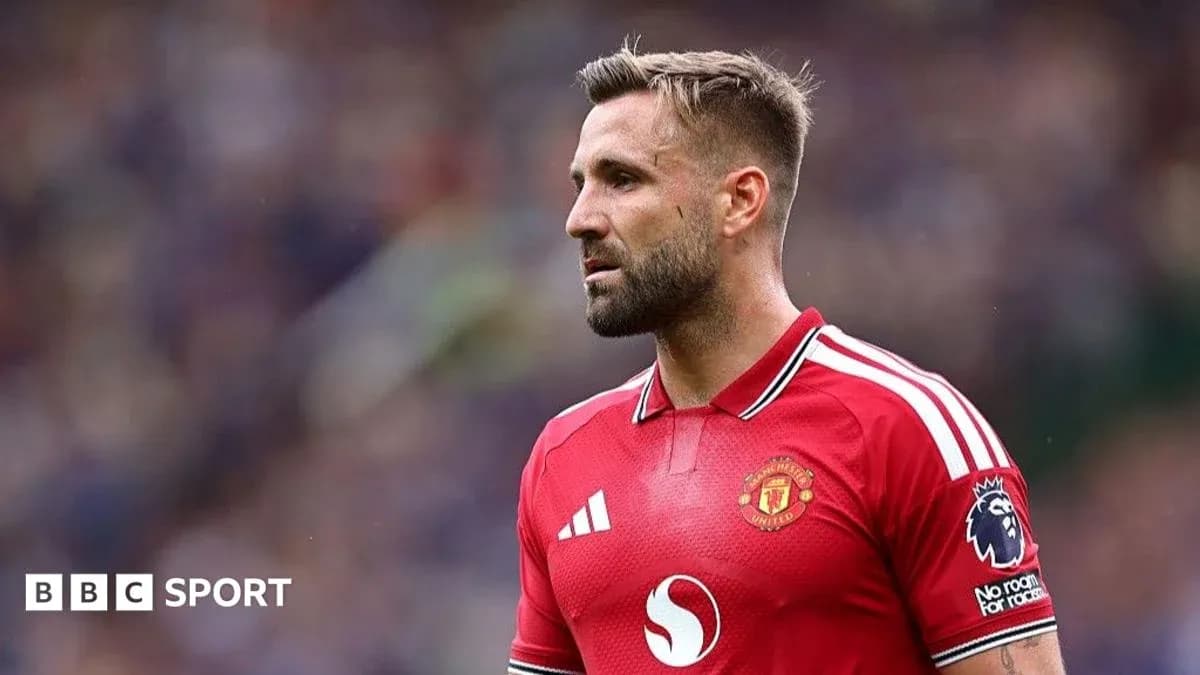
All summer, as Manchester United’s transfer plans were dissected and debated, that position sat there, blinking red on the dashboard. Michael Carrick went into the new season with one senior, specialist option: Luke Shaw. Brilliant last term, remarkably durable, ever-present across 38 Premier League games. But 31 years old, with a long medical file and a schedule that could stretch beyond 60 matches.
Tyrell Malacia’s departure at the end of June, when his contract expired, only sharpened the concern. No surprise he moved on. Big surprise nobody came in.
Targets were not the issue. United looked. Hard.
Lewis Hall at Newcastle, Alejandro Balde at Barcelona, Jorge Salinas at Racing Santander – all sat on recruitment lists at one point. In the end, the late push was for Rayan Ait-Nouri, a loan move that would have dragged him across Manchester. City blocked it. For that deal to breathe, United would have needed to accept an obligation to buy down the line. They walked away, preferring to wait for what they still regard as first-choice options.
Now there is no more waiting. Not until January. Between now and then, this is a calculated gamble that will either look bold or naive.
Hall, Baleba and a budget with limits
Inside Carrick’s staff and the recruitment department, there is no mystery about their stance on Lewis Hall. They really like him. If Newcastle had opened the door at a reasonable price, United would have stepped through.
But this was a summer when Newcastle were already being picked at by rivals. Conversations quickly made it clear: prising away a highly rated 22-year-old would cost a fortune. United’s budget was not built for that kind of late inflation.
They chose their battleground. The priority was midfield. That is where the bulk of the money went, £70m committed to Carlos Baleba from Brighton. Once that decision landed, Hall moved into the “next summer” file. A player to revisit, not to force now.
Balde? United were ready to take him on loan. Barcelona would only talk about a sale. Salinas? Affordable release clause, but Atletico Madrid were always leading the race. By the time United turned to Argentina defender Nicolas Tagliafico, the moment had gone – and he slipped away too.
So when, late in the window, they circled back to Ait-Nouri after an agent’s approach, it carried a quiet admission: the club were not entirely convinced by the path they had taken.
A patchwork at left-back
The plan, as it stands, is simple on paper and fragile in reality.
Shaw remains first-choice. Behind him, Carrick leans on Noussair Mazraoui, a right-back by club trade but a left-sided option for Morocco. Diogo Dalot can shuffle across if required. Then there is Harry Amass, the academy left-back whose situation says as much about United’s uncertainty as any failed transfer.
Amass is 19, a natural in the role, and impressed on loan at Sheffield Wednesday last season before injury struck shortly after a switch to Norwich in the winter window. This summer he shadowed Shaw in pre-season and caught the eye of plenty of observers.
Yet United were, for a long time, prepared to let him go.
Erik ten Hag’s view of the teenager in 2024 still lingers. That August, the then manager left Amass out of the Community Shield squad, even though the youngster had held his own against Mo Salah in a pre-season game in the United States a week earlier. Ten Hag felt he was not physically ready for the demands of the first team.
Two years on, the defender is older, stronger, and still attracting interest. Multiple clubs asked about him. When he did not feature in United’s Premier League 2 game against Leicester on Monday, the assumption grew that a loan was imminent.
It never came. Amass stayed. His exact role, though, remains unclear.
Yoro’s emergence and the domino effect
The willingness to treat Mazraoui as a genuine left-back option has been eased by the emergence of Leny Yoro on the opposite flank.
Signed from Lille for £52m in 2024 as a central defender, Yoro spent most of this pre-season operating at right-back. Carrick liked what he saw. Against Ipswich on Sunday, he came on for Dalot at right-back just as Mazraoui replaced Shaw on the left. The future back four might have been on the pitch right there.
Yoro is only 20 and still learning the angles and instincts of the full-back role. But he has pace, strength, and composure on the ball. United fans only need to glance across the city to see how a similar switch can work. Josko Gvardiol arrived at Manchester City as a centre-back and has grown into a formidable full-back.
That is the model. That is the risk. United are betting on versatility, development and coaching instead of another mid-tier signing who clogs the wage bill.
Scar tissue from past mistakes
Inside Old Trafford, there is a clear conviction about what they did not want to do.
They did not want another Alex Telles. Or Matteo Darmian. Or Sergio Reguilon. All full-backs signed in recent years who, for different reasons, never truly matched the standard United needed. All short-term solutions that became longer-term irritations.
This summer, the club took a hard line. They refused to go beyond what they believed players were worth. They walked away from deals that did not fit their financial or sporting logic.
On paper, it makes sense. From a distance, it is probably the right call.
But football is not played from a distance. It is played in the heat of a title race, in the grind of away days, in the moments when Shaw feels a hamstring tighten on a cold Wednesday night.
If he stays fit, if Mazraoui adapts, if Yoro continues to grow, if Amass steps up, this will look like smart, disciplined squad building.
If not, the question that echoed around at 23:01 on deadline night will only grow louder: how did Manchester United go into a season like this with just one recognised left-back?