Manchester United's Defensive Woes: Carrick's Challenge Ahead
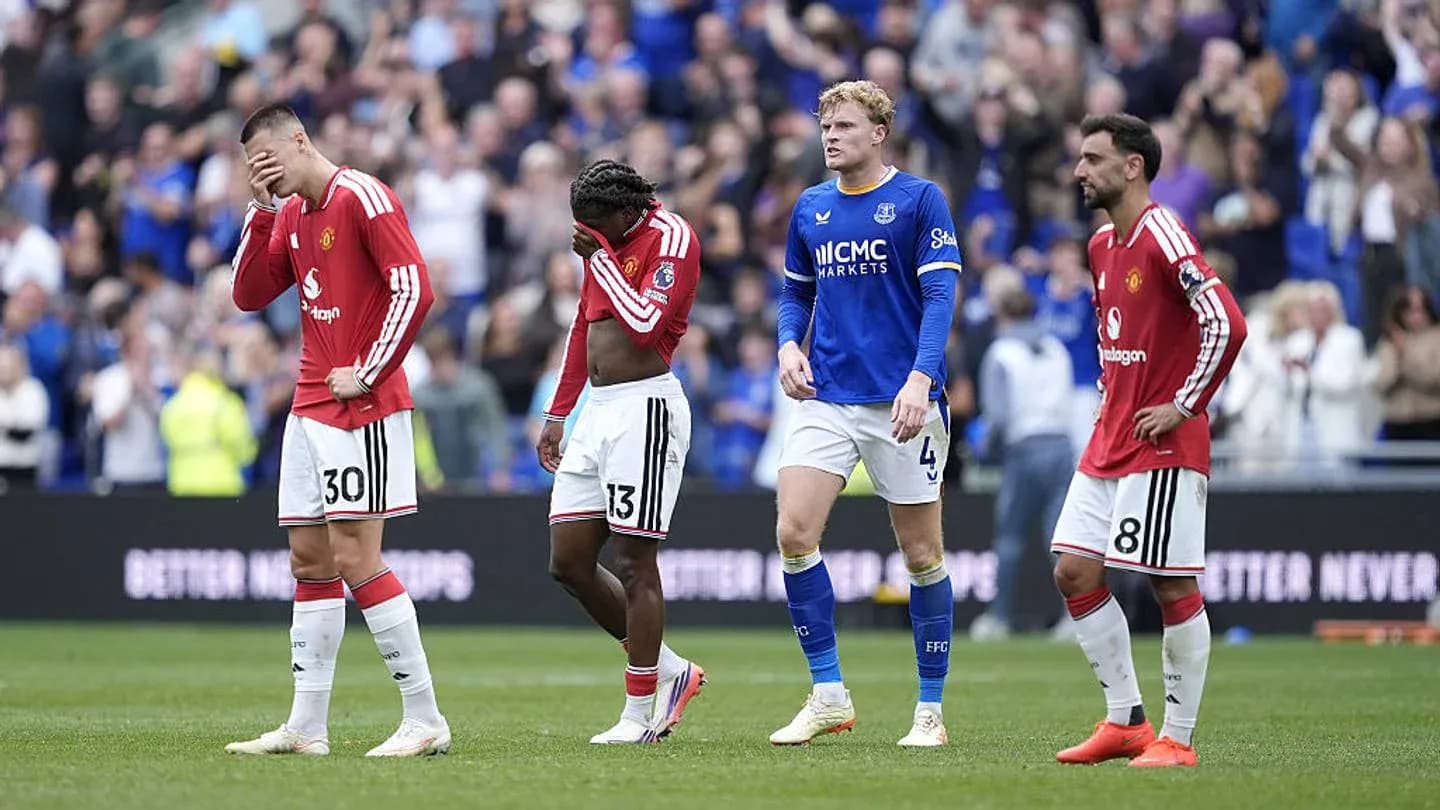
Manchester United have finally found their touch in front of goal. Seven scored across back‑to‑back Premier League games against Ipswich Town and Everton suggest an attack beginning to click under Michael Carrick.
The problem is what’s happening behind them.
United have now opened the league campaign with three straight games in which they’ve conceded twice. Hull City cut through them on the opening weekend in a 2–0 defeat. Ipswich found the net twice in a 5–2 win that looked comfortable on the surface but exposed familiar gaps. Then came Everton on Sunday, snatching a 96th‑minute equaliser in a 2–2 draw that felt like a punch to the stomach.
This is not normal territory for Manchester United. It is historic – and not in a way Carrick will welcome.
Echoes of Solskjær… and of Relegation Fears
Only once before in the Premier League era have United been this fragile across their first three fixtures. In 2020–21, Ole Gunnar Solskjær’s side shipped 11 goals in a chaotic start: a 3–1 defeat to Crystal Palace, a 3–2 escape at Brighton & Hove Albion and that infamous 6–1 home humiliation by Tottenham Hotspur. The season eventually stabilized, but the warning was clear: you can’t keep chasing games forever.
To find the previous instance, you have to wind the clock back more than 50 years.
In 1972–73, United, still only four years removed from becoming England’s first European Cup winners, were sliding towards trouble. They opened with three defeats: 2–1 to Ipswich Town, 2–0 at Liverpool, 2–0 at Everton. Bobby Charlton and Denis Law were in their final season, George Best was heading for the exit, and the club was drifting. Manager Frank O’Farrell didn’t survive past December. Relegation followed a year later.
When United concede two or more in each of their first three league games, the pattern tends to sit at the extremes: either wild, unstable seasons in the modern era, or the beginning of deep decline in the early 1970s. That’s the company this current side is keeping.
A Rarely Seen Vulnerability
This level of openness used to be part of the landscape. In the 1960s, when 3‑2‑5 systems were common and managers packed teams with forwards, high‑scoring chaos came with the territory.
Under Matt Busby in 1964–65, United conceded at least twice in each of their first three league games – 2–2 against West Brom, a 3–1 defeat at West Ham, and 2–2 at Leicester. They still went on to win the title. That team, though, married attacking flair with a hardened core and grew tighter as the season wore on.
The modern United are different. Defensive frailty has become a recurring theme rather than an early‑season quirk.
Last year, the numbers told the story starkly. United scored 69 league goals, almost identical to Arsenal’s 71. But at the other end, the gap was a chasm: Arsenal conceded 27, United 50. The difference in the table? Fourteen points. That is what soft goals cost.
Carrick knows it. He isn’t dressing it up.
Carrick’s Diagnosis: “Little Moments” With Big Consequences
For the manager, the issues are not pinned on a single weakness, but on details that keep tilting games away from his team.
This season’s opener at Hull was defined by set‑piece lapses. Against Ipswich, United’s attacking quality simply overwhelmed the damage. At Everton, two long‑range strikes from the hosts undid what should have been a statement away win.
“The mentality is there,” Carrick insisted after the draw at Goodison Park. From Everton’s perspective, he admitted, they were “two really good strikes from distance.” Shots that “sometimes… fly in the top corner, more often than not they probably don’t.”
That’s the fine line. You can accept the occasional wonder goal. You cannot ignore the pattern.
“We obviously can’t ignore it,” he added. “We need to concede fewer goals to give us a better chance of winning games. There’s things we need to get better at as a team.”
He is right to frame it collectively. The problem doesn’t belong solely to the back four or the goalkeeper. When a side concedes this regularly, it usually starts higher up the pitch: pressure on the ball, distances between the lines, concentration on second phases, organisation at dead‑balls. Those “little moments” Carrick talks about are where titles are won or lost.
Because while the old cliché says goals win games, the second half of the line bites harder at a club like United: defense wins championships.
At the moment, United are leaning on their forwards to drag them out of trouble every week. That’s a thrilling way to live. It is also unsustainable.
The question now is simple: can Carrick turn this lively, entertaining side into one that also knows how to shut the door – or will United’s season be remembered for what they scored, rather than what they threw away?