Manchester United's Crisis Under Michael Carrick
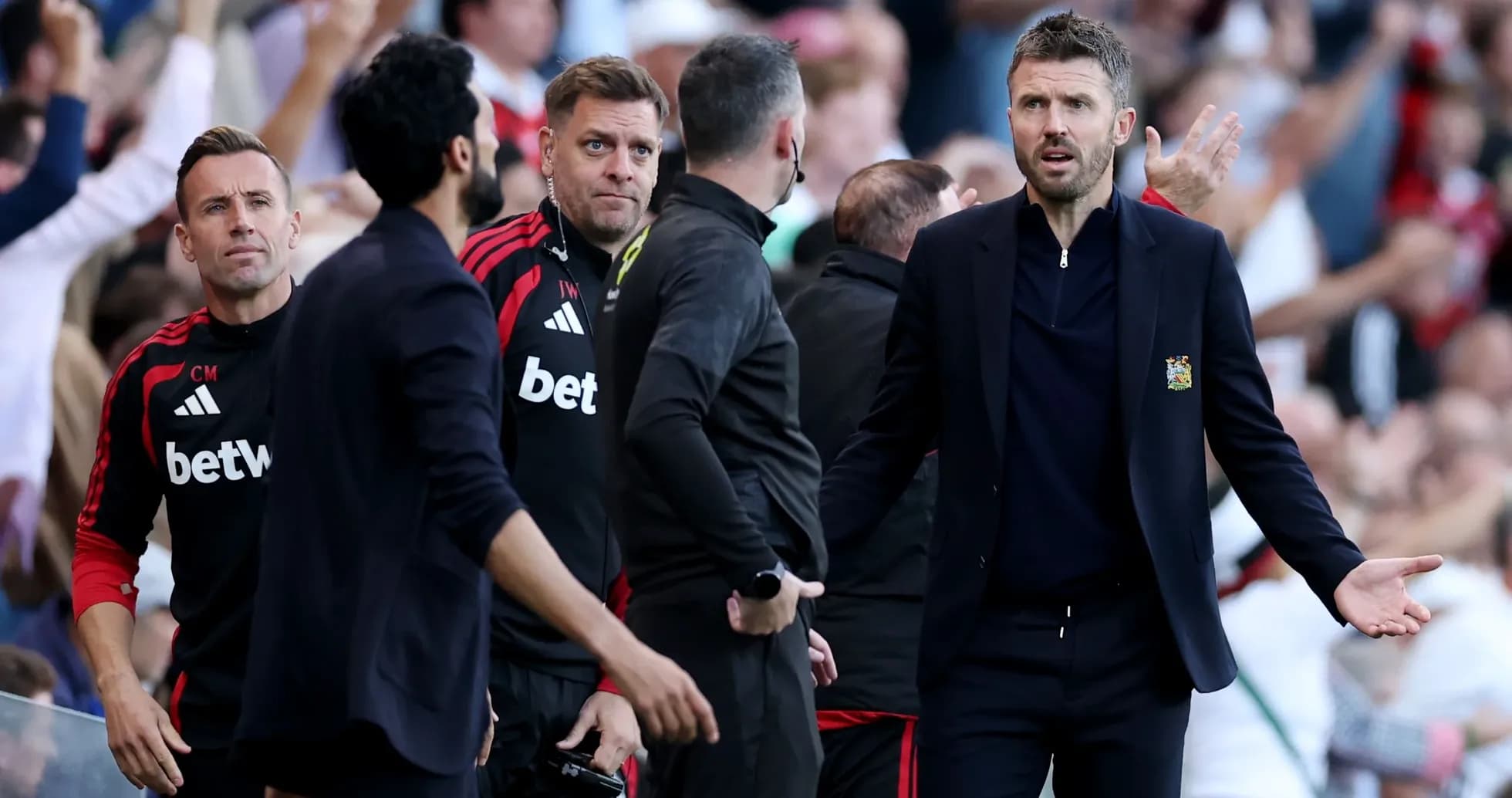
The boos told their own story. As Kobbie Mainoo’s number went up in the 90th minute against Fulham, the sound inside Old Trafford turned poisonous. A month into the new season, Michael Carrick’s homecoming has veered from hopeful reunion to full-blown crisis.
United have already dropped as many points as they did in the whole of last season. Two wins from seven. A team stripped of conviction, a manager stripped of credit. And, as laid bare by a series of glaring missteps, a club stripped of its identity.
A Line-Up That Tore Up United’s Attacking Blueprint
Carrick’s first big gamble set the tone. Ayden Heaven, just 19, was thrown into a Premier League start against Hull City having not begun a league match since the opening day on 22 August. He was picked almost solely because he is left-footed in Lisandro Martinez’s absence, sent out to deal with a rugged, combative striker like Oli McBurnie while more seasoned options like Noussair Mazraoui and Diogo Dalot watched on.
It looked desperate. It played out worse.
On the left wing, the decision was even harder to justify. Carrick had three left wingers available yet opted for Patrick Dorgu, the least convincing of them, to start despite a full preparation period. Dorgu lasted only 45 minutes. The damage lingered far longer.
The knock-on effect ripped through United’s forward line. Matheus Cunha, electric from the left last season and prolific under Carrick in that role, was shunted into the centre and lost his edge. Bryan Mbeumo, who had been scoring freely as a centre forward, was dragged out to the right wing. Two of United’s most dangerous players were moved away from their best zones. The team’s attacking rhythm went with them.
Carrick then doubled down. Against Ipswich, Everton and Fulham – a win, a draw and a defeat – he persisted with the same core line-up. At the back, he restored a back four that still haunts United supporters: Dalot, Harry Maguire, Martinez and Luke Shaw. It is the same defensive line that collapsed in the infamous 4-0 defeat to Brentford in August 2022, widely regarded as United’s worst Premier League performance.
This time, that unit has already leaked five goals in four matches. Old scars, reopened.
Big Games, Big Decisions – And Tactical Self-Destruction
The pattern has not just been about who starts. It has been about how Carrick manages the defining moments.
United were 1-0 up against Everton when Marcus Rashford signalled he “felt something.” Carrick’s response was to withdraw his most explosive forward and bring on Dorgu. It sent a message: caution, not control. Everton sensed it immediately. They introduced Jack Grealish, who promptly punished United with the equaliser.
Then came the late collapse. Shaw, so often United’s creative outlet from deep, provided the cross for Benjamin Sesko’s goal in the 88th minute. United were on the brink of a precious win. Carrick reacted by removing both full-backs, Shaw and Dalot, and sending on Leny Yoro and Mazraoui.
The reshuffle backfired. Yoro tucked in too narrow, gifting Grealish the room he craved. Mazraoui hesitated in the decisive duel, allowing Ainsley Maitland-Niles to strike the killer blow in the 95th minute. From control to chaos in a matter of minutes – and not for the first time.
Against City, the stage was set for a statement. Phil Foden’s red card in the 23rd minute handed United a man advantage and Carrick 22 minutes to reshape his plan before half-time. Sesko warmed up. The Stretford End roared for him. The change never came.
By the time Sesko was finally introduced – 19 minutes into the second half – Erling Haaland had already scored what proved to be the winner. United, a goal down and a man up, drifted.
The reshuffle that followed only deepened the sense of tactical confusion. Cunha dropped deeper. Bruno Fernandes dropped even further back into midfield. United’s most dangerous playmaker, the man who should have been operating closest to City’s box, found himself marooned away from the areas where he hurts teams most. United did not fashion a single real chance until the 95th minute. By then, it was far too late.
Old Trafford, Old Foes, New Lows
If there is one visiting side that knows how to strip United bare at Old Trafford, it is Brighton. Four straight league wins there had already stripped away the aura. This time, in the cup, Carrick chose that fixture to make eight changes and name a 15-year-old on the bench.
It looked like rotation. It played like a surrender.
In front of goalkeeper Karl Darlow, making his first appearance, Carrick fielded Yoro and Heaven together. An inexperienced, untested shield in front of a debutant goalkeeper against a slick, well-drilled Brighton team. Trouble arrived on cue.
The trio were at the heart of the defensive collapse as Brighton came from 0-2 down to win, becoming the first side to overturn that deficit and triumph at Old Trafford since Tottenham did it in 1976. Almost half a century without that kind of capitulation – until now.
Zirkzee, Misfires and a Manager Running Out of Ideas
The issues stretch beyond one or two bad nights. They speak to a manager running out of ideas and turning back to names that have already failed to convince.
Joshua Zirkzee looked like a breakout story when he scored twice in Ruben Amorim’s first win in December 2024. Since then, the goals have dried up. Just two league strikes followed, and by the summer the club were ready to move him on after Everton made contact.
Yet in this early-season slump, Zirkzee has featured in three consecutive defeats, offering almost nothing to change the narrative or the scoreline. At a moment when United needed imagination, reinvention, a bold new idea, Carrick reached instead for a striker the club had already been prepared to sell.
It all feeds into the same picture. A manager chopping and changing where he should be consistent, and clinging to old solutions where he should be bold. A team caught between identities. A fanbase losing patience.
The boos for Mainoo were not really about a teenager coming off in stoppage time. They were about everything that led to that moment – the points squandered, the leads thrown away, the sense that United, under Carrick, are drifting fast towards another reset.
How many more nights like this will Old Trafford tolerate?