Manchester United's Battle for Gabriel: A Prodigy at 15
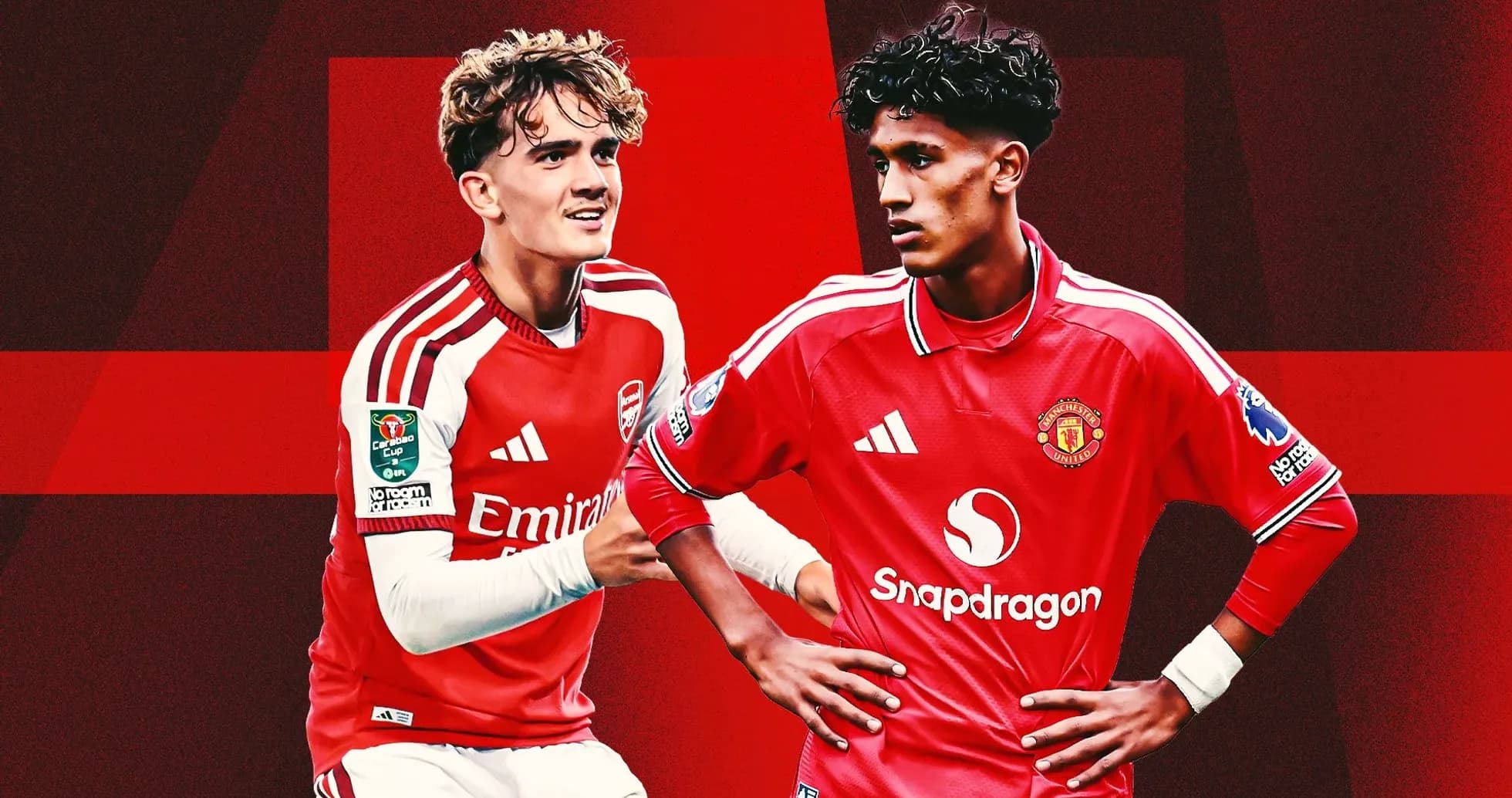
Manchester United are locked in a battle they cannot afford to lose – and it is not for a Champions League place or a marquee signing. It is for a 15-year-old.
Gabriel, the brightest light to come out of Carrington in a decade, is being courted by Real Madrid, Barcelona, Paris Saint-Germain and Bayern Munich. Four of Europe’s superpowers are circling a schoolboy. United, bruised and brittle after years of missteps, are refusing to blink.
A prodigy on the brink
United have made their stance clear: Gabriel is not for sale. Senior figures are now working overtime behind the scenes to convince him of the same thing.
The timing could hardly be more sensitive. INEOS chairman Sir Jim Ratcliffe has already drawn the ire of sections of the fanbase with a string of unpopular calls since taking charge of football operations. Letting a once-in-a-generation academy talent walk out the door would turn frustration into fury. This is the kind of decision that sticks to an ownership group for years.
Gabriel is under contract until next summer, but the situation is far from straightforward. He is not a full-time scholar, not tied into the club’s usual long-term academy model. When he turns 16 on October 16, if he holds a European passport, he will technically be free to leave.
United are scrambling through the fine print. His father, Joe O’Cearuill, played twice for Ireland. His mother is of Greek Cypriot descent. Under post-Brexit regulations, that heritage could give Gabriel dual-national status and a route into the European Union before his 18th birthday. If that door opens, the giants waiting outside will not hesitate.
United kept him out of Manchester City’s grasp last year. This feels different. This feels like a tug of war they might already be losing.
He was scheduled to train with the first team on Saturday. He did not show. He has not been seen at Carrington all week. For a boy who has been the academy’s heartbeat since he was 11, that silence is deafening.
History on hold
Michael Carrick had planned to name Gabriel in his squad for Wednesday night’s Carabao Cup third-round tie against Brighton at Old Trafford. A cameo would have made him the youngest player ever to appear for United’s senior side.
That chance has gone. For now, so has the fairytale.
United’s academy has not produced a true global superstar since Marcus Rashford burst through. In that vacuum, Gabriel has become more than just a prospect. He has been a symbol – of what United used to be, and what they still want to believe they are.
Two-footed, slippery in tight spaces, ruthless in front of goal, he glides rather than runs. Those close to him bristle at the Lionel Messi comparisons, but the Neymar parallels feel more grounded – in the way he drifts past defenders, in the swagger, even in the Nike boots he wears after signing a lucrative extension with the brand in March 2025.
The numbers back up the hype. At 14, he broke into United’s Under-18s – another record – and scored 20 goals in 21 league games. He swept the honours: the inaugural Premier League U18s Player of the Year and United’s Jimmy Murphy Young Player of the Year, the youngest winner in the club’s history.
In August, he jumped to the U21s. On debut against Ipswich he delivered two assists and a delicate chip in a 5-0 rout. A week later, he scored again as United dismantled Leicester City 4-1. It has been one rapid ascent after another.
No wonder the fanbase is clamouring for his promotion. United are short of inspiration in the final third. Arsenal’s Max Dowman is lighting up the Premier League at 16. The temptation is obvious: if he is good enough, why wait?
The Dowman effect – and the danger
The Dowman story has changed the temperature around every elite teenager in England.
Ethan Nwaneri set the record in 2022 as the youngest Premier League player at 15 years and 181 days when he came on for Arsenal at Brentford. His development has not been linear – loans to Marseille and Borussia Dortmund, ups and downs – but he already has more than 50 appearances for the Gunners at 19.
Dowman has gone even further, even faster. Thrown on by Mikel Arteta against Leeds in August 2025, he became the league’s second-youngest player. In March, he broke James Vaughan’s record as the youngest Premier League goalscorer with a brilliant solo strike against Everton at 16 years and 139 days. By May, he was the youngest title-winner in league history.
This week, he joined Wayne Rooney in a tiny club: only the second 16-year-old to score a brace for a Premier League side in a major competition, as Arsenal beat Ipswich 4-2 in the Carabao Cup. Fourteen senior games already, all laced with flair and a body that looks built for this level.
Arteta has even mentioned him in the same breath as Messi, then immediately wrapped him in cotton wool, choosing his moments carefully.
“We have to look after him. He's 16 years old. You don't see that in this league,” Arteta said after the Ipswich tie, stressing the unique physical and mental demands of English football and the need to control the environment around his teenage star.
Dowman can be eased in because Arsenal are stacked. They win often, rotate freely, shelter him when needed. Gabriel would be walking into a storm.
A different landscape at Old Trafford
Gabriel is not Dowman physically. He is slight, usually the smallest player on the pitch. His bravery and bite help bridge the gap, but they cannot erase it.
Throwing him straight into a fragile United side could go one of two ways – and both carry risk.
If he explodes, Carrick faces a different kind of problem. The pressure to start him every week would be relentless, the demands on his body and mind immense. United do not have Arsenal’s depth; they cannot hide him behind waves of senior quality.
If he struggles, the backlash would be brutal. The same voices demanding his debut would be quick to label him overhyped. In a club desperate for a saviour, the appetite for patience is thin.
That is why Carrick has been cautious, a stance backed by former United academy graduate Danny Simpson, who came through at the tail end of Sir Alex Ferguson’s golden era.
Speaking to GOAL via Free Bets, Simpson drew a sharp contrast between Dowman’s environment and Gabriel’s.
He recalled coming into a United side that was already cruising, 2-0 or 3-0 up, surrounded by a “second XI” good enough to win the Premier League. Dowman, he argued, enjoys something similar: a team “flying in confidence, full of top, top talent, winning games,” where even the backups are “just as good.”
“It’s easy to come on and have an impact and play well,” Simpson said. “I think maybe United at the minute is a bit different.”
He urged patience with Gabriel, pointing to the careful handling of Shea Lacey as the template: train with the first team, feel the level, wait for the right moment.
The lure of Europe – and the Yamal mirage
Patience, though, is hard to sell to a teenager watching his peers conquer Europe.
If Dowman is one reference point, Lamine Yamal is another. The Barcelona winger debuted in 2023 at 15 years, nine months and 16 days, as skinny and slight as Gabriel, yet already dictating games with pace and intelligence.
La Liga offers a different kind of test. Less raw physicality, more structure and possession. It is kinder to technicians, more forgiving of small frames. In the Premier League, where time on the ball evaporates and challenges bite, Yamal’s rise might have been slower.
Gabriel will know that. Real Madrid and Barcelona represent not just glamour but a perceived fast-track to the elite. The logic is seductive: if Yamal can do it there, why not me?
But timing is everything. When Yamal broke through, Barcelona were on their way to the La Liga title under Xavi but had crashed out of the Champions League in the group stage. The forward line was in flux. Raphinha, Ousmane Dembele and Ferran Torres were not at today’s levels. There was space for disruption.
Now the picture is different. Barca have Yamal established, a peak Raphinha, Anthony Gordon, Karim Adeyemi and Gabriel Jesus all competing for minutes. At Madrid, Jose Mourinho can call on Kylian Mbappe, Vinicius Junior, Jude Bellingham and Yan Diomande. Any teenager walking into those dressing rooms will wait, and wait, and wait.
At United, the path is clearer. Not guaranteed, not easy, but less cluttered than at the clubs chasing him. Insisting on everything now risks losing everything later.
Entitlement, identity and a line in the sand
There is a hard truth at the heart of this saga: Manchester United cannot allow themselves to be held hostage by a 15-year-old, no matter how gifted.
Gabriel is still 18 months from sitting his GCSEs. He has been nurtured, protected, pushed at the right moments by Carrick and the academy staff. If he recommits, that work will continue. If he chooses to walk, there is little sense in a prolonged stand-off that overshadows a season already under strain.
United’s start has been poor. They do not need a running soap opera around a teenager emboldened by attention and, perhaps, by voices around him who see opportunity more than obligation.
This club was built on homegrown greats who earned everything: George Best, Sir Bobby Charlton, Ryan Giggs, David Beckham, Paul Scholes, Gary Neville. None of them were handed stardom. They climbed towards it, step by painful step, meeting ferocious standards on and off the pitch.
Former manager Ruben Amorim, for all his failings in a short and unhappy spell, saw something clearly before his sacking in January. “There is a feeling of entitlement we have in our club,” he warned. Difficult moments, he argued, can be good for young players. They do not always need applause. They need resistance. They need to stay, fight, overcome.
He was right about that.
Right now, Gabriel is not acting like a player ready to carry the weight of United’s shirt. Talent alone will not be enough. Not here. Not in this league. Not at this club.
No one is bigger than Manchester United. If that message does not land, if Gabriel chooses the shortcut and the bright lights, the club may have to let him go and chase his brand elsewhere.
The question is not just where he will play next. It is what kind of player – and what kind of professional – he wants to become.