Manchester United's 10-Man Problem Reveals Deeper Issues
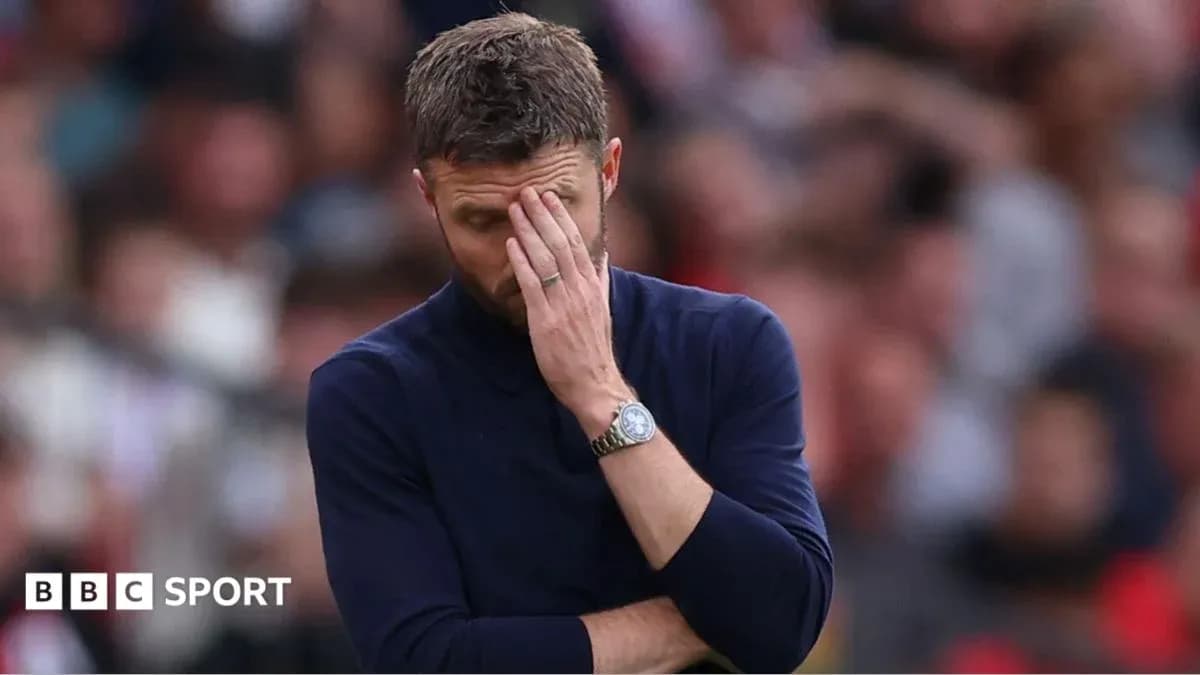
For the third time in less than 10 months, Manchester United have contrived to lose against opponents reduced to 10 men before half-time. That is not a quirk of fate. It is a pattern – and a damning one.
The latest chapter came in a 1-0 home defeat by Manchester City, a result overshadowed by an official apology from Pro Ref for what was described as “an error of judgement” in allowing Erling Haaland’s winner to stand. The controversy has raged since, but inside Carrington the conversation will be far less about referees and far more about United themselves.
Four points from three games at Everton was, in Michael Carrick’s words last weekend, not a crisis. Four points from four, with only a home win over newly-promoted Ipswich to show for a £155m summer spend, is something else entirely.
This is now a team under examination from every angle: recruitment, team selection, substitutions, tactics – and the man in the dugout.
Carrick did not attempt to sugar-coat it. “There is no getting away” from the fact the start is below expectations, he admitted, even if he rejected the notion that United need a reset. “We don't need a break or a restart. We've just got to move on and get winning again.”
He needs that to happen quickly. Brighton arrive at Old Trafford in the Carabao Cup on 16 September, Fulham away follows four days later. Fail to respond and the looming three-week international break will be filled with noise United cannot control and questions they may not enjoy answering.
Ten Men, One Idea
Enzo Maresca, newly installed in the City dugout, knew the red card to Phil Foden changed everything. It made his team’s task harder. It also gave him a clear route to shutting United down.
“They are a team that loves transitions and space in behind,” Maresca said afterwards. With 10 players, City simply dropped, sat in and waited. No space. No chaos. No counter-attacks. United’s strength, neutered.
The result was a familiar picture. United with the ball, United probing, United running out of ideas against a set defence that refused to budge.
This has been the fault line for more than a decade. Since Jose Mourinho’s arrival, United have consistently looked more dangerous when they can counter-punch rather than dictate. Ole Gunnar Solskjaer talked about turning them into a front-foot, possession side but never fully escaped the transition-first identity. Erik ten Hag and Ruben Amorim arrived with reputations forged in leagues where their teams dominated the ball; the same structural problem resurfaced.
Now Carrick, a midfielder who built his career on receiving the ball, recycling it and rarely wasting it, is trying to nudge the club in that direction again. The idea is clear. The execution is not.
Keeping the ball is only the first step. The real test comes when opponents are happy to sit in, clog the central lanes and dare you to find a pass that matters. United still look short of players who can unlock that kind of resistance on a regular basis.
£155m and Still Short
The summer was supposed to address that. United built their window around midfield, but the early return on investment has been thin.
Youri Tielemans has yet to find anything like his best form. Carlos Baleba is still waiting for his debut. Andrey Santos started at Hull, then disappeared from the picture, dropped to the bench and unused against City.
That is a lot of money to spend for so little influence on the pitch.
Elsewhere, the gaps are just as stark. Luke Shaw’s remarkable run of 41 consecutive Premier League starts ended without the arrival of the left-back cover many expected as a priority. It showed.
So did Carrick’s bench. With United chasing the game against 10-man City, the introduction of Joshua Zirkzee for Marcus Rashford seven minutes from time was one of only two substitutions. Zirkzee, available for transfer throughout the summer, hardly represents a secret weapon. His late cameo felt less like a tactical ploy and more like a symptom of a squad stretched thin.
For a club of United’s scale, that is a brutal indictment of depth.
The Bruno Burden
Bruno Fernandes carried United last season. He left with the PFA and Football Writers’ Player of the Year awards, nine league goals and a Premier League-record 22 assists. Those numbers told only part of the story; his energy, creativity and sheer force of will often dragged United through games they had no right to win.
This season the picture is murkier. Three goals and one assist is a respectable return on paper. The eye test tells a different tale. His influence feels dulled, his spark dimmed.
Some observers felt he looked tired against City. That perception only sharpened the focus on Carrick’s decision-making in midweek against Sabah FK in the Champions League. United, back in Europe’s elite competition after a two-year absence, led 3-0 at half-time against modest opposition. With a three-day turnaround to the derby, this looked the perfect opportunity to protect key legs.
Carrick chose another path. He used all five substitutes, but Fernandes stayed on for the full 90 minutes. It was a curious call then; it looks even more questionable now, with the captain seemingly running on fumes in a game United could not afford to lose.
Fernandes is in the final year of his contract, with United holding an option to extend to 2028. That should be a position of strength. Instead, it only sharpens the sense of over-reliance. When he dips, the whole structure wobbles.
A Week That Will Shape the Mood
Strip away the noise around Haaland’s goal and Pro Ref’s apology and the core problem remains: United still do not know how to control games against compact, organised opponents, and they still lean too heavily on too few players.
Carrick insists United do not need a reset. The next week will test that belief. Brighton in the cup, Fulham in the league, and then a long, echoing break with no football and plenty of opinion.
If United cannot find answers on the pitch before then, the questions off it will only grow louder.