Lucas Herrington: From MLS to Premier League Stardom
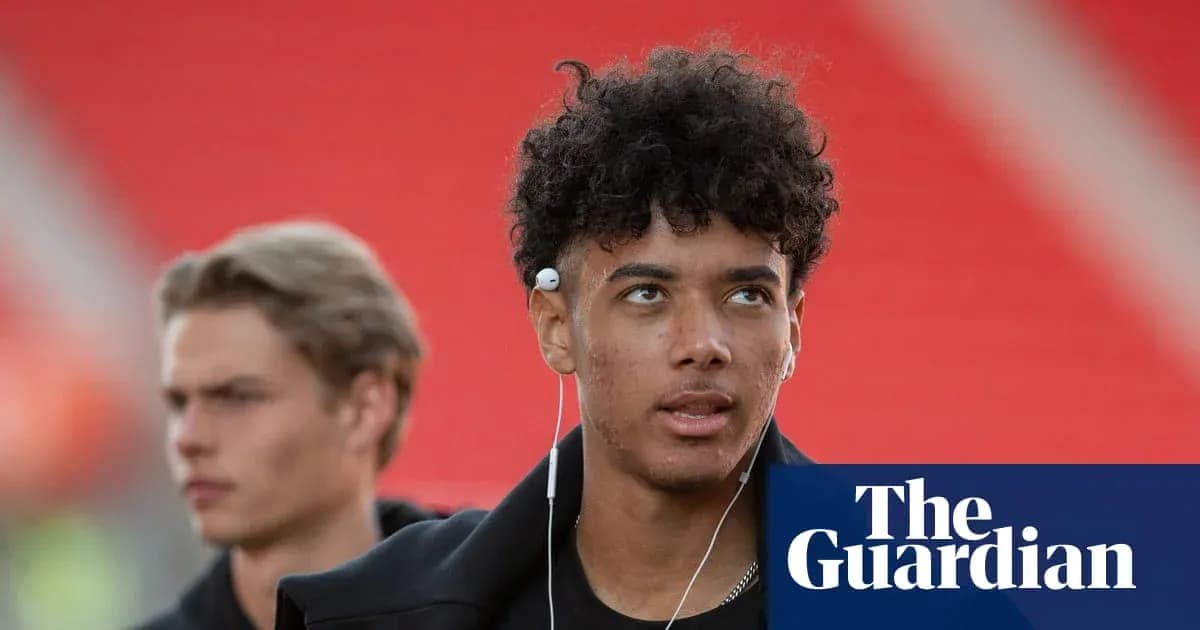
On the opening day of the Premier League season, with the game starting to tilt back towards Manchester United, an 18-year-old who had barely unpacked his bags in England was told to get ready.
Lucas Herrington rose from the Hull City bench just after the hour mark, his side 2-0 up, Nobel Mendy injured, Old Trafford rattled. Sergej Jakirović didn’t send him on to enjoy the occasion. He sent him on with a job.
“I knew the job that had to be done,” Herrington says, two weeks on from that debut. “I knew that we had to see out the game. It wasn’t going to be easy because they were going to throw everything at it. With their subs, they did. They were more attacking.”
Thrown straight into a storm, he barely had time to consider what had brought him there.
From Queensland pitches to Premier League pressure
Herrington had been in the UK just over a week when he stepped into that cauldron. Seven, eight days earlier, he was a Colorado Rapids defender in MLS. By the time he jogged onto the pitch in a Hull shirt, he had become one of the most expensive Socceroos in history, the costliest Australian teenager ever, and the centrepiece of the richest deal MLS has ever banked for a defender.
Meteoric barely covers it. The Queenslander turns 19 this weekend, when Aston Villa visit. Almost exactly a year ago, he was playing a preseason game against NPL QLD side Olympic FC. The move to Colorado Rapids in 2026 had already been announced back then, but the script since has been torn up and rewritten at dizzying speed: regular starts in MLS, a Socceroos debut, a World Cup appearance, and then, before anyone could catch their breath, a Premier League transfer.
Now he has come off the bench in both of Hull’s opening fixtures, part of a side that has started perfectly. Only Hull, Manchester City, Chelsea and Arsenal still carry 100% records. That was never the expectation for a newly promoted club. It certainly wasn’t for a teenager with fewer than 50 professional games behind him.
Yet he has walked into it as if it were the natural next step.
“I wouldn’t say it’s easy. But it’s definitely been very enjoyable,” he says. “The intensity of the games – you have to be focused at all times. You’ve got to always know your surroundings; you’ve got to be scanning, communicating. It’s great for me; in my position, you have to be communicating. You see the whole field. It’s been great.”
A rapid rise, and a growing reputation
The scale of the leap is stark. Twelve months ago, he was a prospect. Now he is a project the game is watching closely.
Off the pitch, life has changed shape just as quickly. In Hull, strangers stop him in the street for photos. He’s picked out a car “nice” enough to sit comfortably in a Premier League car park. The trappings of the league have arrived almost as fast as the football.
What excites him most, though, is the calibre of opposition waiting for him. The idea of facing Erling Haaland, in particular, lights him up.
“It’s pretty hard to look past him when it comes to strikers,” Herrington says. A defender’s ultimate examination, looming somewhere on the fixture list.
“It’s pretty crazy. It’s the trajectory that I’ve always dreamed of being on. But I’m just very grateful to the coaches that have given me the opportunity, and that includes [Socceroos coach Tony Popovic] for giving me that opportunity to play at the World Cup at such a young age. Every coach that’s helped me along the way at club level. It’s all meant so much to me.”
Australian football has produced a steady stream of promising youngsters in recent years. None have accelerated like this.
Ruben Zadkovich, then Brisbane Roar boss, went early with his verdict, calling Herrington “the best defender in Australian football” before the teenager had even played an A-League game, let alone a Premier League one. Socceroos captain Harry Souttar labelled him a “Rolls-Royce” after his World Cup bow against Paraguay. Popovic trusted him not only to start a knockout game against Egypt, but, rightly or wrongly, to step up in the decisive last-32 shootout. Team-mates in North America reached for the same word over and over: “unbelievable”.
Those assessments have built a reputation that now has to be lived with, and lived up to.
Zlatan’s message and a steel-core mentality
The World Cup also delivered one of the more surreal moments of his short career. After that missed penalty against Egypt, Zlatan Ibrahimović followed through on an offer to speak with him.
“He said, ‘really, don’t fear anyone; I’m here for a reason, so just go enjoy it’,” Herrington recalls. “It’s a great league; he played in it. His message was just to go have fun, and don’t fear anything. Go, work hard, be yourself … because it’s a great experience to play in the Premier League.”
Advice from one of the game’s great egos, aimed at keeping a young defender’s head clear. It seems to have landed.
There will be more adjustments in the coming weeks. His mum, who watched from the stands as he made his Premier League debut against United, will soon fly back to Brisbane after helping him bed into life in Yorkshire. The support bubble will shrink. The scrutiny will not.
Yet the same calm that defines his defending appears to run through his off-field personality. Socceroos team-mates have praised not just his technique and reading of the game, but his mentality. Nothing, they say, seems to rattle him.
“My parents have always instilled that factor of humility in my life, and having that humbleness to stay grounded and to keep working hard,” he says. “Obviously, I’m still only 18, so I’ve got a lot to work on, a lot to improve on. I remember that every day. I’ve had a lot of coaches tell me that as well: to stay humble, keep working hard. To hear it from everyone in my support group is really instilling, and I’m always trying to get better.
“Always having that positive mindset that I’ve still got a lot of things to work on. I’m not the finished product. So continue to work hard.”
The Premier League has a habit of exposing any weakness, technical or mental. Herrington walks into it with a price tag, a reputation and a future that already looks mapped out. What he insists on, though, is that the story is still being written – and that, for all the noise around him, he is nowhere near the finished article.