
London City Lionesses: The Putellas Impact on WSL
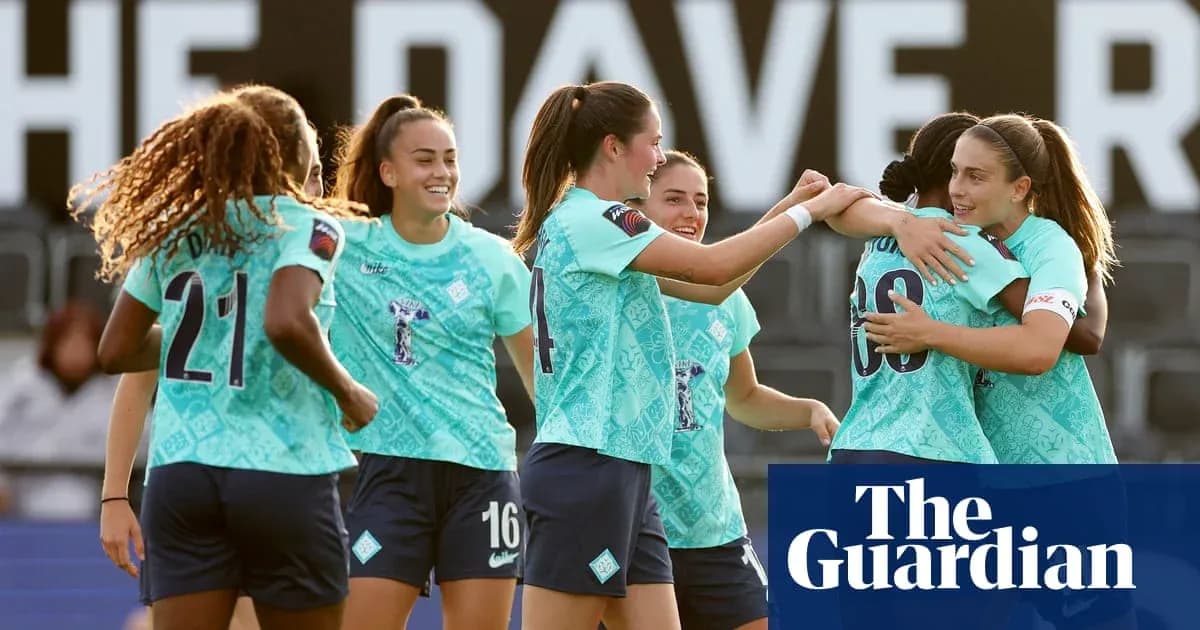
Martin Semmens leans back in his chair at Hayes Lane looking utterly satisfied, and with good reason. The London City Lionesses chief executive has just been told the club’s Instagram account has racked up 34 million hits since Alexia Putellas lifted the Ballon d’Or on Monday night. It’s only Thursday afternoon.
On Sunday, Manchester City arrive in Bromley. Between them, the two clubs will put seven of the top 30 Ballon d’Or-ranked players on the pitch. For a league still fighting for oxygen in a crowded sporting landscape, it is a statement occasion.
“It’s awesome for the WSL,” Semmens says.
He knows exactly what this looks like from the outside: a once-modest, independent club, owned by US businesswoman Michele Kang, now sitting third in the top flight barely two and a half years after finishing eighth in the second tier. The leap feels improbable. Signing the world’s best player has made it feel inevitable.
Putellas has not just changed the team sheet. She has changed the temperature of the building.
“Her impact on our commercial business is extraordinary,” Semmens says.
The numbers back him up. The Ballon d’Or winner, a World Cup champion with Spain and four-time European champion with Barcelona, brings a global profile that dwarfs many established men’s clubs. Her 3.7 million Instagram followers, for instance, outstrip a club the size of Porto.
But the real shift, Semmens insists, is psychological. “From a leadership point of view, she allows us to start thinking about really winning. The environment today feels like it can beat Man City on Sunday and that’s a lot down to her.”
Putellas, London and a power play
Luring a player who had spent 14 years at Barcelona was never going to be a simple transaction, even with Kang’s wealth. Semmens, who previously ran Southampton, recalls the early conversations.
“The conversation went: ‘Wait until I’ve finished winning a Champions League with Barcelona and then we’ll have a conversation,’ which we loved and we respected,” he says. “But we always had a feeling she would come.”
Why London City? Putellas, he explains, bought into a specific project. First, the independence: a women’s-only club, built around a women-first environment, not tethered to a men’s team. Then, the city itself. London still carries a pull few players can resist.
The WSL’s momentum mattered too. “People see WSL as the growth brand,” Semmens says. The league is where players and agents increasingly see the next wave of investment, visibility and competitive edge.
Above all, there was Kang. The owner’s credibility, built on doing rather than promising, resonated with Putellas. “Alexia said to me: ‘Well, she said she was going to do all this stuff and she’s done it. So I want to be part of that.’”
Legacy played its part. At Barcelona, Putellas became an icon. In London, she can become an architect. “It allows her to have a legacy in the future – she will grow this club to a point where she’s creating a pathway for the next young players to come through in London,” Semmens says.
The Nike deal that changes the equation
The Putellas effect is not just emotional. It is financial. London City claim to have secured the largest front-of-shirt sponsorship in the women’s game with Nike, a deal they say is worth more than the $4m (£3m) a year attached to the new NWSL franchise in Atlanta.
“It’s insanely big,” Semmens says, without flinching.
The size of the partnership validates a strategy that many in football would consider reckless.
“Our view on how to run this business, rightly or wrongly, was to invest first, invest in everything to make it awesome, and then the commercial deal will be big,” he explains. “The other way, of: ‘Let’s sit back, let’s grow a fanbase, let’s wait for the money to come’ – we don’t have the patience for that.”
Kang certainly doesn’t. “Michele’s vision was: ‘I’m going to invest now to prove that we can bring these deals in.’ That deal allows us to kick forward, it allows us to keep investing in players and infrastructure, because without it, we’re just burning Michele’s money, which is not the plan.”
The start-up mentality is obvious. Spend heavily to build something compelling, then monetise it. In tech, it’s standard. In women’s football, it still raises eyebrows.
Spending, scrutiny and the salary cap
Those eyebrows went skywards last season. London City recorded an operating loss more than 10 times their revenue in the 2024-25 campaign, the year they won promotion as second-tier champions. Across the WSL, rival executives took notice. Some quietly questioned how sustainable this could be. Others wondered whether it was even within the rules.
Since then, the league has drawn a clear line. Salary cap regulations now state that no club’s wage bill can exceed 80% of revenue, plus up to £4m or an additional 25% of revenue, whichever is higher. Last season, when London City finished sixth, the WSL handbook specified there would be no punishment for breaches of the cap in that campaign alone. This year, points deductions are on the table.
That makes commercial growth non-negotiable. It also makes the Nike deal and the Putellas boom more than just nice headlines – they are structural necessities.
So were London City compliant last term?
“We are 100% within the rules, we will always be,” Semmens says firmly. “It’s so important to Michele.”
He describes last season’s spending as a “start-up fund”, the heavy lift before the business turns.
“The [salary cap] rules were set up with a clear understanding that they wouldn’t come until this year. The handbook is 100% clear,” he says. “We want to see investment coming into the women’s game. Anything that kind of restricts positive and good investment obviously worries me but there is a need for rules and we’re 100% fine with that.”
Transparency, he insists, is non-negotiable. “We are super-transparent. We can reassure the fans that we are financially viable, sustainable, and we’ve made serious investments over the last two years to be profitable and successful in the future.” The internal target is to turn a profit within five years.
Lyon, Europe and the multi-club puzzle
On the pitch, London City sit three points behind Chelsea and Manchester City. Off it, another question looms: if they finish high enough, can they even play in the Women’s Champions League?
Kang also owns OL Lyonnais, the eight-time European champions and the defining powerhouse of the women’s game. Uefa’s multi-club ownership rules in the men’s competitions are strict. The women’s side of the game is now running into the same issue.
Semmens is bullish. “One hundred per cent, it can be resolved,” he says. London City’s position is clear: multi-club investment in the women’s game should be seen differently to the men’s model.
“It’s not about exchanging players like the men’s game. It’s not about one club dominating and the other being a feeder club. It’s a different model but we fully understand and respect the rules,” he says. “Therefore, we will set ourselves up in a way where we’re allowed to and can compete in Europe together.”
He points to “clear rules, clear precedents in the men’s game and clear things you can do to allow both teams to flourish”. London City, he insists, are “fully aware of that” and will comply.
The subtext is simple: they intend to qualify for Europe, and they intend to be there when they do.
A defining weekend
For now, the focus is narrower. London City trail the traditional heavyweights by a single win. Semmens’ stated aim is to “build a squad that is consistently in the top three”. That is not a dream any more. It is a target measured in league tables and sponsorship lines.
On Sunday, Manchester City roll into Hayes Lane, bringing their own stars, their own ambitions, their own sense of entitlement to the WSL summit. London City bring Putellas, a surging commercial engine and a belief that would have sounded fanciful just a few years ago.
“This is probably the No 1 game in the women’s game in the world this weekend,” Semmens says.
For a club that once fought for attention in the shadows, that is the point. Not just to be in the fixture list, but to be on the map – and to stay there.





