Liverpool's Deadline Day: A New Strategy Unfolds
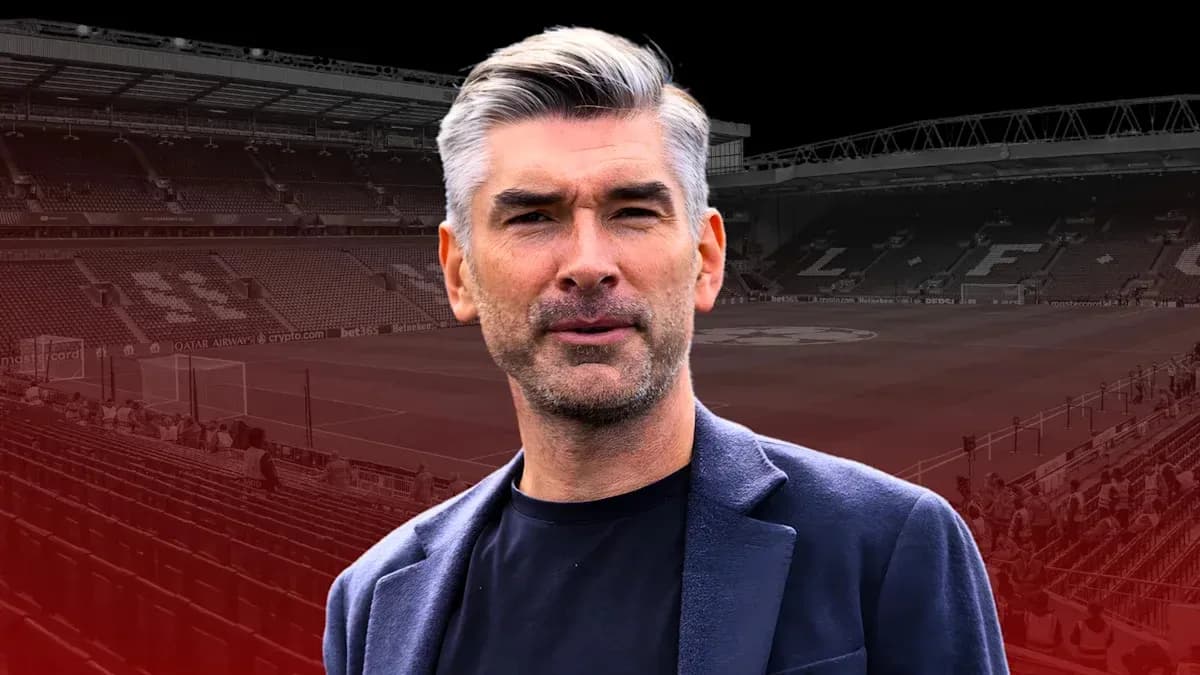
Deadline day at Anfield arrived with a drumroll and ended with a shrug.
Liverpool supporters had gone into the final hours of the window braced for one more attacking signing to accompany Bradley Barcola. Instead, the club effectively locked the doors the moment they turned down Manchester City’s £80 million offer for Cody Gakpo. That was the line in the sand. Once City were rebuffed, the shutters came down.
It wasn’t for a lack of trying.
Brighton refused to budge on Yankuba Minteh, knocking back two bids. Crystal Palace stood firm over Ismaila Sarr. Paris Saint-Germain changed the rules mid-game with Ibrahim Mbaye, almost doubling their asking price and killing any realistic prospect of a deal. The market fought back, and Liverpool walked away.
Yet Richard Hughes, in his final window as Liverpool’s sporting director, did not leave quietly. Victor Munoz arrived. So did Barcola. One is already making a nuisance of himself in the Premier League; the other is being kept under wraps, for now.
Munoz has wasted no time in introducing himself. A won penalty against Newcastle United. A late equaliser against Nottingham Forest. Two games, two decisive contributions. Barcola, the headline winger signing, is still to be unveiled in competitive red, but the expectation around the Frenchman is obvious. Liverpool see him as a piece for now and the future.
The senior forward they wanted to add on top of that never came. On paper, it looks like a miss. In practice, Liverpool spent deadline day working on something far more unconventional.
The Djylian N’Guessan detour
The move for Djylian N’Guessan is not yet official, and that’s not down to hesitation.
Liverpool planned to bring the Saint-Étienne striker in during the summer and immediately send him out on loan. The problem? FIFA’s strict limits on foreign international loans. With their allocation already used up – most notably with Harvey Elliott’s season-long spell at Valencia – Liverpool could not sign N’Guessan and then park him elsewhere abroad.
So they changed the route, not the destination.
To avoid losing the 18-year-old, who has been likened stylistically to Eli Kroupi Jnr, Liverpool helped shape a workaround. N’Guessan will spend the 2026/27 season on loan at Brest, but officially as a Saint-Étienne player. His development continues in Ligue 1, his registration remains in France, and Liverpool stay within FIFA’s rules.
The key moment comes in January. That is when N’Guessan is expected to sign a pre-contract agreement with Liverpool, allowing him to complete a free transfer to Anfield in the summer once his Saint-Étienne deal expires. It is complex, yes, but it’s also the sort of creativity the modern market demands.
Liverpool couldn’t loan him. So they waited him out.
A quiet revolution in recruitment
N’Guessan is not an isolated case. He is another piece in a broader strategy that has started to define Liverpool’s post-title planning.
Anfield is turning into a magnet for elite prospects. Highly rated defensive pair Ifeanyi Ndukwe and Mor Talla Ndiaye have been secured. Samuel Martinez has been added to the production line. Lucca Brughmans arrived from KRC Genk for £30 million, a fee that underlines how seriously Liverpool take this next generation.
This is not scattergun work. Under the meticulous eye of Pedro Marques and Matt Newbury, the 2024/25 Premier League champions are building a second wave behind the current core, a squad within a squad. Some of these names will be drip-fed into the first team. Others may be sold on for profit. All of them raise the floor of the club’s talent base.
Deadline day did not deliver the fireworks many fans wanted. No last-gasp winger. No dramatic late twist.
Instead, Liverpool left the window with Gakpo still theirs, Barcola waiting in the wings, Munoz already impacting games, and a complicated, almost covert route mapped out for Djylian N’Guessan.
It was not the loudest end to a window. But if this wonderkid strategy lands as intended, it may prove to be one of the most important.