Liverpool’s Coach Discusses Urgent Winger Needs and Tactical Balance
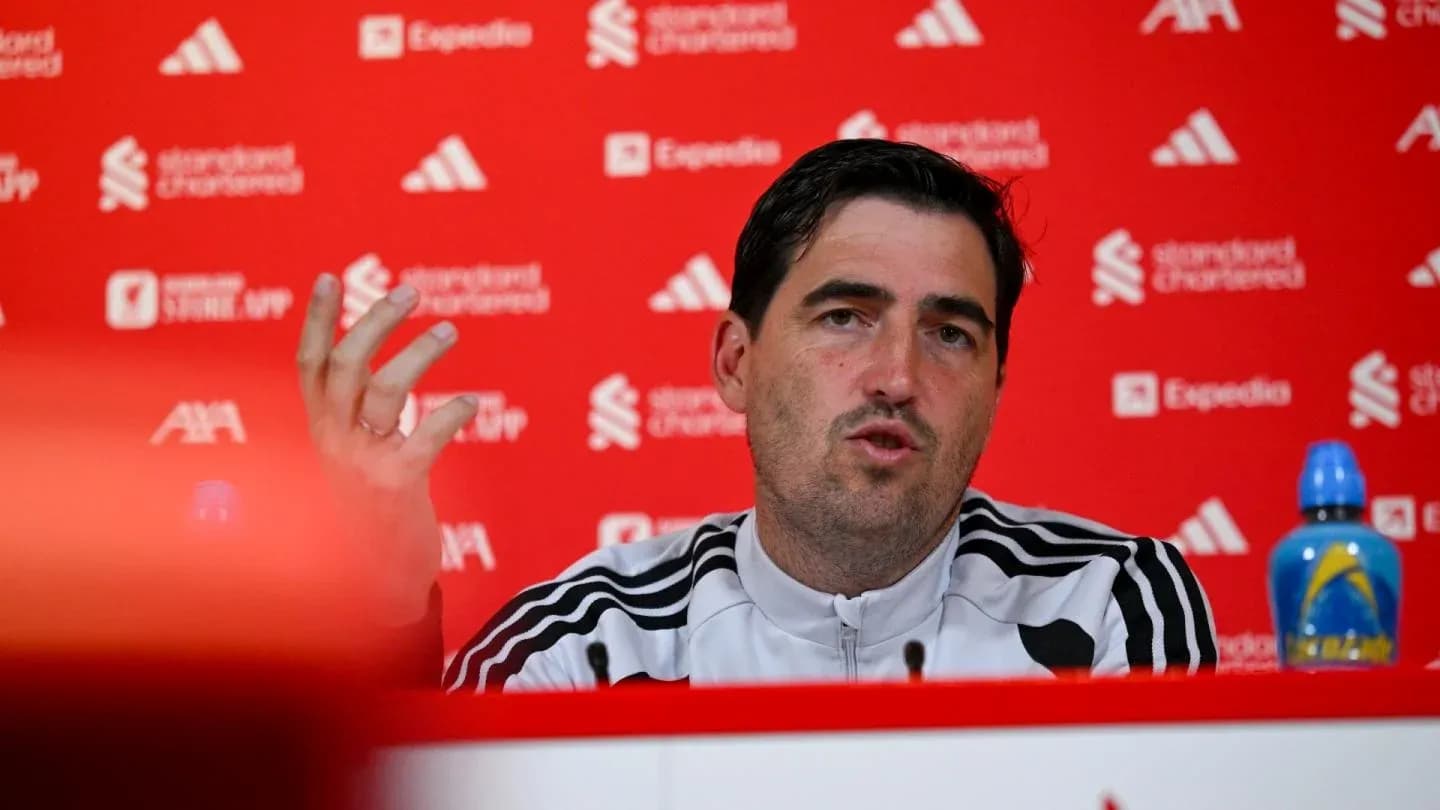
At the AXA Training Centre, with Anfield looming on the horizon and the transfer window ticking towards its close, Liverpool’s head coach cut a calm but clear figure. The message was simple: he knows exactly what he wants, from both his squad and the club.
Wingers wanted – and urgently
Liverpool’s need in wide areas is no secret, and the manager did nothing to disguise it.
“As you know, we are trying to sign in that position,” he said, careful not to name names but not hiding the priority either. Numbers out wide are short. That is the reality. The club is working to fix it.
“I hope we can have good news soon but we are still not there,” he admitted. The deals are not done, the gaps in the squad still visible, but the plan is clear. He has told the club what he wants. Now he waits for them to close.
Walking the tightrope: attack, defence and that elusive balance
The conversation quickly turned to the theme that will define Liverpool’s season: how to attack with ferocity without leaving the back door wide open.
“Yeah, that’s the key – you said the balance,” he agreed. Liverpool’s first outing of the campaign showed both sides of the coin: fluid attacking play, but punishment on the counter, particularly with the first goal conceded.
He doesn’t want to blunt his team. The “offensive side, the fluidity, the arrivals with numbers” are non-negotiable. But he knows they cannot keep getting caught with too many bodies ahead of the ball.
The solution, for him, lies less in rigid instruction and more in player intelligence.
“You cannot be with the joystick every time with the player,” he said. Some footballers sense danger. They know when to hold, when to go. That instinct – that ability to read the game in real time – will decide how well Liverpool manage this balancing act.
He refuses to swing from one extreme to the other: from sending waves of red shirts forward to a cautious, static set-up that leaves the attack sterile. The job now is to fine-tune recognition of situations, not to shackle his players.
Transfer window tension
The clock is ticking, and he feels it like everyone else.
“I don’t know what’s going to happen,” he admitted when asked about late business. There was no attempt to bluff. Just a quiet insistence on patience – even from himself.
Four or five more days, then clarity. “I will be comfortable the first of September, or the second in this case, when they tell me, ‘OK, this is who we are, this is the options we have.’”
By then, the squad will be fixed, the market closed, and the focus narrowed. Until that moment, he lives with uncertainty, even if in his mind the picture is already drawn. He knows the profiles he wants. The club knows too. Now it’s about execution.
Anfield awaits
Amid the tactical detail and transfer talk, there is a human story unfolding. This will be his first Premier League game at Anfield as Liverpool head coach. That still matters.
“It’s definitely a special moment for me,” he said. Pre-season gave him a taste. The real thing will be different. Sharper. Louder. He will be locked on the game, but he knows the emotion will be there, because it should be.
“It is a special place. I’ve had to fight a lot to arrive to this place,” he reflected. There was no sense of being overawed, only a desire that “everything goes well” so he can enjoy the game as well as endure it.
Facing Forest and Glasner’s grip
Standing between him and a winning Anfield league debut is Oliver Glasner and a Nottingham Forest side that already carry the manager’s imprint.
“I think he has been very successful,” Liverpool’s boss said of his opposite number. The familiarity is real; they have met often enough in the Premier League to know each other’s habits.
You can see Glasner’s work immediately in Forest’s structure. They don’t give much away. The recent defeat to Leeds told its own story: a tight game, few chances, settled by a 90th-minute free-kick, with Forest arguably having created more before that late blow.
“We will have to earn every chance,” he warned. Nothing comes free against this Forest side. Liverpool will need to be sharp on the ball, patient when the game slows, and ruthless when the gaps finally appear.
And when Forest break, they carry the same menace as most sides in this league. “Very good players up front” and serious threats in transition mean Liverpool’s rest defence must hold, or the afternoon can turn quickly.
Midfield freedom, with a cost
The midfield, as ever, sits at the heart of the debate. How much freedom is too much?
He is not interested in turning Ryan Gravenberch or Dominik Szoboszlai into safety-first midfielders. He reached for a recent example: the goal against Monaco in pre-season, a sweeping move starting with Gravenberch, a one-two with Szoboszlai, then the pass to Alex Isak to finish.
No-one questioned the risk then. “They said, ‘Incredible goal, lovely goal.’” The same positioning that sparks applause when it leads to a goal draws criticism when it leaves space behind. He knows that. He accepts it.
“There is a balance there,” he repeated. Full-backs don’t always have to mirror each other. One goes, one stays – but only if the situation demands it. If the opposition sits deep and Liverpool have cover, it is safer to commit extra numbers. If rivals leave players high, the calculation changes.
Recognising those nuances, in real time, is the work in progress.
Control, and the illusion of it
The 2-2 draw with Newcastle still lingers in the analysis. To many, conceding twice in transition suggests a lack of control. He sees it differently.
“I felt we controlled the game, honestly, quite well the other day,” he said. Yes, the transitions hurt. Yes, those moments count. But across the 90 minutes, he saw “meaningful possession” and a team that attacked with purpose, not sterile dominance.
He watched from the touchline with a manager’s intuition: “I was always feeling we are closer to scoring than Newcastle are in most parts of the game.” The result didn’t reward that feeling, and he knows no one can change a 2-2. But he will not throw out the good because of two bad moments.
Jacquet’s first steps
There was praise, too, for Jeremy Jacquet, handed a Premier League debut with barely 45 minutes of pre-season in his legs.
“I think overall he played very well,” the manager said. The lack of conditioning told late on; he came off because the staff could see the fatigue in those final minutes, especially in a position where lapses are unforgiving.
But the raw material is there. Confident on the ball. Solid without it. Young, new, and inevitably prone to mistakes, which the coach insists must be accepted as part of his growth.
“He’s performing and training very well for me,” he added, a line that tends to matter inside a dressing room more than any headline.
Now comes Forest at Anfield, the noise, the scrutiny, the stakes. A coach searching for balance, a squad waiting on reinforcements, a fanbase ready to judge in real time. How quickly those pieces come together may shape far more than just one afternoon.