Lionel Messi's Departure from International Football: A New Era for Argentina
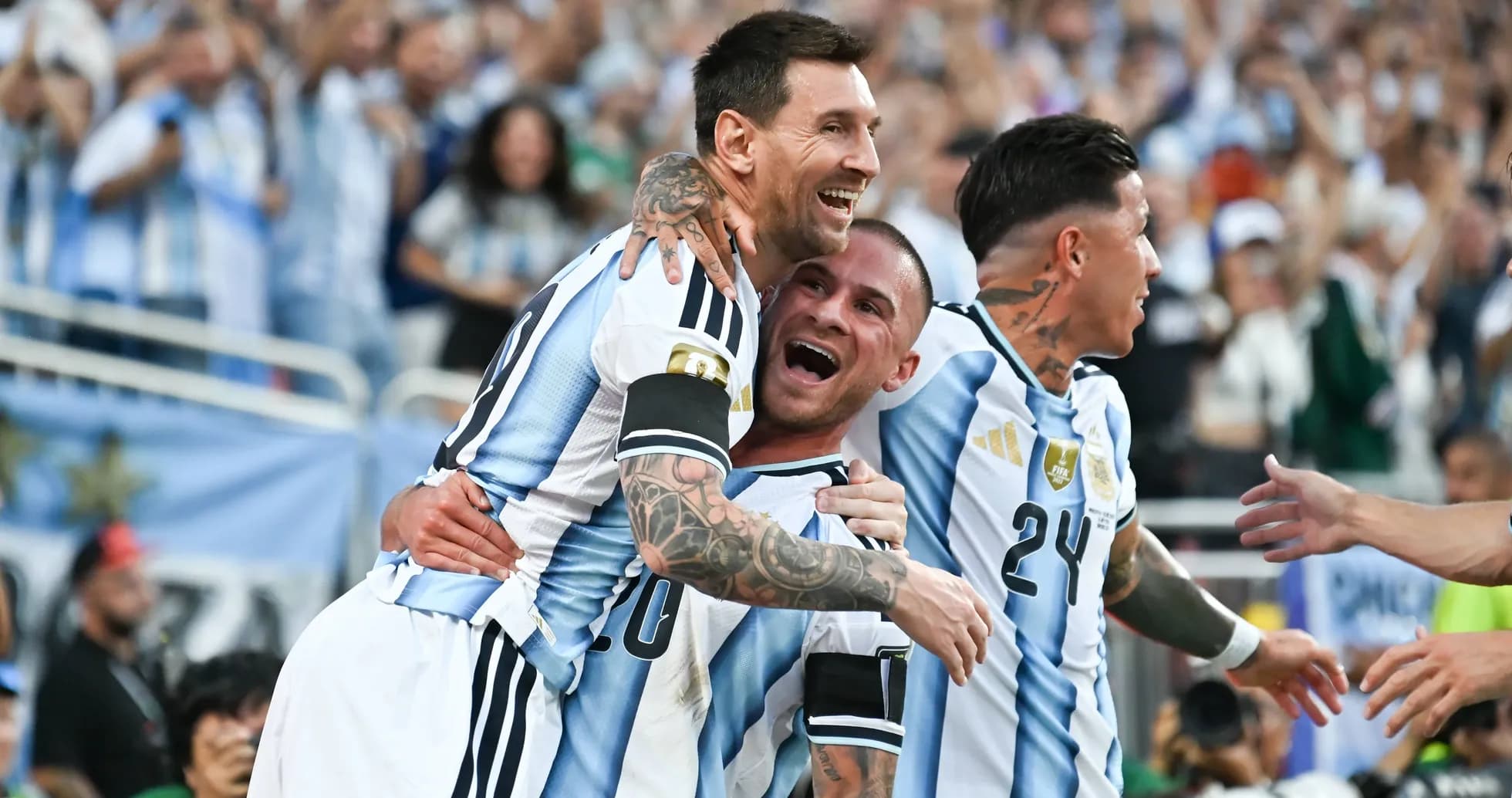
Lionel Messi is walking towards the exit door of international football, and Argentina know exactly what that means. They are about to lose the greatest player in their history – and there is no succession plan that can truly cover that.
At 39, Messi will leave the national team as its record appearance maker and record goalscorer, with 125 goals in 207 caps for the reigning world champions. Those numbers will sit in the books for decades. The void behind them will be harder to quantify.
Alexis Mac Allister isn’t pretending otherwise.
Speaking to ESPN, the midfielder laid bare the scale of what is coming. The tone was not nostalgic yet, but it carried the weight of a squad bracing for life without the man who has defined an era.
“The words for Messi are always the same: gratitude, and the realisation that there will never be another like him,” he said. “We've enjoyed our time with him immensely. We're also grateful to him for everything he's helped us win. It's sure to be a very emotional occasion.”
That “occasion” is still in the future, but the countdown has clearly started. Argentina have already lifted the Copa América and the World Cup with Messi as the beating heart of the side. Every tournament from now on will pose a different question: what does this team look like when the best player in the world is no longer there to tilt the pitch?
Mac Allister knows the answer won’t be romantic. It will be tactical.
“It will be a different process with new players coming in,” he explained. “We need to start realising that the best player in the world, the one who made all the difference, won't be there anymore, and that we'll have to grow stronger as a team.”
That is the challenge for Lionel Scaloni and his staff. Argentina have spent years building around Messi’s genius – giving him the ball in the right zones, surrounding him with legs, aggression and balance. The next version of the Albiceleste will have to spread responsibility across the pitch, not funnel everything through one left foot.
For now, Messi remains central to the present as well as the past. The Ballon d'Or debate refuses to die down, and inside the Argentina camp, there is no ambiguity.
“As Argentines we'd love for Messi to win it. He had an incredible World Cup and I don't see why he shouldn't be awarded it,” Mac Allister said. “We all know that Leo has always prioritised the team over individual achievements, so it wouldn't be a big deal for him.”
That last line captures the paradox of Messi’s career. The individual awards stack up, but his teammates still see a player who measures his legacy in trophies shared, not trophies lifted alone.
While the national team prepares for a seismic shift, Mac Allister’s own future carries a different kind of uncertainty.
The Liverpool midfielder has already admitted he felt disappointed that the club did not move to extend his contract, especially after fellow midfielders Ryan Gravenberch and Dominik Szoboszlai secured new deals. For a player who has become a key figure in the middle of the pitch, it is a jarring reality.
He had chances to leave Anfield in the summer. He stayed. Commitment, though, is not the same as clarity.
“There's no firm decision yet. I still have two years left on my contract,” he said. “As I said, I'm going to give it my all. A lot can happen in that time; there are plenty of options.”
The message is calm, but the subtext is obvious: his future is open. The next two seasons will shape his prime years, whether that is in front of the Kop or elsewhere.
For now, Mac Allister leans into the present.
“Hopefully it'll be for more years, but if it's just two, I'll have to enjoy them with my family, because I have no doubt that I'm at one of the best clubs in the world.”
Argentina are watching the clock on Messi. Liverpool are on the clock with Mac Allister. One era is ending, another is being negotiated – and neither can afford to get the next decision wrong.