LeBron James' Custom Canyon Grizl CF with 32in Wheels
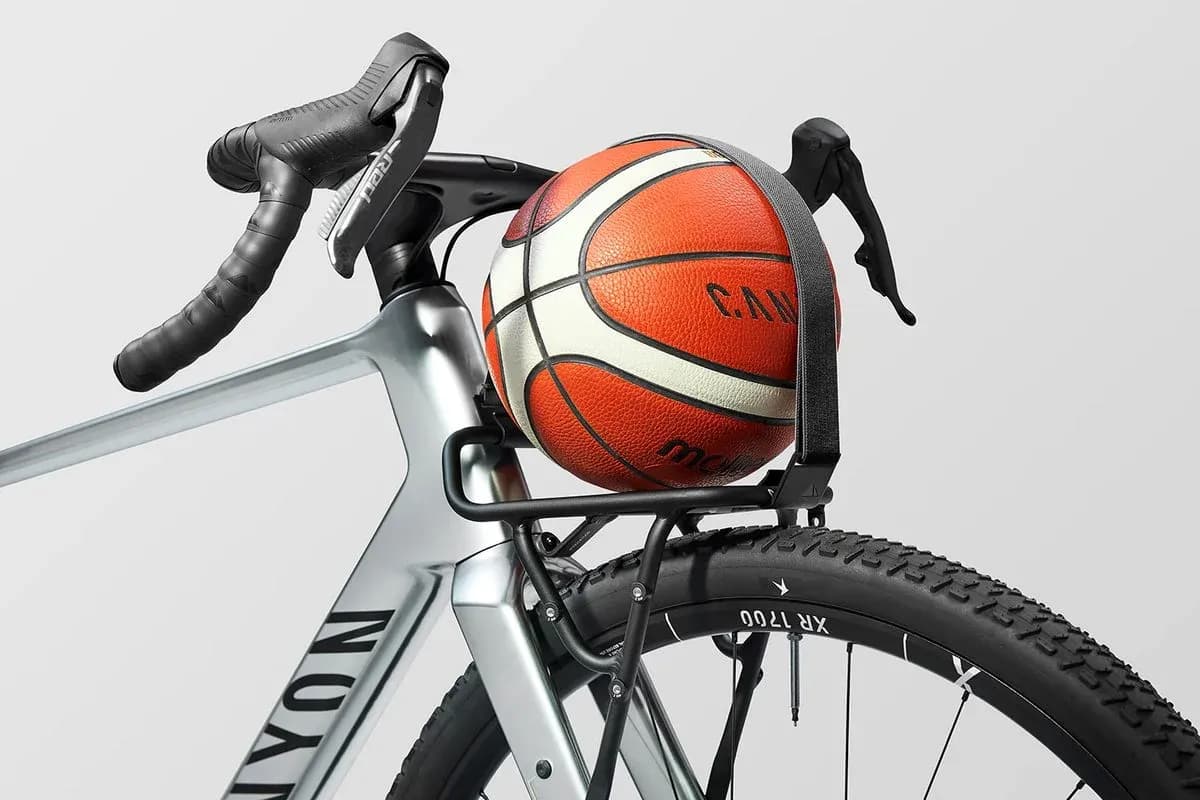
LeBron James has a new custom machine, and it’s as outsized as the man himself. Canyon has built the NBA superstar a unique Grizl CF gravel bike rolling on enormous 32in wheels – a one-off project that pushed the brand’s engineers well beyond simply upsizing an existing frame.
This isn’t just a big Grizl. It’s a ground-up rethink.
Engineering a bike for 6ft 9in and serious power
The bike was designed and built in southern Germany, where Canyon’s gravel lead engineer, Wolfgang Kohl, and his team had to tear up the usual playbook.
“It wasn’t just a case of taking the current frame and making it bigger,” Kohl explains. On paper, you can stretch geometry numbers to fit a taller rider. On the road or trail, it doesn’t work that easily.
“The geometry might land in the right place, but the loads don't scale the way the dimensions do. Everything needed to get re-engineered or the bike simply wouldn't function as a responsive system to the rider,” he says.
That meant more than just a taller head tube and longer seatpost. The 3XL Grizl CF uses a special carbon layup built to cope with the forces a 6ft 9in elite athlete can put through the frame. The structure has been tuned so it doesn’t just survive the load, but still feels alive under James – stiff where it has to be, compliant where it can be.
The details underline how far Canyon went. The bike runs custom CNC‑machined thru-axles with wider Boost spacing to handle the huge wheels and added leverage. A bespoke seat clamp helps secure the long exposed seatpost for a rider of James’ height. Every junction, every interface, has been reconsidered for scale.
One of a kind – at least for now
There’s a lot of noise around 32in wheels right now, and Canyon’s project will only amplify it. Yet the brand is clear: this is a one-off. The company describes James’ Grizl as “one of a kind”, even as it stresses the bike is “fully functional”.
That stance echoes what we’ve already seen from other big names.
Scott rolled out 32in-wheel prototypes that Robin Gemperle rode to victory in the 2026 Unbound XL, with Cameron Jones also racing them over the 200‑mile Unbound course. Those bikes clearly worked in the heat of competition, but Scott still labelled them “pure prototypes” and ruled out a commercial release.
BMC went down a similar path. Its athletes raced a 32in prototype at the Andorran round of the XC World Cup in July 2025. The bike drew plenty of attention, yet BMC later confirmed it had no plans to bring a 32in model to market.
So for now, the pattern is clear: the big mainstream brands are treating 32in wheels as an experiment, a test bed. It’s the smaller, bespoke builders who are actually committing to the size and selling it.
The tide behind 32in wheels is rising
The industry mood around the wheel size is shifting, though.
Schwalbe, a major player in tyres, nailed its colours to the mast back in January, saying it is “fully convinced” by 32in wheels. The company plans to release production 32in tyres next year. James’ new Grizl already wears prototype 32in G‑One RX rubber, a sign that development is well advanced.
Merida is moving in the same direction. In March, Stephan Seitz confirmed the brand is actively developing both gravel and cross-country mountain bikes built around 32in wheels. He went further, predicting that 32in could become the performance standard by the spring of next year.
If that timeline holds, what now looks like a curiosity under LeBron James might soon be a familiar sight at the front of gravel races and World Cup XC rounds.
The perfect test pilot
Right now, though, it’s James who gets to enjoy the benefits of Canyon’s experiment. At his size, he’s almost the ideal rider to showcase what 32in wheels can do.
The general consensus inside the industry is straightforward: the bigger the rider, the more sense 32in wheels make. Taller athletes get a more proportionate fit, better rollover, and a bike that doesn’t feel like a toy scaled down beneath them.
James has felt that mismatch for years.
“On most bikes I've ridden, I was aware of the bike, where it didn't fit me, what I was working around,” he says.
“This is the first one that I didn't have to think about. That's what I love most about riding. It's just you out there and everything else is gone.”
For now, that sensation belongs to one man on one bike. The question is how long Canyon, Scott, BMC and the rest can keep 32in wheels locked away in prototype labs when the tyres, the testing, and the tallest riders in the sport are already pointing in the same direction.