
Labib's Harsh Self-Critique and Zamalek's Debt Crisis
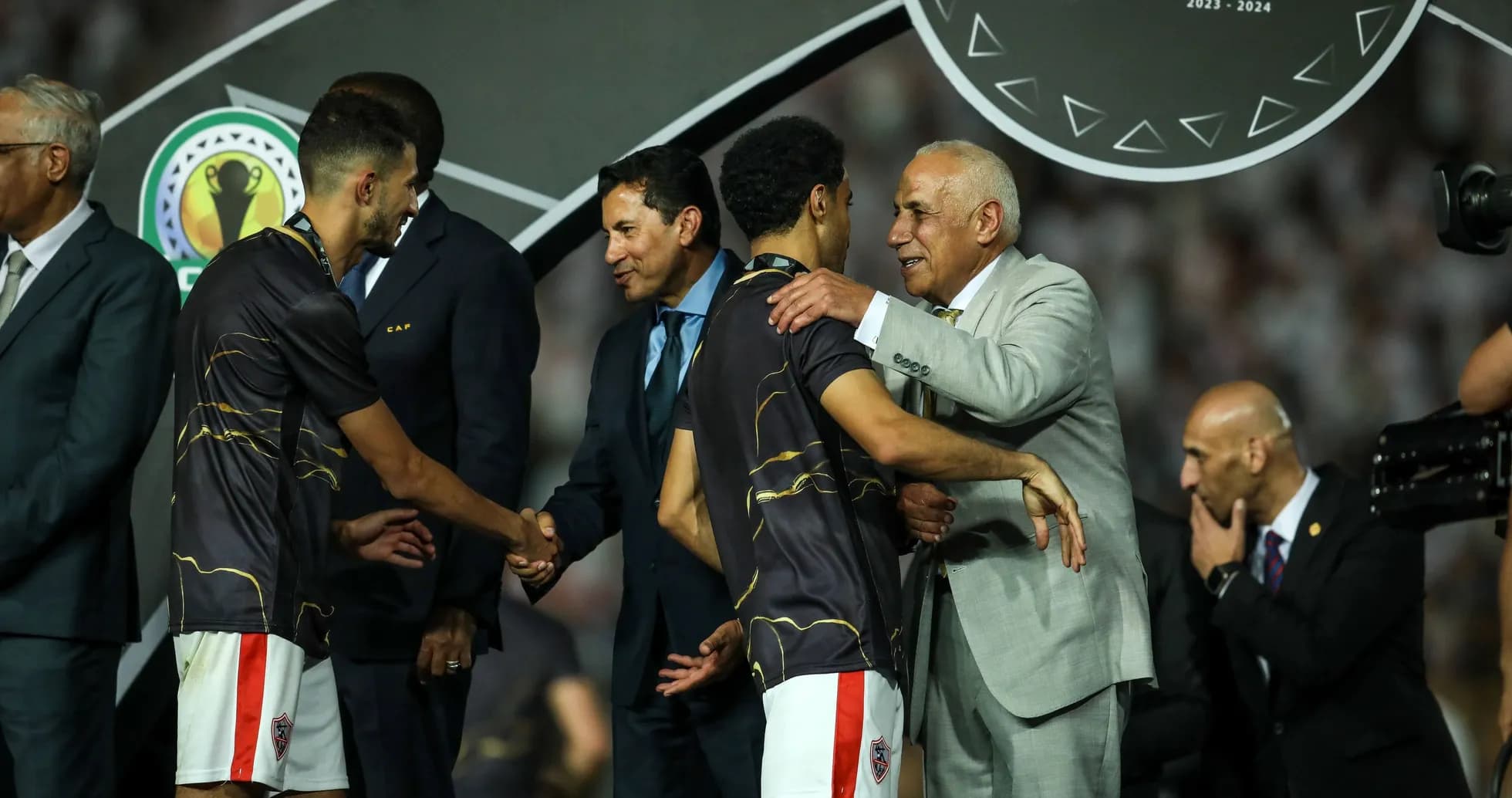
In a rare, unvarnished appearance, Zamalek president Hussein Labib put his tenure under the microscope and did not spare himself.
The numbers were stark. The admissions, even starker.
Speaking on the “On Sport” channel, Labib moved well beyond the usual presidential platitudes. He talked about legal crises, transfer bans, land losses, internal rifts and a mountain of debt that has reshaped the club’s future.
This was not a victory lap. It sounded more like a reckoning.
The Abdel Hamid Maaly Case: No Translation Error, Same Punishment
The Abdel Hamid Maaly saga has hung over Zamalek like a legal cloud, and Labib went straight at it.
He dismissed the idea that a failure to translate a FIFA letter had triggered the crisis. The club, he explained, had already appealed the disciplinary penalty, then reached a settlement agreement with the player and sent it to the Court of Arbitration for Sport, asking for the suspension of the sanction.
CAS said no.
Even after Maaly received his dues, the court rejected Zamalek’s request. According to Labib, the issue of translation never surfaced in the official case. The narrative that a clerical translation mistake doomed Zamalek simply does not match the legal record, in his view.
The damage, though, is real. Zamalek remain under a disciplinary transfer ban, and Labib made clear that the administration is working intensely to have it lifted before the upcoming winter window. CAS has not yet set a date to hear the case, leaving the club’s planning trapped in uncertainty.
For an administration already under pressure, that delay is another obstacle on an increasingly crowded path.
“4 out of 10”: A President Grades Himself
When Labib turned to his own board, the tone shifted from defensive to brutally honest.
If he could rewind the clock, he said, he would change the composition of the board. It was a pointed nod to internal disputes that chipped away at unity inside the “White Castle”. One to three members, he revealed, were simply not aligned with the rest.
Then came the number that will echo around the fanbase: he rated his administration’s performance at no more than 4 out of 10.
Not a political 7. Not a diplomatic 6.
A four.
For a club of Zamalek’s stature, that is an extraordinary admission from the sitting president. It laid bare his own dissatisfaction with how the tenure has unfolded and hinted at the friction that has shaped decision‑making behind the scenes.
The Worst Day: Losing the October City Land
Asked about his hardest moments, Labib did not hesitate.
The withdrawal of Zamalek’s land in 6th of October City, he said, was the worst day of his presidency. That loss was not just symbolic; it cut into the club’s long‑term financial planning.
The land had been baked into future revenue projections. When it was pulled, those calculations collapsed. It left a hole that still distorts the club’s balance sheet.
The administration has since tried to pivot, seeking approvals to acquire a plot in the Fifth Settlement to offset some of the damage. Those approvals have not yet come. Until they do, the gap remains, and with it, a nagging question about what might have been had the October land project gone ahead as planned.
Ashour, Zizo, Bencharki: The One That Hurt Most
On the football side, Labib was asked to pick the biggest loss among three modern pillars of Zamalek: Imam Ashour, Ahmed Sayed Zizo and Ashraf Bencharki.
He chose Imam Ashour.
In a squad that has repeatedly been forced into painful sales and exits, that choice underlines how highly the club valued Ashour’s influence and profile. Yet even as he highlighted that loss, Labib shut the door on one possible reunion: a return for Zizo.
He rejected the idea of bringing Zizo back and underlined that he had not tried to sign any Al‑Ahly player in reaction to Zizo’s move to the traditional rival. The message was clear: no tit‑for‑tat transfer politics, no emotional raids on the “Red Castle”.
The Debt Burden: “6 to 7 Million Dollars” on This Board’s Watch
Then came the rawest financial confession.
Labib acknowledged that his current board has itself created new debts in the range of 6 to 7 million dollars. Not inherited. New.
He stressed that they took over a club in an “extremely difficult” financial condition, with obligations exceeding two billion Egyptian pounds. Under his watch, Zamalek has paid off close to one billion pounds of that burden.
The history matters. Zamalek’s financial crises did not start with this board; they have been building over many years. But Labib did not try to wash his hands of responsibility. The new debts, he explained, were tied to contractual obligations and financial plans that did not unfold as expected.
One key example: the agreement with Bizerte club and the valuation of that deal. The board had relied heavily on anticipated revenue from the October land. When that land was withdrawn, the whole financial structure around those commitments began to wobble.
The result is a club still searching for a sustainable model, still looking for ways to guarantee stability for the next administration rather than simply passing on a heavier load.
Abbas, Donations and the Shadow of Influence
Given the financial strain, the role of major benefactors inevitably comes under scrutiny.
Labib addressed directly the talk around Mamdouh Abbas. He denied that Abbas interferes in board decisions, describing the relationship as one of discussion and exchange of views with a prominent Zamalek supporter, not a hidden power broker.
He also drew a firm line on the money. Labib thanked Abbas for what he described as large financial donations, insisting these are not debts on the club’s books.
In a climate where every pound is questioned, that distinction matters.
Indoor Games, Lost Ground and a Rebuild
Zamalek’s struggles have not been limited to football.
Labib admitted clear failure in the so‑called indoor games. When the board took over, he said, there were gaps everywhere: missing teams, missing coaches, and a youth sector that was not in the required shape.
Errors in appointing some coaches and signing certain players only deepened the problems.
According to Labib, the club has already started taking steps to restore its standing in these sports. It is a long road back. For a club that once prided itself on dominance across multiple disciplines, the fall has been steep, and the rebuild will demand more than statements.
Africa, Tactics and a Squad That Needs Reinforcements
On the continental front, Labib did not sugarcoat Zamalek’s task.
He described the team’s group in African competition as “difficult” but backed the squad to reach the final. It was one of the few moments where confidence edged out caution.
He also outlined what he sees on the pitch: a team that needs reinforcements in midfield and on the wings, and a shift in playing style. Head coach Moatamed Gamal, he noted, prefers to hold training sessions away from the club’s headquarters. That, Labib said, is the coach’s decision.
The implication was simple: the board sets the framework, but on football matters, the technical staff will be allowed to live – or fall – by their own choices.
Elections on the Horizon, But Not Yet
With the club always only a few missteps away from political turbulence, talk of upcoming elections is inevitable.
Labib, though, insisted it is still early. No board member has approached him to seek his consultation on the elections, he said. When the time comes, he promised, he will announce his position on the candidates for the presidency.
For now, he remains the man in the hot seat, the one carrying both the old debts and the new ones, both the criticism and the responsibility.
Al‑Ahly, Transfers and a Fragile Truce
No Zamalek president can speak at length without the name Al‑Ahly surfacing.
Labib closed by stressing there is no rupture in the relationship with Al‑Ahly’s board. He does not want to repeat the experience of signing a player from the Red Castle, pointing out that several players who moved between the two giants struggled to succeed in their new surroundings.
It was a subtle acknowledgment of the emotional weight those moves carry and the risk they bring, on and off the pitch.
In one appearance, Labib admitted mistakes in the administrative make‑up, acknowledged new debts, criticised his own performance and laid out the legal and financial traps still facing Zamalek. The numbers are harsh, the challenges sharper still.
The question now is not what went wrong.
It is whether this administration can repair enough, fast enough, to hand Zamalek to the next board in better shape than it found it.





