Kylian Mbappé's Controversial Interview Sparks Debate in France
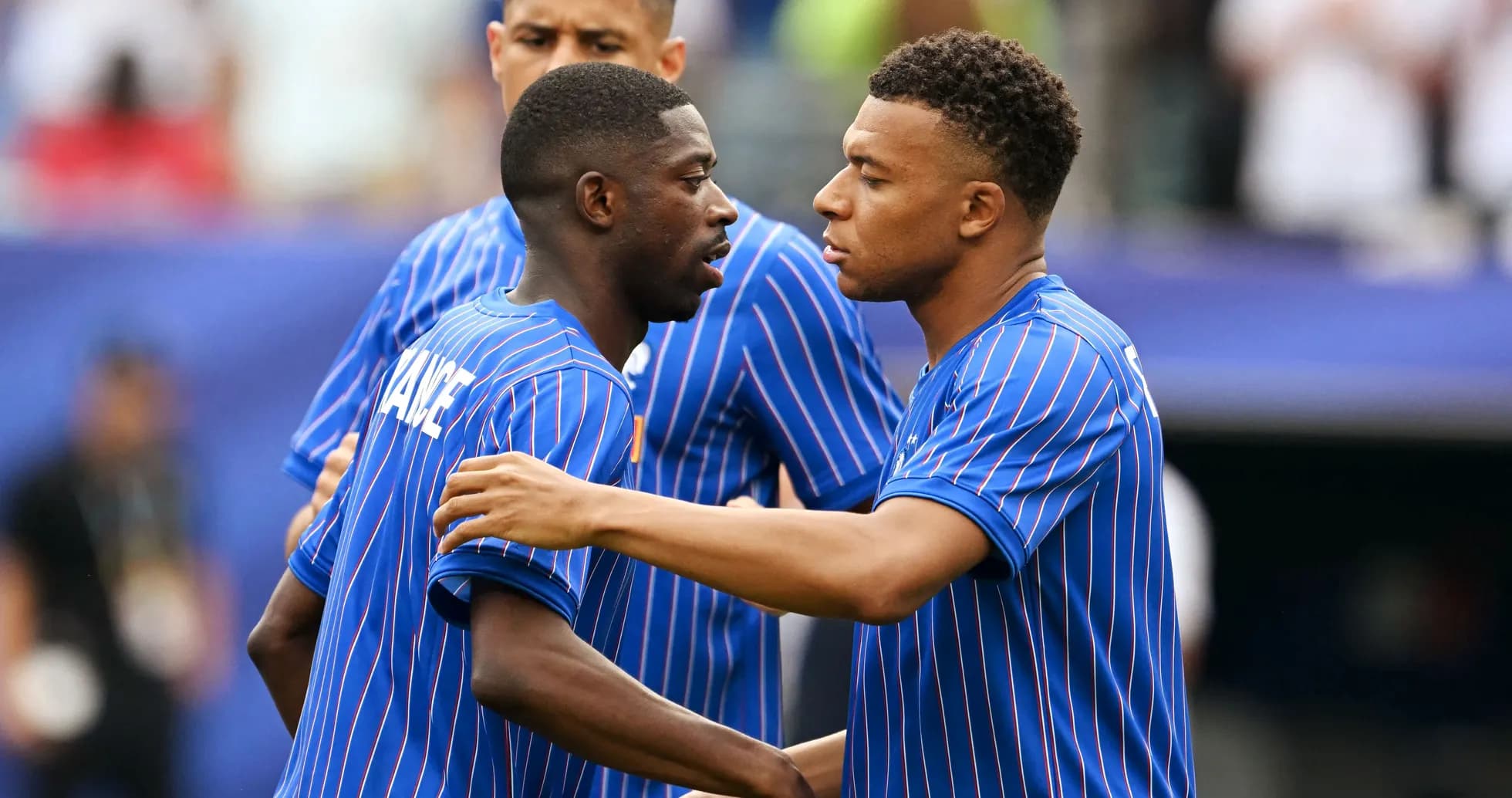
Kylian Mbappé’s latest interview was supposed to be another statement of intent from a player who has spent years living with the idea that the Ballon d’Or is his destiny. Instead, one phrase detonated a fresh storm around the France captain.
“The chosen one.”
Those three words, used by Mbappé to describe himself, have not gone down well in all corners of the France camp. According to French daily L’Équipe, Ousmane Dembélé and people close to him bristled at the remark, unhappy with the way the Paris Saint-Germain forward framed his own status.
In pure football terms, Mbappé seeing himself among the elite is nothing new. He has operated in that space for years, one of the permanent fixtures in any Ballon d’Or discussion. That is almost a given now. The problem lies in how he chose to say it, and what that wording suggests inside a dressing room built on hierarchy, ego and fragile balance.
The reaction in France has been immediate and fierce. The debate has spilled across sports shows and front pages, with former internationals taking sides in a row that touches on leadership, friendship and the thin line between self-belief and arrogance.
Rothen cries “betrayal”
On RMC Sport, Jérôme Rothen went in hard. The former PSG midfielder spoke of “betrayal” from Mbappé, hinting that the captain’s comments had deepened a split within the national team.
Rothen suggested the interview had drawn a line between two groups in the squad, with Dembélé on one side and Mbappé on the other. In his view, this was not just an unfortunate turn of phrase but a sign of a fracture.
That was too much for Christophe Dugarry.
Dugarry hits back
Live on the same programme, the 1998 World Cup winner cut Rothen off and demanded evidence.
“Jérôme, regarding what you are saying, I want names,” Dugarry snapped. “You are telling me there are two groups within the team. I don’t believe this nonsense!”
He then turned the focus onto Dembélé, questioning why the winger would be so offended in the first place.
“What is bothering you, Ousmane?” Dugarry asked on air. “He has won the Champions League twice and won the Ballon d’Or.”
The point was clear: if Mbappé speaks from a position of towering individual ambition, Dembélé has built his career on something very different. And Dugarry could not understand why a single interview would shake a friendship that dates back to their teenage years.
“You two have known each other since you were 15 years old,” he reminded. “Are you going to be upset by an interview in which Kylian spends all his time talking about himself? He didn’t say anything bad about Dembélé.”
Two stars, two worlds
Dugarry then widened the lens. For him, Mbappé’s words did not amount to an insult, but rather exposed the gulf between two personalities and two ways of living with fame.
“What Kylian said is the truth,” he insisted. He recalled Dembélé’s early years at Barcelona, when stories circulated about the winger struggling to get up for training because he was up late playing PlayStation.
“Come on!” Dugarry exclaimed. “Dembélé is the anti-star, and he shines because of that. He has the mentality of the anti-star. These are two visions of football. Two different footballing styles clashing. Two different personalities.”
In other words, Mbappé leans into the spotlight. Dembélé runs from it. One speaks in the first person, the other hides behind the collective. That does not automatically mean open conflict, Dugarry argued, just a natural tension between contrasting characters inside a high-pressure environment.
A difference, he stressed, does not equal crisis.
Each man, in his eyes, remains fully entitled to his own way of understanding the game and his place within it. The France squad has always been a blend of egos and temperaments; this is simply the latest expression of that mix.
“I don’t understand what shocks Dembélé”
Dugarry kept returning to the same question: why is Dembélé so offended?
“I don’t understand what shocks Ousmane Dembélé,” he said. “He has always presented himself as a reserved, shy person, somewhat introverted, with a high team spirit. He built his career this way, and won this way. He understands this footballing philosophy. Mbappé is the complete opposite of that.”
For Dugarry, if such a friendship cannot survive a bold interview, then it was never built on solid foundations.
“Excuse me, but if their friendship cannot get past this matter, then it means it was never strong in the first place.”
The remark cuts to the heart of the issue. Is this a real rift or simply noise around two very different superstars forced to share the same stage?
Admiration with a warning
Dugarry did not let Mbappé off entirely. Even as he defended the captain from accusations of betrayal, he admitted that certain aspects of Mbappé’s rhetoric irritate him.
“There are things that bother me, such as Kylian’s excessive confidence in his comments,” he explained. “I find it strange that he speaks at length in the first person, and presents himself in this way… in a team sport, where he hasn’t achieved a great deal despite having a lot to win.”
The message is nuanced. Mbappé has every right to back himself, but the tone matters when you wear the armband of France and sit at the centre of every camera shot. The language of “I” carries weight, especially in a squad full of players who have also made sacrifices, also chased trophies, also lived under scrutiny.
Yet Dugarry finished with a blunt recognition of reality.
“Right now, Mbappé is his own source of strength today!”
France’s captain has built a career on that inner conviction. It drives him, defines him and, increasingly, divides opinion around him. The question now is whether that same unshakeable belief will keep pulling the national team forward—or start pulling it apart.