Kylian Mbappé vs Harry Kane: The Ballon d'Or Debate
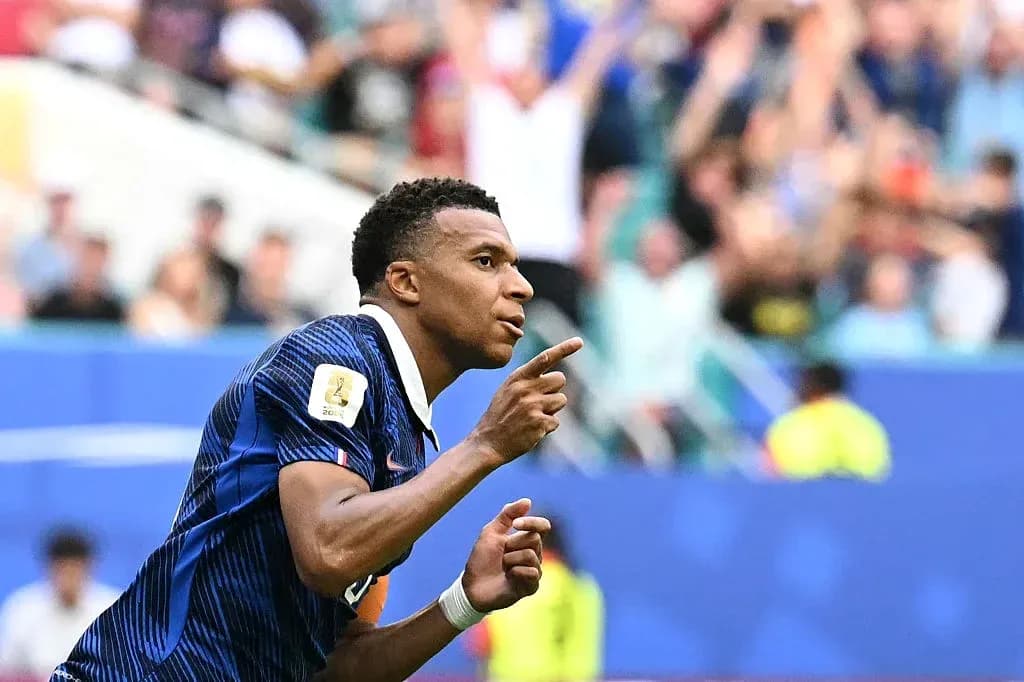
Kylian Mbappé walked off last season empty-handed in terms of trophies. No league title, no Champions League, no World Cup. On paper, that usually ends a Ballon d’Or debate before it starts.
This time, it doesn’t.
Because while Real Madrid and France fell short collectively, Mbappé produced a season that bent the numbers to his will. He finished as top scorer in the World Cup, the Champions League and La Liga, and climbed to a place no one has ever been before: all-time leading scorer in World Cup history.
Fifty-eight goals in 60 games for club and country. Twenty-five in La Liga for the golden boot, 15 in the Champions League to dominate Europe’s elite, 10 at the World Cup to sit alone at the summit of the tournament’s scoring charts. Add five more in World Cup qualifiers, one in France’s 2-1 win over Brazil, and two in the Copa del Rey. It reads like a career résumé, not a single season.
So when Mbappé spoke to L’Équipe and delivered his verdict on his own campaign, it didn’t sound like arrogance. It sounded like a man reading the stats.
“There wasn’t any player who had a better season than mine. I believe I have a chance (to win).”
On pure production, it is hard to argue. But the Ballon d’Or rarely lives on numbers alone. It lives on moments, on trophies, on the images that define a season.
And that is where Harry Kane storms into the conversation.
Kane’s year of everything
While Mbappé piled up goals and records, Kane did something simpler and, in award terms, often more decisive: he won.
The Bayern Munich striker delivered a season of almost absurd consistency. Thirty-six goals in the Bundesliga secured him another European Golden Shoe and underpinned a domestic campaign in which Bayern swept all three trophies available on German soil.
- League title.
- DFB-Pokal.
- German Super Cup.
Kane had a hand — or rather, a boot — in all of it.
His numbers for 25/26 are staggering even by his own standards: 73 goals in 65 matches for Bayern and England. An average of 1.12 goals per game. That is not just form, it is domination.
He finished as top scorer in the Bundesliga and led the way in the DFB-Pokal with 10 goals. In Europe, he pushed Mbappé as close as anyone could, scoring 14 times in the Champions League, just one shy of the Frenchman. He also found the net in the German Super Cup final, another decisive stamp on another piece of silverware.
Internationally, Kane’s output stayed ruthless. Six goals at the World Cup with England, five more in the qualifiers, and one in pre-World Cup friendlies. Every competition, every stage, the same story: Kane on the scoresheet.
Where Mbappé dazzled and fell short in the trophy count, Kane married elite numbers with a clean sweep at home. That contrast sits at the heart of this year’s debate.
Goals, glory, and what the award really values
So who deserves it more?
On one side stands Mbappé: three major competitions, three top scorer crowns, and a historic World Cup record. A season defined by individual brilliance, by the feeling that every time he stepped on the pitch, something unprecedented might happen.
On the other stands Kane: 73 goals, titles in every domestic competition he could win, and a scoring record that barely dipped from one tournament to the next. A season that finally matched his personal excellence with collective success.
It is the old Ballon d’Or question in its purest form. Do you reward the player who reached the highest individual peak, even without trophies? Or the one who combined relentless scoring with a cabinet full of medals?
The answer will not come from arguments, statistics, or social media debates. It will come on October 26, when one of these two extraordinary seasons gets its golden seal — and the other is remembered as the year that might, on another ballot, have been enough.