Kylian Mbappe's Bold Claim for Ballon d'Or
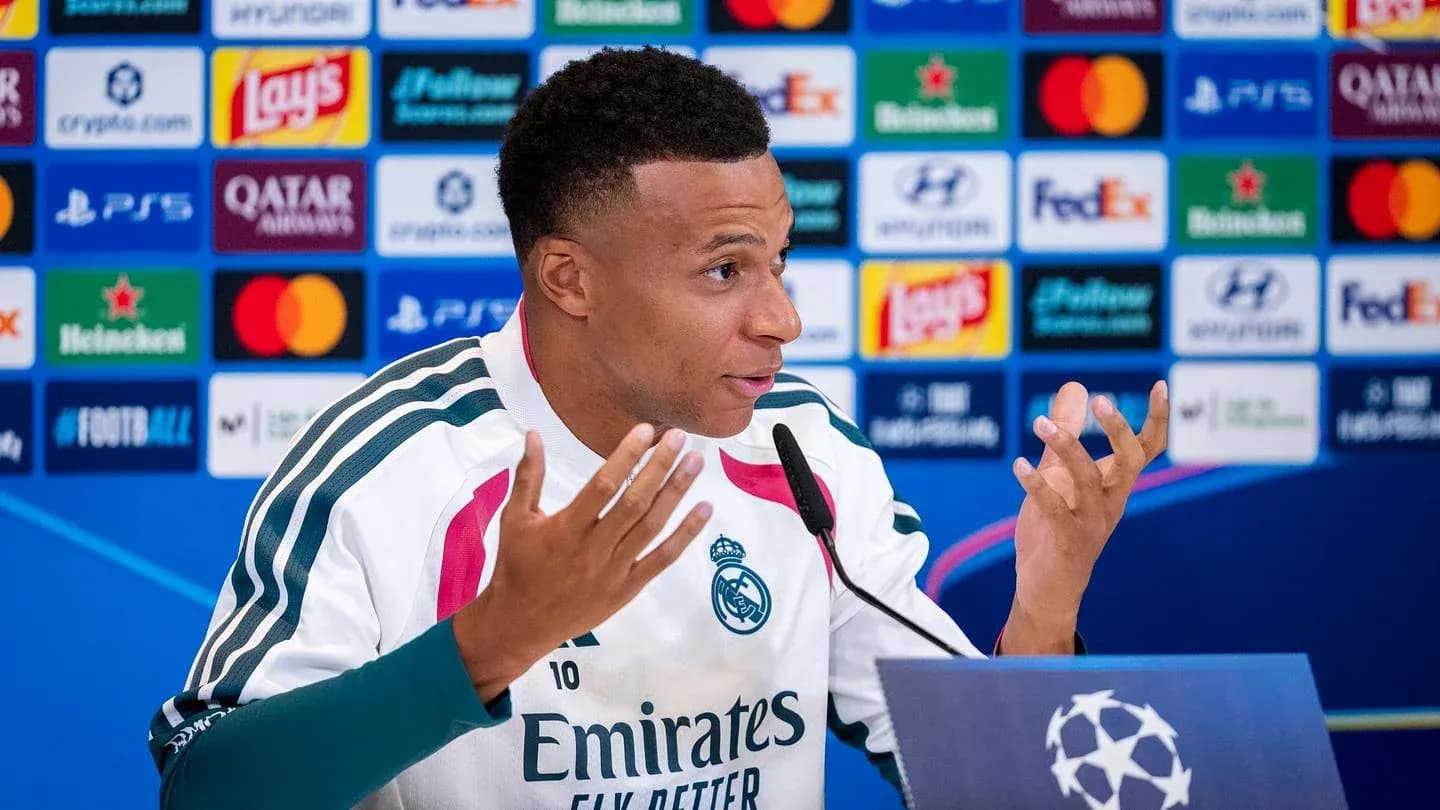
Kylian Mbappe walked into the new Champions League season with the same conviction he shows in front of goal: he believes he is the best player in the world, and he believes he has earned the Ballon d’Or.
On the eve of Real Madrid’s opener against Inter, the forward faced the media and the familiar questions. Is he the standout player on the planet? Does he deserve football’s most prestigious individual prize after last season? In the press room, his answers were measured, almost restrained. The real Mbappe had already spoken elsewhere.
The day before, in a far more revealing interview with L’Equipe, the mask slipped and the swagger returned.
“Who would I vote for the Ballon d'Or? I'd vote for myself,” he said. No hesitation. No apology. “It's an individual award, we need to see what the player did individually. People saying I went trophyless? I've never seen a single Ballon d'Or winner that ticked every single box of the criteria.”
That line cut to the heart of the debate. Mbappe knows others can point to better collective seasons, more trophies, more medals. He isn’t pretending otherwise. He’s arguing something different: that history and individual brilliance should carry their own weight.
“Has any player ever won the Ballon d'Or unanimously? No. Which means there's always someone who thought the player doesn't deserve it,” he continued. “Being the best scorer in World Cup history, that's something that sticks in people's minds. Being the top scorer of all the biggest competitions, where the best players play, the UCL, the World Cup, I don't know if anyone did it before.
“I believe that making history should always be rewarded. So when you look at my arguments, when you look at what the other players did this year, I'd say yes, I wouldn't be robbing anybody if I win it. But I understand people who disagree, this is not a dictatorship."
That last sentence matters. Mbappe is not demanding universal agreement. He knows it will never come. He is simply staking his claim, loudly and unflinchingly.
Football’s reluctant villain
You can line up against him with your own list. Harry Kane’s numbers. Michael Olise’s emergence. Ousmane Dembele’s influence. The noise around Lamine Yamal, the teenager some would already thrust into the conversation.
The point isn’t that Mbappe has silenced the debate. It’s that he has ignited it.
Modern football’s biggest stars usually reach for the same script at moments like this: humility, diplomacy, a gentle shrug. They praise their teammates, deflect the praise, and glide away untouched. Safe. Loved. Bland.
Mbappe has chosen the opposite path. He has chosen to say what most elite players only think in private.
Football has seen this before. Cristiano Ronaldo built an entire competitive persona on that relentless self-belief, on the refusal to play the “good boy” every time a microphone appeared. On the other side stood Lionel Messi, quieter, more understated, his greatness wrapped in understatement.
Mbappe is very clearly leaning toward the Ronaldo model. Not in imitation, but in attitude. He is comfortable being the one who says, “Yes, I think I’m the best.” He is comfortable knowing that the moment he does, a portion of the football world will turn on him.
Because that is how it works. Take the humble route and you are adored. Step into the spotlight and declare your own greatness, and you instantly become a villain for someone. The enemy of a rival fanbase. The symbol of arrogance for those who want their idols quieter.
Mbappe doesn’t seem bothered. He understands the trade-off. The obsession with being the best lives in his own head first. That is where the real battle is fought, and that is where he wants to win.
Confidence or arrogance?
This type of open, almost confrontational self-confidence is celebrated in other sports. In basketball, players are lauded for it. Talk your talk, back it up on the court, and the culture embraces you.
In football, the reaction is often very different. The same confidence is quickly rebranded as arrogance. Ego. A lack of respect. The sport, for all its glamour, still clings to a certain expectation of public modesty from its stars.
Yet the truth is simple: the very best athletes almost always think this way. They just don’t say it.
Mbappe is saying it, and he is not alone. Even Lamine Yamal, already drawing criticism from some Real Madrid supporters for perceived arrogance, is tapping into the same current. A young player willing to back his own talent, to speak with conviction rather than deference.
That edge is exactly what football often pretends it doesn’t want, but absolutely needs. Rivalries feed on it. Storylines grow from it. The sport feels more alive when its biggest stars are not just extraordinary on the pitch, but unapologetically themselves off it.
Mbappe’s claim to the Ballon d’Or will be argued all year, dissected and disputed in every corner of the game. But his stance is clear, and so is his message: he is not here to play the role of the polite superstar.
He is here to make history—and to demand that the game recognizes it.