Kyle Lowry's No. 7 Jersey Retirement: A Celebration of Legacy
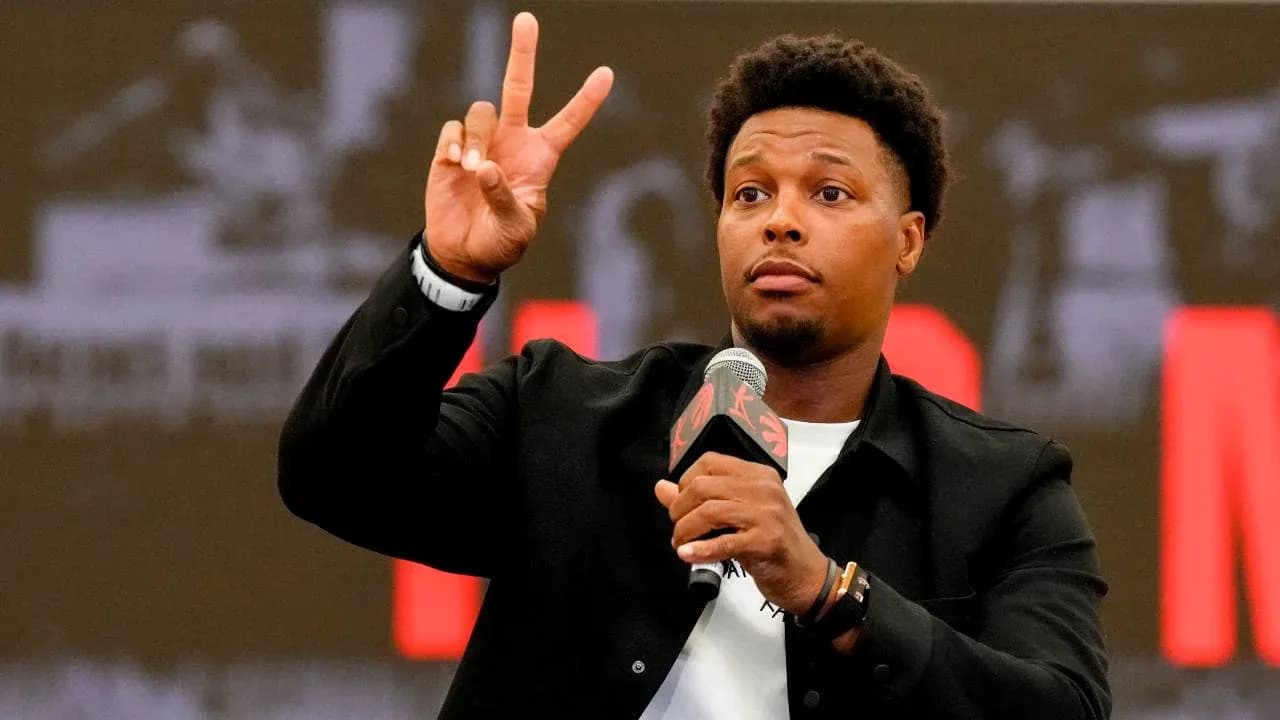
CALEDON, Ont. — Some jersey retirements are debates. Panels on TV. Call-in shows. Pros and cons.
Kyle Lowry’s was none of that.
This was a layup, a breakaway, the kind of inevitable finish Raptors fans once watched Vince Carter hammer home above helpless defenders. Lowry’s No. 7 going to the rafters was never in doubt. Only the timing, and the staging, were up for discussion.
Now, both are locked in.
On Jan. 10, when the Raptors host LeBron James and Lowry’s hometown Philadelphia 76ers, the most important point guard in franchise history will see his number rise to the top of Scotiabank Arena. Up there, it will sit beside Carter’s No. 15 — the first two jerseys the Raptors have retired in their 32 years, finally sharing the same air after very different journeys.
Two legends, two very different roads
Carter’s route to immortality in Toronto was messy, emotional, and for a long time, unthinkable. Lowry’s has been almost surgical.
Carter soared during his playing days, but his path to having his number retired was anything but smooth. His exit — that infamous trade early in the 2004-05 season — left scars. He was accused of quitting. Fans felt betrayed. The organization, in hindsight, had hardly covered itself in glory in how it handled its first true superstar.
It took the better part of a decade for those wounds to close. Only then could the work begin to rebuild trust, to acknowledge that Carter’s legacy in Toronto was bigger than the bitterness that followed his departure. When his jersey finally went up in November 2024, it felt like a full-circle moment the franchise had to fight to earn.
Lowry’s story is the opposite.
There was no rupture, no civil war with the fan base. He left as a champion and as the club’s all-time leader in assists, steals, three-pointers, wins and playoff wins. He orchestrated the 2019 title run, then carefully managed his exit so that the relationship with the city, the fans and the organization never frayed.
Even back in the 2020-21 season, when the Raptors were playing out of Tampa and Lowry looked destined to be traded to a contender, he made it clear: wherever he finished, his last contract would be signed in Toronto. It was less a promise than a plan.
This summer, after 20 seasons in the NBA, he made good on it. On July 7, he signed a one-day contract and officially retired as a Raptor. That was Stage 1.
Stage 2 arrived this weekend.
A 36-hour tribute to No. 7
Lowry’s celebration isn’t a single night. It’s a 36-hour embrace.
It started Friday at TPC Toronto at Osprey Valley with the KLOW Invitational, a charity golf tournament in support of the MLSE Foundation. The fairways were full of familiar faces: Fred VanVleet, DeMar DeRozan, Serge Ibaka, CJ Miles, Danny Green and former Raptors head coach Nick Nurse all showed up to swing the clubs and share the moment.
“It’s something I didn’t expect and I appreciate it,” Lowry said. “Words can’t describe how I feel about what they’ve done.”
Saturday brings Kyle’s Block Party, a free fan event in Jurassic Park outside Scotiabank Arena, turning the team’s traditional playoff cauldron into a mid-summer celebration of its greatest floor general. Later that evening, A Night For Seven — a gala dinner, again supporting the MLSE Foundation — will put a formal bow on the weekend.
By the time Jan. 10 rolls around, the jersey retirement itself will feel less like a standalone ceremony and more like the final chapter of a carefully constructed farewell tour.
That precision is not accidental. It’s organizational growth.
Lessons from Vince
Carter’s saga changed the Raptors.
His departure exposed a young franchise that didn’t yet know how to handle superstardom, expectations or the politics of keeping elite talent happy. The fallout was long and public. It lingered in the boos that greeted Carter on his returns and in the awkward distance between the club and the player who had once put it on the global map.
“The organization was in a far different place when Vince was here,” said one insider. “Kyle benefitted from the lessons learned from that.”
Those lessons are now visible in the way the Raptors handle their icons. Carter’s jersey night was not just a ceremony; it was a reconciliation, built around emotion and memory. The team resurfaced a court his foundation had built during his playing days. A signature Air Canada jet was rolled out in his honour. The message was clear: the Raptors were not just welcoming Carter back; they were rewriting the ending.
Lowry’s weekend follows a similar script, but without the need for repair. The franchise has learned how to celebrate without caveats, how to turn individual nights into pillars of culture.
Nick Nurse, now coaching the Sixers but forever linked to that 2019 title, sees it as a sign of maturity.
“I think the organization’s just maturing as the years go by,” he said. “So you have these occasions and this success to celebrate, right? It’s still a relatively new organization in the grand scheme of things. I was in our practice facility (in Philadelphia) and we have Moses (Malone) and Dr. J up there, and now the Raptors get to start telling some of their stories too.”
Those stories matter. Not just to fans, but to players and agents around the league.
“Players talk, agents talk,” said one source. “They notice things like that.”
The Raptors, once a fledgling outpost, are now positioning themselves as a franchise that takes care of its own — in the moment and long after the last game is played.
Who’s next in line?
With Carter and Lowry secured in Raptors lore, the obvious question hangs over the franchise: whose number goes up next?
DeMar DeRozan is the most straightforward candidate. He is still the club’s all-time leader in points and games played and is heading into his 18th NBA season, now with the Denver Nuggets. Few players have ever embraced Toronto the way DeRozan did, and the feeling clearly runs both ways.
“I hope so,” DeRozan said when asked if he might one day see No. 10 in the rafters. “This will always be home for me.”
Lowry didn’t hesitate.
“Oh, No. 10 should definitely go up there,” he said. “Without a doubt.”
Pascal Siakam presents another compelling case. Now with the Indiana Pacers, he earned two All-NBA selections as a Raptor, started on the 2019 championship team and might be the single greatest development story in franchise history — a raw late first-round pick turned into an elite forward through patience and work.
Neither DeRozan nor Siakam chose to leave Toronto. Both departures carried emotional weight, and there may still be lingering frustration about how those eras ended. Carter’s story, though, is proof that time can soften even the hardest edges. Lowry’s shows what it looks like when everything is done right.
Then there is the most complicated candidate of all: Kawhi Leonard.
His one season in Toronto was seismic. He delivered the only championship in franchise history, authored some of its greatest moments and changed the way the league viewed the Raptors. But one brilliant year has rarely been enough for a jersey retirement anywhere, and the standard in Toronto appears to be longevity plus impact, not impact alone.
Still, the equation could change.
If Leonard, now back with the Raptors, finishes his career in Toronto, and the next three seasons bring multiple playoff runs and at least one deep push, the conversation shifts. Sources suggest one of the reasons he chose to return was the chance to make Toronto his permanent basketball home, an option that seemed to vanish in San Antonio and especially with the Los Angeles Clippers, where endings were far from ideal.
If he writes a second act here, No. 2 might demand a different kind of discussion.
The present and the future
The most intriguing long-term case might already be in-house.
Scottie Barnes, only 25 and entering his sixth season, is already a two-time all-star and a second-team All-NBA selection. He’s climbing the franchise leaderboards at a startling pace: eighth in points, eighth in rebounds, sixth in assists, seventh in blocks, and likely to crack the top 10 in steals before Christmas.
The Raptors have made the playoffs twice during his tenure and, with Leonard now on the roster, are aiming higher. Barnes was in the building when Carter’s No. 15 went up. He’ll be there again when Lowry’s No. 7 joins it.
He’s watching, taking notes on how the organization treats its greats.
It’s far too early to etch his name into the rafters, but the trajectory is impossible to ignore. If his career in Toronto plays out the way his early years suggest, the franchise will one day be planning another weekend like this — only with Barnes at the centre of it.
For now, though, the stage belongs to Lowry.
The kid from Philadelphia who became the heartbeat of a Canadian franchise. The bulldog guard who dragged the Raptors from plucky upstart to perennial contender and, finally, over the mountaintop to a title. The player who left, but never really left at all.
On Jan. 10, his number will take its place beside Carter’s. Two very different men, two very different stories, one shared legacy.
And somewhere below those banners, the next generation will be playing, wondering what it will take for their numbers to join them.