Jonathan Kuminga's Role with the Minnesota Timberwolves: High Risk, High Reward
The Minnesota Timberwolves think they’ve found their missing piece at power forward. Draymond Green thinks that same piece comes with a built‑in risk.
Jonathan Kuminga’s move to Minnesota on a two-year, $12.4 million deal looks like one of the summer’s sharpest value plays: a 22-year-old former lottery pick, slotted straight into a contender’s starting lineup, on what amounts to mid-tier money. Green, who spent years in the same locker room with Kuminga in Golden State and pushed loudly for his development, loves the fit.
He just doesn’t love the leverage.
“My only worry for JK is that if it’s not working, you’re the first plug that gets pulled,” Green said on The Draymond Green Show.
A Starter’s Role, a Bench Player’s Price
On paper, Minnesota’s starting five is loaded: LaMelo Ball, Anthony Edwards, Jaden McDaniels, Jonathan Kuminga and Rudy Gobert. Four established, highly paid pillars and one upside swing on a cut‑rate contract.
Kuminga will make roughly $6 million this season. In that locker room, that number jumps off the page for a different reason. He’ll earn significantly less than the other four starters and even trails some of Chris Finch’s projected bench pieces.
Green’s concern isn’t about Kuminga’s game. He’s seen the talent up close. It’s about what happens when lineups get squeezed, rotations tighten and a franchise has to decide whose minutes — and whose role — take the hit.
“A $6.5 million salary in the NBA is a bench-role salary,” Green said, cutting straight to the heart of how front offices often operate. Big contracts come with built-in patience. Cheaper ones, not so much.
Minnesota is a perfect case study in that dynamic.
Ayo Dosunmu, who arrived from Chicago in February and quickly became one of the Wolves’ most valuable pieces, just signed a five-year, $112 million deal. He averaged 14.8 points last season and authored a 43-point playoff eruption against Denver that turned heads across the league.
He’s now staring at a sixth-man role.
Dosunmu’s new contract carries an average annual salary of $22.4 million — more than triple what Kuminga will earn this season. Yet it’s Kuminga, not Dosunmu, who walks into camp penciled in as the starting power forward.
Finch isn’t expected to hand out minutes based on pay stubs. Coaches coach who they trust. But Green’s point lives above the bench and beyond the whiteboard. When a front office has to decide where to show faith and where to pivot, organizational investment often dictates who gets the longer runway.
In that calculus, Kuminga is the easiest variable to change.
High Upside, Low Commitment
For Kuminga, that reality cuts both ways.
His contract includes a player option for 2027-28. If he delivers a breakout season now, he can opt out next summer and re-enter the market with far more leverage than he had this year. The same deal that makes him vulnerable in the short term could become his springboard to the payday he’s been chasing.
That’s the bet Minnesota is making.
The Wolves cleared space at power forward when they moved on from Julius Randle and Naz Reid during their offseason reshuffle. They wanted more length, more athleticism, more switchability around Edwards and Ball. Kuminga checks all of those boxes, and he does it at a price that gives the front office flexibility elsewhere on the roster.
They also have a vivid reminder of what he looks like when the keys swing his way.
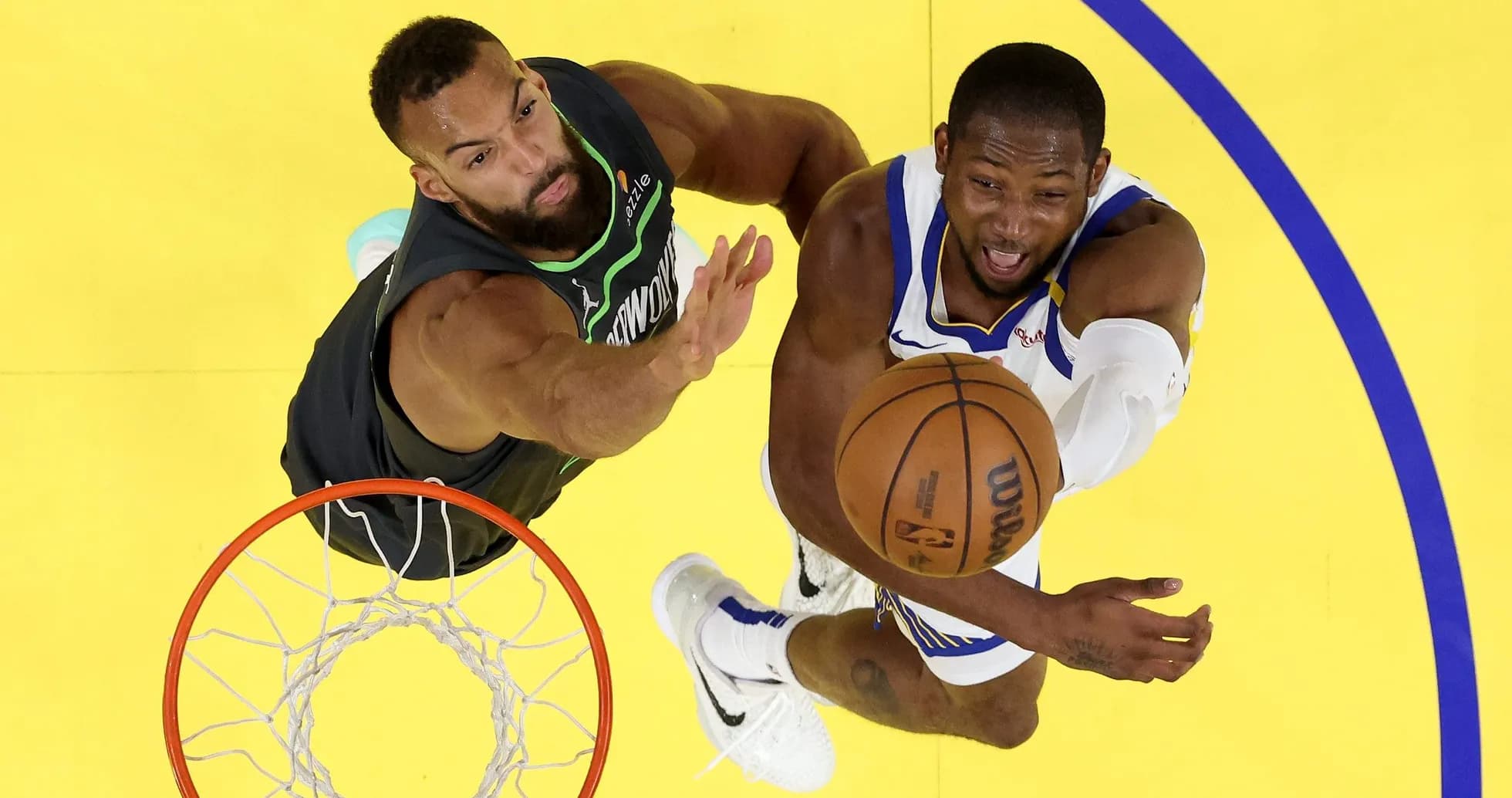
When Stephen Curry went down during Golden State’s 2025 playoff series against Minnesota, Kuminga stepped into a much larger role and punished the Wolves. He averaged 20.8 points on 54% shooting in that series, flashing the downhill force and scoring punch that once made him one of the league’s most intriguing prospects.
Green believes that stretch stuck with both Timberwolves president Tim Connelly and Edwards. It’s the kind of performance that lingers in the mind of a front office and a franchise player when summer decisions roll around.
“I think it’s a great opportunity for JK,” Green said. And he meant it.
The Other Side of the Bargain
Kuminga now walks into a situation most young forwards would crave: a starting job on a team with real postseason ambitions, a wide-open lane at his position and two dynamic guards in Ball and Edwards who can tilt defenses and feed him easy looks.
At roughly $6 million this season, he might be one of the league’s best value bets if he turns those flashes into nightly production.
But that same number makes him expendable if the fit goes sideways.
If Minnesota’s starting unit sputters, the Wolves won’t be shuffling Edwards, Ball or Gobert out of the spotlight. McDaniels just signed his own hefty extension. Dosunmu’s contract and playoff résumé demand a serious role. When the pressure rises and something has to give, the cheapest starter on the floor is usually the first name in the crosshairs.
That’s the tension Green sees — and the challenge Kuminga has to beat.
Minnesota is gambling that his talent will outweigh the financial math. Kuminga is gambling that he can play so well the math no longer matters.