Kristaps Porzingis: Warriors' Biggest Gamble for Next Season
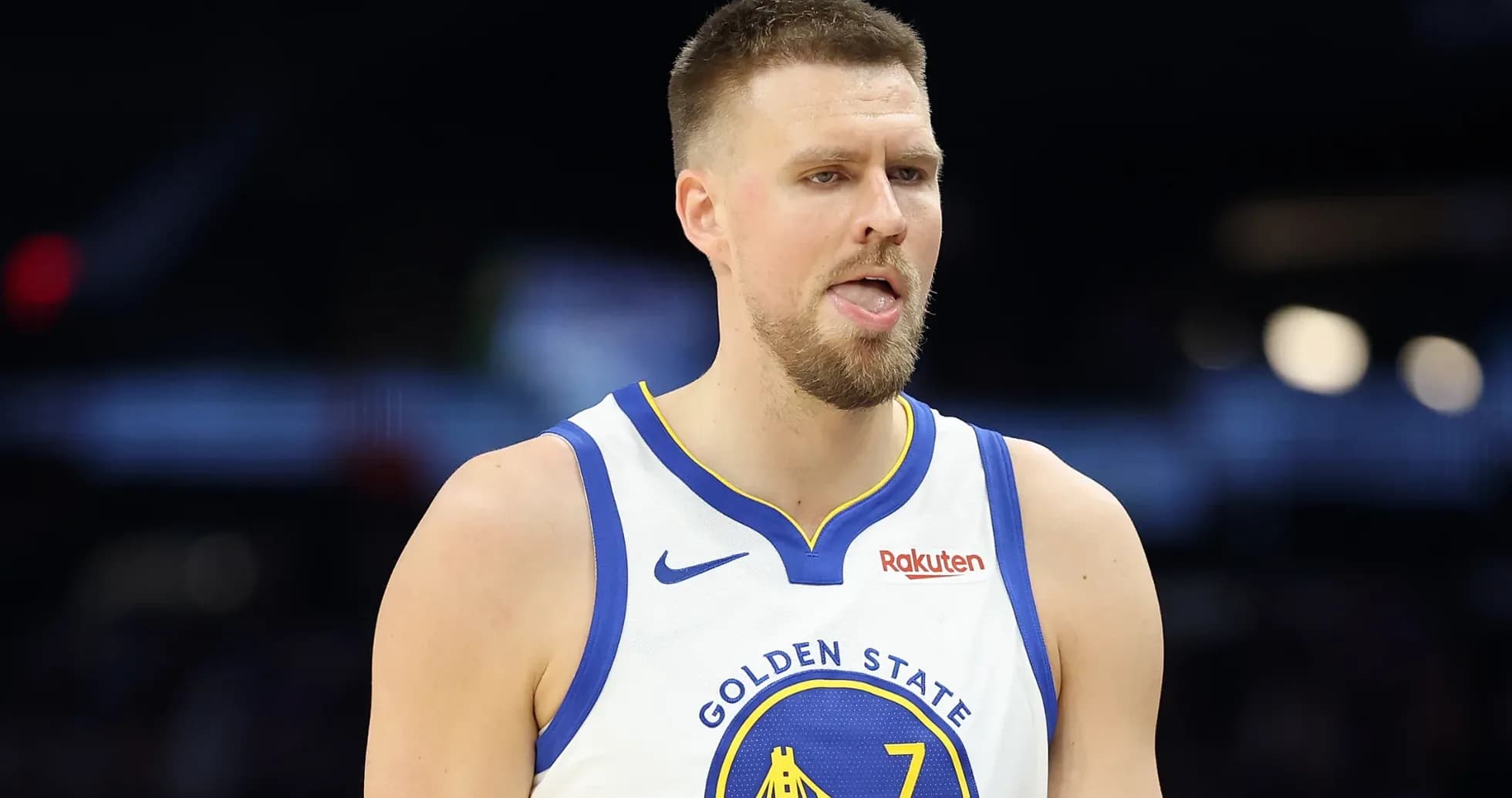
Kristaps Porzingis has become the Warriors’ biggest gamble and their clearest bet.
Golden State doubled down on the 7-foot-3 Latvian this offseason, re-signing him to a two-year, $40 million deal despite a season that barely got off the ground. Fifteen games. That’s all they got after prying him loose from the Atlanta Hawks at the trade deadline in a package that cost them Jonathan Kuminga and Buddy Hield.
Fifteen games, but enough of a glimpse to keep the front office all-in.
Porzingis still produced: 16.1 points, 5.3 rebounds, 2.3 assists and 1.1 blocks per night, even as a recurring medical issue kept him parked on the sideline for most of the stretch run. The numbers teased what he could be in a Warriors system that has long craved size, shooting and rim protection in the same body.
Now the organization is acting as if next season is the payoff.
Vogel’s Vision: A New Anchor in the Middle
The clearest sign came not from a medical report, but from the coaching reshuffle. Frank Vogel, one of the league’s most defensive-minded coaches, arrived this summer with a familiar blueprint and a very specific idea of where Porzingis fits in it.
Vogel’s career has been built around a certain type of center. Roy Hibbert in Indiana. Anthony Davis in Los Angeles. Bigs who erase mistakes at the rim and let the perimeter defense gamble a little more than most coaches would dare.
“We feel like Kristaps can fill that role,” Vogel told Luca Evans of the San Francisco Chronicle. He spoke like a coach who already has the clips queued up and the schemes drawn. “And I’m really excited about putting him in my defensive system. Because there’s a lot of details I believe in with my defensive system and how I use shot-blocking bigs that really gets a lot out of ’em on that side, and I really look forward to putting KP in those spots.”
That’s not cautious optimism. That’s a man planning a defense around a player who has rarely been available for a full grind of an NBA calendar.
Vogel replaces Terry Stotts, Jerry Stackhouse and Chris DeMarco on the Warriors’ bench, and his arrival sends a clear message: this team intends to defend again. The scheme should tighten. The rotations should sharpen. But the personnel has to hold up, and that’s where the Warriors are walking a tightrope.
A Thin Frontcourt and a Heavy Burden
Porzingis didn’t just skip Latvia’s FIBA World Cup qualifying windows this offseason for rest. He essentially made a statement: the Warriors come first. His entire summer became a rehab and recovery project designed to justify the franchise’s financial and trade investment.
Golden State needs that commitment to translate into availability, because the margin for error at center is almost nonexistent.
Al Horford, the second-oldest player in the league, can still organize a defense and knock down shots, but asking him to shoulder a heavy regular-season load at this stage is a risk on its own. Charles Bassey, meanwhile, has never held a major role. Those are the safety nets behind a star with a long medical file.
Porzingis’ presence changes the geometry of the floor when he’s right. He can space to the perimeter, punish smaller defenders, and turn the paint into a no-fly zone. He also carries a history that can’t be ignored.
He hasn’t played 70 games in a season since his rookie year with the New York Knicks in 2015-16. Every franchise that has had him has lived in the same tension: when he’s healthy, he produces; when he’s not, entire plans collapse.
Front Office Doubles Down on Belief
Inside the Warriors, the tone on his health has been anything but cautious.
General manager Mike Dunleavy Jr. sounded convinced last month when he spoke to Luca Stevens of the San Francisco Chronicle about the organization’s deep dive into Porzingis’ situation.
“We looked at it extensively, what’s going on, how we can help him, how we can be better,” Dunleavy said. “And I just think the things we’ve discussed and look at and worked through lean in the direction of him having a healthier year.”
That’s the bet: that better load management, tailored conditioning and Vogel’s system can turn Porzingis from a 15-game cameo into a season-long pillar.
If it works, Golden State suddenly has a modern, stretch rim protector to stabilize an aging core and unlock new defensive coverages. If it doesn’t, they’re left with an expensive, fragile centerpiece and a frontcourt rotation stretched thin by age and inexperience.
For now, the Warriors are choosing belief over fear. They’ve handed Vogel his shot-blocking big, backed the medical staff’s projections, and trusted that Porzingis’ decision to prioritize recovery over national duty will pay off when the games start to matter.
Soon enough, the question won’t be what Porzingis can do in theory. It will be how long he can stay on the floor to prove it.