Knicks Face Crucial Decision on Miles McBride Amid Trade Talks
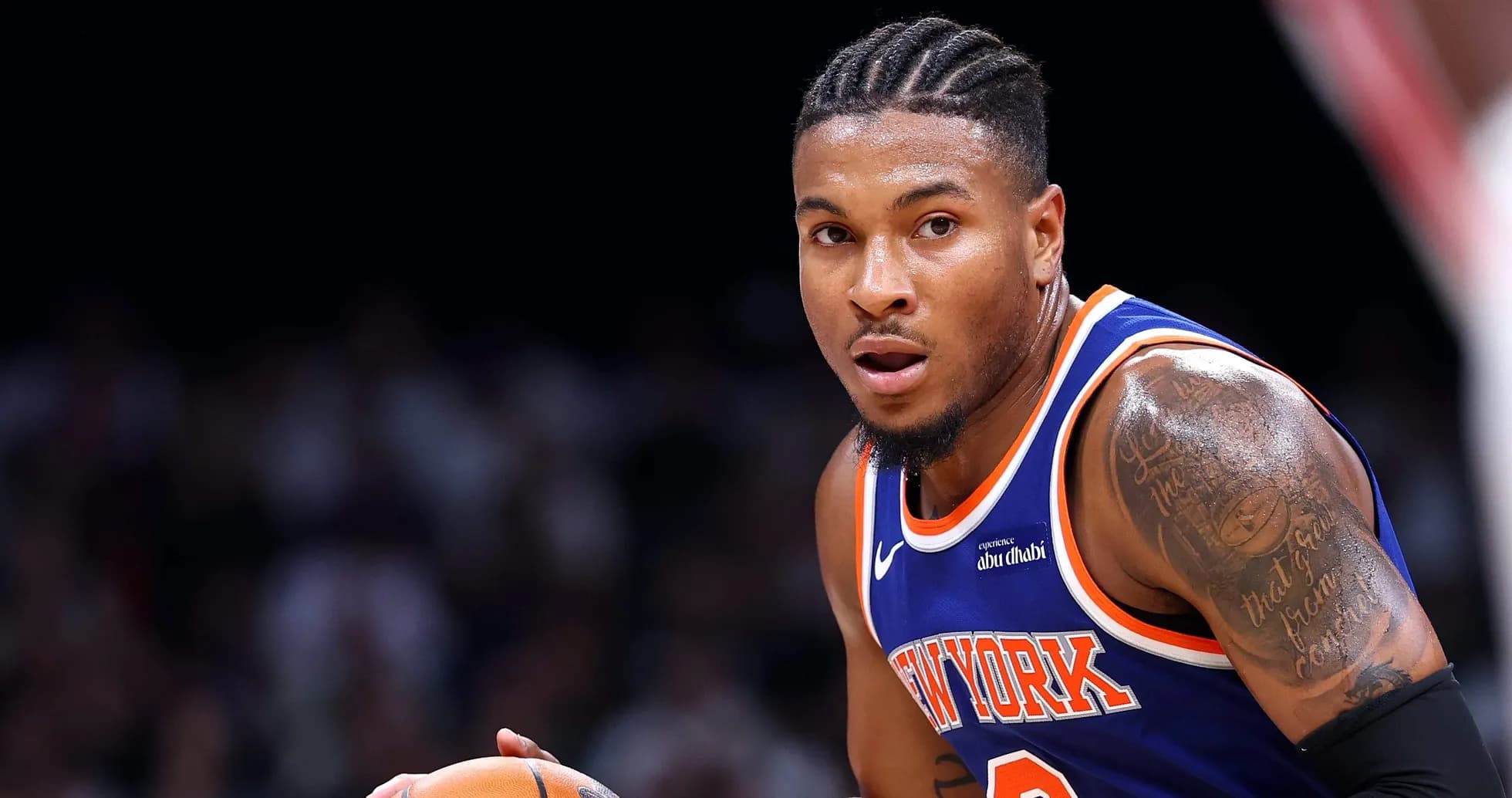
The New York Knicks have reached the kind of crossroads that defines a front office’s nerve.
Miles “Deuce” McBride, the hard-nosed guard who has quietly become one of Tom Thibodeau’s most trusted bench pieces, is barreling toward a payday the Knicks are unlikely to meet. With the second apron already dictating decisions — Mitchell Robinson has already walked because of it — New York is staring at a familiar choice: pay up, or get proactive.
This time, the answer may be to cash out early.
A Clean Trade, a Complicated Emotion
On the board is a deal that works as neatly on the cap sheet as it does on the whiteboard:
- Knicks receive: Yves Missi
- Pelicans receive: Miles McBride (via TPE)
New Orleans would slide McBride into the $4.5 million traded player exception created in the Jose Alvarado move. The Knicks would bring in Missi on his rookie-scale contract and stay clear of the second apron.
No picks. No filler. Just a straight talent-for-talent swap with two teams solving very different problems.
For New York, the financial logic is brutal but obvious. McBride’s expiring $3.9 million deal makes him one of the most attractive mid-tier trade chips on the market. At 25, with a reputation as a fearless shot-maker and rugged defender, he’s about to price himself into a bracket that a cap-strapped contender cannot comfortably reach.
So the Knicks, who already pushed Robinson out to avoid a more punitive tax future, may have to move on from another homegrown contributor.
The Knicks’ Dream Target, Revisited
This is not the first time Yves Missi’s name has circled Madison Square Garden.
New York made a strong run at the 22-year-old Cameroonian big man before last season’s February deadline. Some around the league labeled him a “dream” target for the Leon Rose regime — a young, athletic rim protector on a controllable contract who fits the team’s identity.
The Pelicans held firm then. They may not now.
Mitchell Robinson’s departure has left a clear gap in the Knicks’ frontcourt. Isaiah Hartenstein can only cover so many minutes, and New York’s system thrives when there’s a vertical threat cleaning the glass and protecting the rim behind aggressive perimeter defense.
Missi checks those boxes. Across his first two seasons in New Orleans, the third-year center averaged 10.9 rebounds and 2.2 blocks per 36 minutes, flashing the kind of upside that makes coaches greedy. He’s long, active, and disruptive, the sort of big who can erase mistakes and tilt possessions.
For a team that leans on defense, rebounding, and toughness, that profile is hard to ignore.
The cost, of course, is McBride — arguably the Knicks’ best bench player over the past three seasons. That’s not an easy piece to give up, especially for a coach who values continuity and guard defense as much as Thibodeau does.
But the depth chart has shifted.
Landry Shamet’s postseason emergence gave New York another trusted backcourt option. Jordan Clarkson’s decision to re-sign with the Knicks adds scoring and experience. Tyler Kolek, entering his third year, is positioned for a larger role and has earned the organization’s belief.
With that mix in place, McBride becomes something he has never really been in New York: expendable.
Why New Orleans Listens Now
The Pelicans’ motivation is less about money and more about clarity.
They have a choice to make at center. And they know it.
Derik Queen is the franchise’s anointed big man of the future, the player with the higher ceiling and the star potential. To clear the runway for him, New Orleans pushed Missi to the bench in his second season after he had started 67 games as a rookie.
The drop in role didn’t sit well.
Back in January, ClutchPoints’ Brett Siegel reported that Missi and his camp were frustrated by the dramatic cut in minutes:
“The 21-year-old big man and his camp feel disrespected by the Pelicans for his major decrease in minutes, and tension has formed between the two sides, sources say.”
When a young center goes from foundational starter to afterthought, friction is inevitable. At some point, the Pelicans have to pick a lane. All signs point to Queen.
That makes Missi the logical trade piece — valuable enough to bring back a rotation player, surplus enough to move without blowing up the long-term plan.
McBride fits their timeline and their needs.
At 25, he’s young enough to grow with a core built around Dejounte Murray, Jeremiah Fears, and Queen. He can operate as a reliable backup to Murray and Fears, or slide in alongside either as a combo guard. His ability to knock down big shots and guard up on the perimeter gives New Orleans lineup flexibility they’ve often lacked.
This isn’t a rental. It’s a piece that could stick.
Two Teams, One Calculated Gamble
Strip the emotion away and the trade is almost too tidy.
New York turns a soon-to-be-expensive reserve guard into a cost-controlled, high-upside center who addresses a glaring need. New Orleans converts a frustrated backup big into a versatile guard who strengthens their rotation and supports their backcourt future.
But this isn’t a fantasy roster. These are real locker rooms, real rotations, real playoff ambitions.
The Knicks would be betting that their guard depth can absorb the loss of McBride and that Missi’s rim protection can anchor second units — and maybe more — in the seasons ahead. The Pelicans would be betting that Queen can own the starting center role without a safety net, and that McBride’s two-way impact translates immediately in the West.
Both sides know the risk. Both sides also know the alternative: let assets with value drift toward free agency or discontent.
So the question lingers over the coming months, as the deadline creeps closer and the cap math tightens.
Do the Knicks turn a “dream” target into reality at the cost of one of Thibodeau’s favorites? Or does New York hold onto McBride, squeeze one more run out of this guard rotation, and hope the bill that’s coming won’t be too steep to pay?