Kendry Paez's Journey: From Ecuadorian Prodigy to Chelsea's Under-21
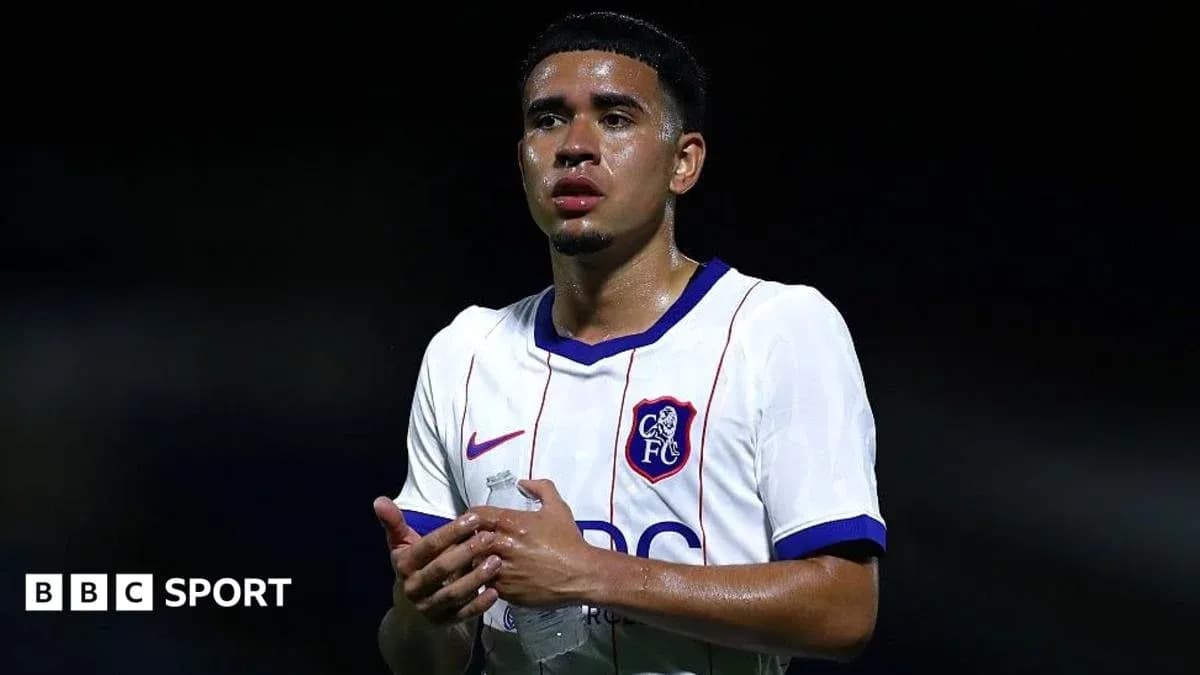
Kendry Paez finally pulled on a Chelsea shirt at the weekend. Not under the lights at Stamford Bridge, not to the roar of a full Shed End, but as a 12th-minute substitute for Cobham Next Gen in front of a smattering of spectators at Arsenal’s training ground.
Three years after Chelsea agreed a £17.27m deal for one of South America’s most talked-about teenagers, the club’s great Ecuadorian hope is starting again from the bottom of the ladder.
From record breaker to reality check
Paez’s story was supposed to run differently.
At 15, he became the youngest debutant and goalscorer in Ecuador’s top flight with Independiente del Valle. He stepped straight from that into the Copa Libertadores, the continent’s fiercest club stage, as if it were the most natural thing in the world.
By 16 years and 131 days, he was playing in World Cup qualifiers for Ecuador, the second-youngest South American ever to do so after Diego Maradona. A month later, he became the youngest South American to score in a World Cup qualifier, away in the altitude of La Paz, in a 2-1 win over Bolivia.
Chelsea were watching all of it. When they agreed the deal in 2023, Paez already had 18 caps and two international goals. The numbers screamed “generational”. The clips did too.
He trained regularly with Chelsea’s first team long before he was eligible to join officially at 18. The club invested beyond the pitch as well, stepping in to provide security for Paez, his family and the family of Moises Caicedo when violence erupted in Ecuador in early 2024. This was a long-term project, carefully ring-fenced.
Then the story veered.
A few months later, Paez was filmed in a New York strip club while on international duty. The footage travelled quickly, the narrative even faster. For a teenager still learning how to carry sudden fame, it was another spotlight he didn’t need.
Loans, criticism and a stalled rise
Chelsea’s multi-club model offered what looked like the perfect bridge: a loan to Strasbourg. Early signs were promising. Paez won Ligue 1’s Young Player of the Month for September and looked, briefly, like he might be accelerating again.
The momentum didn’t last.
Manager Liam Rosenior went public with his frustration.
“We expect more, clearly,” he said. “I’m tired of using the excuse of the player’s youth.”
One goal in 21 appearances told its own story. Strasbourg and Chelsea cut the loan short despite the ownership links that might have made compromise easier.
River Plate came next, a two-year loan to one of Argentina’s giants and a club that rarely blinks at pressure or expectation. Instead of a reset, it became another uncomfortable chapter.
Sources in Argentina raised familiar concerns about his attitude. They highlighted a poor performance in the Superclasico defeat to Boca Juniors at the Monumental in April, a game that can define careers. Soon after, club president Stefano Di Carlo named Paez among 15 players training away from the first team. Some inside River felt he deserved more chances; the numbers again were stark: one goal in 14 appearances, 461 minutes in total.
The loan ended by mutual consent. Another door closed.
Ecuador’s prodigy under the microscope
Back home, the concern grew louder. Ecuador had built Paez up as the country’s next great attacking talent, the heir apparent in a generation that has already produced Moises Caicedo and others.
Michel Deller, the owner of Independiente del Valle, spoke with a mixture of affection and alarm.
“He’s like a son to us. We care about him deeply,” Deller told Hincha Amarillo. “He’s a good kid who’s had a tough time and has made decisions that have complicated his life.
“We are always hopeful he’ll show his exceptional talent once again but right now, it’s up to him to decide what to do with his life.”
Chelsea and those around Paez don’t dismiss those worries. They do argue the narrative has run away from reality. A teenager with more than 100 senior games, 70 of them for Independiente, is now being talked about as if his career is already on the brink.
He is 19.
A different kind of debut
Which brings us to Saturday, and that understated moment in north London.
Cobham Next Gen, Chelsea’s newly rebranded Under-21 side, were already in control in a 4-1 win away to Arsenal when Paez entered in the 12th minute. No television build-up. No grand unveiling. Just a talented 19-year-old in blue, trying to find his rhythm again.
A few days earlier, he had appeared in the EFL Trophy away at Wycombe Wanderers. Only 778 fans turned up. Paez, a Spanish speaker still adjusting to life in England, stood slightly apart from his academy team-mates before kick-off. He joined the warm-up but mostly kept to himself until he came on in the 62nd minute.
For most of the night he was on the fringes, used as a right-sided No 10 in a shape mirroring Xabi Alonso’s back three. The game drifted away from Chelsea.
Then, in stoppage time, a flash.
From a short corner, Paez whipped in an outswinging cross that Harrison Bettoni tapped home. Moments later, another delivery caused chaos as Chelsea hunted an equaliser. It wasn’t enough to save the result, but it was a reminder – to himself as much as anyone – of what his left foot can do.
These are small details, easily lost on a scoresheet. Inside Cobham, they matter.
Alonso’s stance and Chelsea’s gamble
Alonso has been blunt. Paez is “not in my plans” for the first team. On the club website, he is listed as an academy player. For someone capped 27 times by his country and already a World Cup participant, that is a jarring line to read.
Yet Chelsea believe this reset is necessary. FIFA rules have blocked another overseas move for now: the club have already used all six of their international loan slots, which also ruled out an immediate loan within English football.
So Paez stays at Cobham, in a controlled environment, under daily supervision. The club like what they have seen since he returned. The attitude, they say, has been good. Family presence at Wycombe was another small but significant sign of stability.
Academy matches at Chelsea are heavily scouted. Representatives from across the English Football League and beyond are regulars. The hope is simple: play, train, grow, and earn a loan move in England in January, or step into one of the six international slots if one opens up.
This is no longer the fast track. It is the long road.
Still time to rewrite the story
Strip away the noise and the picture is more nuanced than the “lost wonderkid” tag suggests.
Paez has already lived more football than many players twice his age: Libertadores nights, World Cup qualifiers, Superclasicos, European top-flight minutes, a World Cup appearance, and now the quiet graft of Under-21 football in England.
He has stumbled. He has been criticised, sometimes sharply. He has been overhyped and then written off just as quickly.
What he also has is time, games behind him, and a club that has decided, for now, to keep him close rather than cut him loose.
The next few months at Cobham will not decide his career, but they will shape the direction of it. If he can rediscover the form that first seduced Chelsea’s scouts and lit up Ecuador, the narrative flips again – from cautionary tale back to comeback arc.
For Kendry Paez, the question is no longer whether he was special at 15. Everyone knows he was.
The question now is what he does with 19.